Ancient Medicine

  • Home
  • About
  • Contact

Goat, located in Fiesch, Valais (Switzerland). Source: Armin Kübelbeck via Wikimedia Commons.

How to smell nice: Galen's advice for doctors

December 25, 2025 by Sean Coughlin in Ancient Medicine

The last part of Galen’s comment on Epid. 6.4.7, here on smell, including advice on how to use deodorants and breath fresheners — and a nice Quintus’ story as well.


Odour. Some people naturally have an unpleasant smell, whether of the body as a whole or of the mouth, while others are naturally free of it. In other cases it arises from carelessness, when doctors think they are doing nothing wrong even if they go to see patients reeking of garlic or onions. Something like this actually happened to Quintus, who practiced medicine in Rome in our fathers’ day. After lunch he went to visit a wealthy and very influential man smelling strongly of wine. The patient was running a fairly high fever, with headaches as well, and so could not tolerate the smell coming from the wine. He asked Quintus to stand a little farther away, since he was distressed by the strong smell of wine. In saying this the patient seemed to be speaking reasonably enough. But Quintus handled it clumsily and told him to endure the smell. He said that he himself put up with the stench of the patient’s fever, and that it was hardly the same thing to smell a fever as to smell wine.

I also know of another doctor in our part of Asia whose armpits were foul-smelling, to the point that no sick person could bear his presence, or any healthy person either. He ought first to have treated this condition in himself, and only then attempted to treat others. For even if the smell is congenital, as it is in goats, it is still possible to make it milder, and then to reduce it further each day by using powders that blunt bad odours. At any rate, there was one man whose mouth was naturally foul, who took care to make it more moderate by cleansing and by taking suitable medicines for this purpose, and who each day took a very small amount of something aromatic, sometimes amomum, sometimes a leaf of malabathrum, sometimes some other fragrant substance, and in this way would leave the house.

ὀδμή. καὶ τῆς ὀδμῆς τοῦ σώματος ὅλου καὶ τοῦ στόματος ἡ μέν τίς ἐστιν ἐνίοις φύσει μοχθηρά, καθάπερ γε καὶ ἄλλοις τισὶν ἄμεμπτος, ἡ δ' ἐξ ἀμελείας ἐγγίνεται μηδὲν ἡγουμένων ἁμαρτάνειν τῶν ἰατρῶν, ἐὰν ἤτοι σκορόδων ἢ κρομύων ὄζοντες ἐπισκοπῶνται τοὺς νοσοῦντας. ἐπὶ δὲ Κοΐντου τοῦ κατὰ τοὺς πατέρας ἡμῶν ἰατρεύοντος ἐν Ῥώμῃ καὶ τοιοῦτό τι συνέβη· μετ' ἄριστον ἐπεσκέπτετό τινα τῶν πλουσίων τε καὶ πολὺ δυναμένων ἀνδρῶν ὄζων οἴνου σφοδρῶς. πυρέττων οὖν ἱκανῶς ὁ κάμνων ἅμα κεφαλαλγίαις καὶ διὰ τοῦτο μὴ φέρων τὴν ἐκ τοῦ οἴνου προσπίπτουσαν ὀσμὴν ἠξίου προσωτέρω χωρήσειν τὸν Κόϊντον, ἀνιᾶν γὰρ αὐτὸν ἐξόζοντα σφοδρῶς οἴνου. ταῦτα μὲν οὖν ὁ κάμνων ἐφαίνετο μετρίως λέγειν· ὁ Κόϊντος δ' ἀβελτέρως αὐτῷ προσενεχθεὶς ἐκέλευσεν ἀνέχεσθαι τῆς ὀσμῆς. καὶ γὰρ ἑαυτὸν ἔφη τοῦ κάμνοντος ἀνέχεσθαι πυρετοῦ ὄζοντος, εἶναι δ' οὐκ ἴσον ἢ πυρετὸν ἢ οἶνον ὀσμᾶσθαι.

ἕτερον δ' ἰατρὸν ἐπὶ τῆς ἡμετέρας Ἀσίας οἶδα δυσώδεις ἔχοντα τὰς μάλας, ὡς διὰ τοῦτο μὴ φέρειν αὐτοῦ τὴν εἴσοδον ἄνθρωπον νοσοῦντα μηδένα καθάρειον. ἐχρῆν οὖν αὐτὸν ἑαυτοῦ πρῶτον ἰᾶσθαι τὸ σύμπτωμα καὶ οὕτως ἐπιχειρεῖν ἑτέρους θεραπεύειν. ἐγχωρεῖ γάρ, εἰ καὶ σύμφυτον ὥσπερ καὶ τοῖς τράγοις ἐστίν, ἀλλά τοι μετριώτερόν γ' αὐτὸ ποιήσαντα τὸ μέτριον αὖθις τοῦτο πραΰνειν ἑκάστης ἡμέρας διαπάσμασιν ἀμβλυντικοῖς δυσωδίας. ἄλλος γοῦν τις ἔχων δυσῶδες φύσει τὸ στόμα προὐνοήσατο μετριώτερον αὐτὸ ποιήσασθαι διά τε καθάρσεως καὶ φαρμάκων πόσεως ἐπιτηδείων εἰς τοῦτο, καὶ καθ' ἑκάστην ἡμέραν ὀλίγιστόν τι λαμβάνων εἰς αὐτὸ ποτὲ μὲν ἀμώμου, ποτὲ δὲ μαλαβάθρου φύλλου, ποτὲ δ' ἄλλου τινὸς τῶν εὐωδῶν οὕτως ἐκ τῆς οἰκίας προήρχετο.

Galen, Commentary on Epidemics VI on Epidemics VI 4.10, 17B.151-152K = 206-207 Wenkebach

December 25, 2025 /Sean Coughlin
Galen, garlic, onions, Epidemics, Hippocratic Commentary, bedside manner
Ancient Medicine
Comment

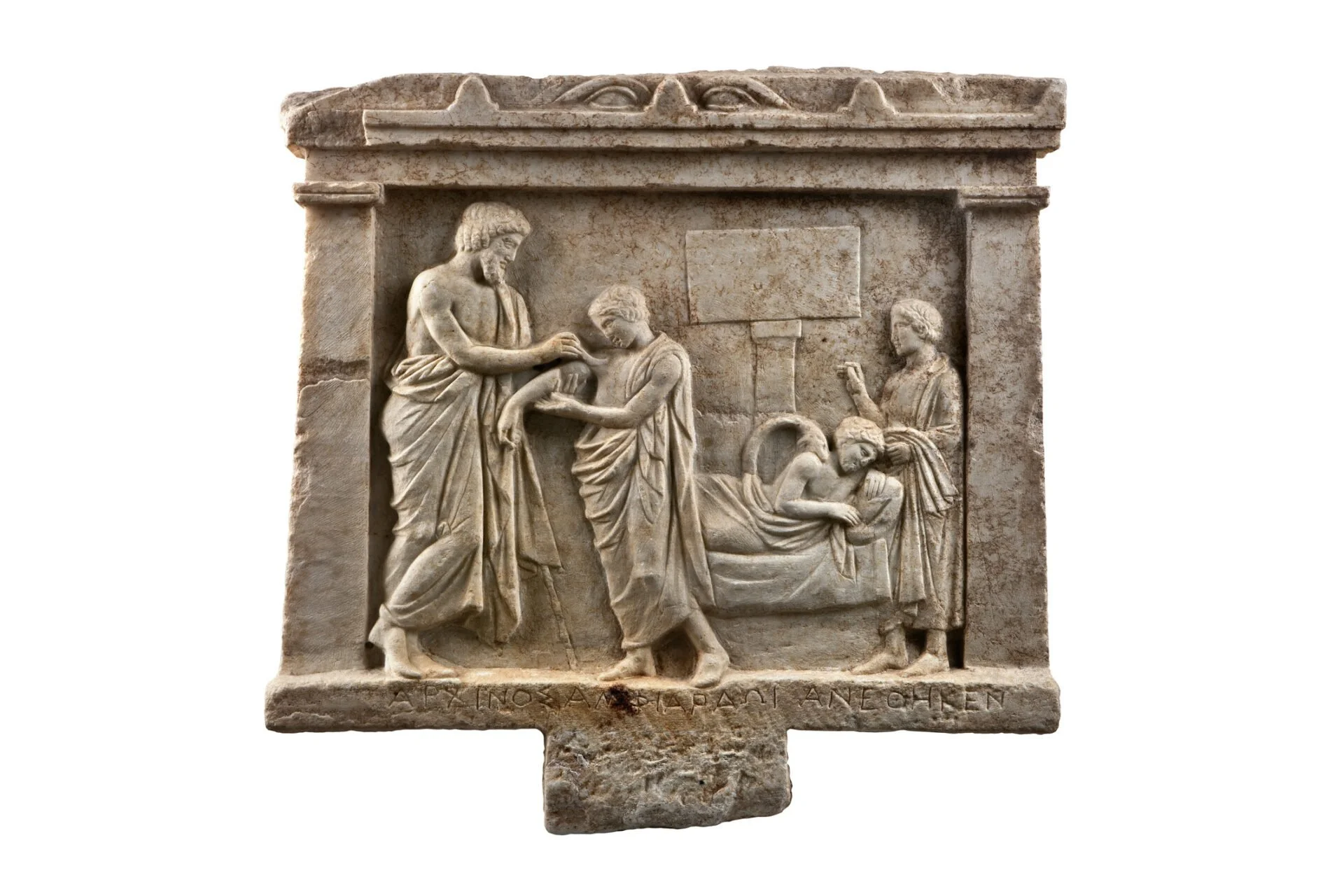
Votive relief from the sanctuary of Amphiaraos at Oropos (Γ 3369). Source: National Archaeological Museum, Athens.

More on how not to talk to patients

December 23, 2025 by Sean Coughlin in Ancient Medicine

Continuing Galen’s bedside manner advice


Posture. The physician should maintain a mean when it comes to the posture of his whole body, both when entering and when seated: neither so low as to invite contempt, nor so lax as to advertise arrogance. Some come in and sit down rigid and sprawling; others do so in a slack, careless way; others are bent over and abject. You must avoid every extreme and try to stay between them. If, on rare occasions, the patient seems particularly humble, it is better to incline yourself a little from the mean toward the lower side. If the patient is disposed the other way, you should do the opposite, briefly stepping away from the mean and from what is natural toward something more elevated.

Clothing. The same rule applies here. Let it be moderate: neither lavish, so as to suggest arrogance, nor dirty and excessively shabby, unless the patient himself is immoderately fond either of luxury or of roughness. In such cases you should move away from the mean toward what the patient finds more agreeable, so far as you judge it still fitting for you.

For the patient. I said that this phrase, inserted in the middle, creates a difficulty. If it had been placed at the beginning of the whole discussion or at the end, it would be clear that the physician should do all these things in a way that pleases the patient: his entrances, his conversation, the bearing of his whole body, his clothing, the trimming of his hair, the proper length of his nails, and his scent. In entrances, the right measure is different for different patients, as I said earlier, and likewise in conversation. Some enjoy doctors who tell stories; others are irritated by them. Some take pleasure in dignified speech; others in witty talk. As for posture and clothing, I have just explained how one must aim at what the patient finds pleasing.

Haircut. the best haircut would naturally be the one that aims at the health of the head, since different styles suit different people. Among the sick, however, what is pleasing is not the same for everyone. You must take this into account too, keeping your eye on the person being treated, just as all those who attended on Antoninus, the father of Commodus, kept their hair cropped close. Lucius used to call them “mimes,” and for that very reason those who later accompanied him let their hair grow long again.

Nails. He himself taught how long a physician’s nails should be in On the Surgery, making their proper length part of being pleasant to those who see them. As for nails with scabs or anything of that sort, just as with alopecia or ophiasis of the hair on the head, there is no need to say a word. Such conditions, being already against nature, are most disgraceful for a physician, just like severe gout or anything similar.

σχῆμα. καὶ τὸ σχῆμα τοῦ σώματος ὅλου κατά τε τὴν εἴσοδον καὶ τὴν καθέδραν ὁ ἰατρὸς ἐχέτω μέσον, μήτε ταπεινὸν ὡς εὐκαταφρόνητον εἶναι μήτε χαυνότητά τινα καὶ ἀλαζονείαν ἐνδεικνύμενον. ἔνιοι μὲν γὰρ ἀνατεταμένοι καὶ πλατεῖς εἰσίασί τε καὶ καθέζονται, ἔνιοι δὲ διατεθρυμμένοι, τινὲς δὲ ἐγκεκυφότες καὶ ταπεινοί. φεύγειν οὖν ἁπάσας χρὴ τὰς ὑπερβολὰς καὶ πειρᾶσθαι μέσον αὐτῶν εἶναι. εἰ δέ ποτε κατὰ τὸ σπάνιον ὁ κάμνων φαίνοιτό σοι φιλοτάπεινός τις, ἀπὸ τοῦ μέσου βραχὺ πρὸς τὸ ταπεινότερον ἄμεινόν ἐστι σχηματίζειν ἑαυτόν. εἰ δ' ἐναντίως ἔχοι, καὶ σὺ τἀναντία ποιήσεις ἐπὶ βραχὺ τοῦ μέσου τε καὶ κατὰ φύσιν ἐφ' ὑπέρτερα παραχωρῶν.

ἐσθής. καὶ αὕτη κατὰ τὸν αὐτὸν λόγον ἔστω μέση, μήτε πολυτελὴς ὡς ἀλαζονείαν ἐμφαίνειν μήτε ῥυπαρὰ καὶ πάνυ ταπεινή, πλὴν εἴ ποθ' ὁ κάμνων αὐτὸς εἴη τῶν ἀμετρότερον ἢ τὰ πολυτελῆ φιλούντων ἢ τοῖς ῥυπαροῖς ἡδομένων. ἐπὶ τούτων γὰρ ἀπὸ τῆς μεσότητος ἐπὶ τὸ τῷ κάμνοντι φίλτερον ἀποχωρήσεις, ὅσον ἂν εἰκάσῃς ἔσεσθαί σοι σύμμετρον.

τῷ νοσοῦντι. διὰ μέσου τοῦτ' ἔφην ἐγκείμενον ἀπορίαν παρέχειν· εἰ δέ γε κατὰ τὴν ἀρχὴν τῆς ὅλης ῥήσεως ἢ τὴν τελευτὴν εἴρητο, σαφὲς ἂν ἦν ὡς ἅπαντα ταῦτα τῷ νοσοῦντι κεχαρισμένως προσήκει πράττειν τὸν ἰατρόν, εἰσόδους, λόγους, σχῆμα τοῦ παντὸς σώματος, ἐσθῆτα, κουρὰν τριχῶν, ὀνύχων συμμετρίαν, ὀσμήν. ἐπί τε γὰρ εἰσόδων ἄλλη πρὸς ἄλλον ἐστὶ τῶν νοσούντων ἡ συμμετρία, καθότι πρόσθεν εἶπον, ἔν τε τοῖς λόγοις ὡσαύτως· οἱ μὲν γὰρ μυθολογοῦσι τοῖς ἰατροῖς ἥδονται, τινὲς δὲ ἀνιῶνται, καὶ τινὲς μὲν σεμνοῖς λόγοις, τινὲς δ' εὐτραπέλοις χαίρουσι. καὶ περὶ τῶν σχημάτων δὲ καὶ τῆς ἐσθῆτος ἀρτίως εἴρηται, τίνα τρόπον ἐστοχάσθαι χρὴ τῶν ἡδέων τῷ νοσοῦντι.

κουρή. τῶν τριχῶν ἡ κουρὰ φύσει μὲν ἀρίστη γένοιτο ἄν, εἰ στοχάζοιτο τῆς κατὰ τὴν κεφαλὴν ὑγείας. ἄλλοις γὰρ ἄλλο προσήκει. τοῖς νοσοῦσι δὲ τὸ τῆς κουρᾶς εἶδος οὐ ταὐτὸν ἅπασιν ἡδύ. στοχάζεσθαι τοίνυν σε χρὴ καὶ τούτου πρὸς τὸν ἰατρευόμενον ἀποβλέποντα, καθάπερ ἐπ' Ἀντωνίνου τοῦ Κομμόδου πατρὸς ἐποίουν οἱ συνόντες ἅπαντες ἐν χρῷ κειρόμενοι. Λούκιος δὲ μιμολόγους αὐτοὺς ἀπεκάλει. καὶ διὰ τοῦτο πάλιν ἐκόμων οἱ μετ' ἐκείνου.

ὄνυχες. πηλίκους εἶναι χρὴ τοὺς ὄνυχας τοῖς ἰατροῖς αὐτὸς ἐδίδαξεν ἐν τῷ Κατ' ἰητρεῖον, συνάπτων αὐτῶν τὴν συμμετρίαν ἡδεῖαν εἶναι τοῖς ὁρῶσι. περὶ δὲ τῶν ψώραν ἐχόντων ὀνύχων ἤ τι τοιοῦτον καθάπερ γε καὶ περὶ τῆς ἐν κεφαλῇ τῶν τριχῶν ἀλωπεκίας ἢ ὀφιάσεως οὐδὲ λόγου δεῖται. ταῦτα γὰρ ὡς ἤδη παρὰ φύσιν αἴσχιστόν ἐστιν ἔχειν ἰατρῷ, καθάπερ γε καὶ ἀρθρῖτιν ἰσχυρὰν ἤ τι τοιοῦτον ἕτερον.

Galen, Commentary on Epidemics VI 4.10, 17B.148-150K = 205-206 Wenkebach

December 23, 2025 /Sean Coughlin
Galen, Hippocratic Commentary, bedside manner, Epidemics
Ancient Medicine
Comment

Fragment of bas-relief, female patient on a bed. In copyright. Source: Wellcome Collection.

"Patroclus died as well" (How Not to Talk to Patients)

December 13, 2025 by Sean Coughlin in Ancient Medicine

Let’s get back into this. A story from Galen on how not to talk to patients, and how to use Hippocrates to get them on your side.


“The comforts for those who are ill, like doing things in a clean way when it comes to drink, food, and whatever they may see; with softness whatever they touch. [There are other measures as well]. What does no great harm, or is easily borne [or easily gotten?], like something cold, when it is needed. Entrances, words, posture, clothing, for the patient, haircut, nails, smells.”

Αἱ τοῖσι κάμνουσι χάριτες, οἷον τὸ καθαρίως δρῇν ἢ ποτὰ ἢ βρωτὰ ἢ ἃ ἂν ὁρᾷ, μαλακῶς ὅσα ψαύει· [ἄλλαι·] ἃ μὴ μεγά[λα] βλάπτει, ἢ εὐανάληπτα, οἷον ψυχρὸν, ὅκου τοῦτο δεῖ· εἴσοδοι, λόγοι, σχῆμα, ἐσθὴς, τῷ νοσέοντι, κουρὴ, ὄνυχες, ὀδμαί.

Epidemics 6.4.7, 5.308L

Galen’s comments

All of the words obviously refer to the doctor, but the phrase “for the patient” inserted in between them raises a question; consequently, some have entirely removed it and pretended not to have found it written at all. However, the ancient interpreters are aware of this reading. Maybe we’ll find some plausible solution for it if we first examine each of the things mentioned individually. [1]

Τούτων τὰ μὲν ἄλλα πάντα προφανῶς ἐπὶ τὸν ἰατρὸν ἀναφέρεται, μεταξὺ δ' αὐτῶν παρεγκείμενον τὸ «τῷ νοσοῦντι» παρέχει τινὰ ζήτησιν, ὅθεν ἔνιοι παντάπασιν ἐξελόντες αὐτὸ προσεποιήσαντο μηδ' ὅλως εὑρηκέναι γεγραμμένον. ἀλλ' οἵ γε παλαιοὶ τῶν ἐξηγητῶν ἴσασι καὶ ταύτην τὴν γραφήν. ἴσως δ' ἄν τινος εὐπορήσαιμεν εἰς αὐτὴν πιθανοῦ προεπισκεψάμενοι τῶν εἰρημένων ἕκαστον ἰδίᾳ.

Entrances. And first, he spoke about the doctors’ “entrances” to the patient, and how they may occur in a pleasing manner. For some patients find it annoying when doctors check on them frequently, while others enjoy this very much. There are some doctors who behave so foolishly as to intrude upon sleeping patients with the noise of their feet or a loud voice; the patients, sometimes woken up by this, are aggravated with them and say they have been caused greatest harms. Therefore, a doctor must consider all these things ahead of time in order not to appear at an inappropriate time, or rush in headlong with a lot of noise and a loud voice, or an awkward gait or look, or anything of this sort at all.

καὶ πρώτας γε ἔλεγε τὰς πρὸς τὸν κάμνοντα τῶν ἰατρῶν «εἰσόδους» ὅσαι κεχαρισμένως αὐτοῖς γίνονται. τινὲς μὲν γὰρ ἐνοχλεῖσθαι νομίζουσιν ὑπὸ τῶν πολλάκις αὐτοὺς ὁρώντων, ἔνιοι δὲ πάνυ τούτῳ σφόδρα χαίρουσιν. ἰατροὶ δέ τινές εἰσιν οἳ μέχρι τοσούτου μωραίνουσιν, ὡς καὶ τοῖς κοιμωμένοις ἐπεισιέναι μετὰ ψόφου ποδῶν ἢ φωνῆς μείζονος, ὑφ' ὧν ἐνίοτε διεγερθέντες οἱ νοσοῦντες ἀγανακτοῦσί τε πρὸς αὐτοὺς καὶ βεβλάφθαι τὰ μέγιστά φασι. ἅπαντ' οὖν ταῦτα προορᾶσθαι χρὴ τὸν ἰατρόν, ὡς μήτε κατὰ καιρὸν ὃν οὐ χρὴ παραγίνεσθαι μήτε προπετῶς μετὰ ψόφων πολλῶν καὶ φωνῆς μεγάλης ἢ βαδίσματος ἀσχήμονος ἢ βλέμματος ἢ ὅλως οὑτινοσοῦν τοιούτου.

Conversation. This is one of the greatest issues regarding whether patients are being treated appropriately or inappropriately by their doctors. Some of them are utterly witless, the sort of people Zeuxis says Bacchius described in his Memoirs of Herophilus and his House regarding Callianax the Herophilean. For once, when a patient said to Callianax, “I am going to die,” they say he responded with this verse:

“Unless Leto of the Fair Children gave birth to you.” [2]

And to another who said the same thing, he said:

“Patroclus died as well, who was much better than you.” [3]

Some doctors today, even if they are more moderate than Callianax, are still rough on patients, so that they are hated. Others, conversely, who flatter in a slavish manner, are despised for this very reason. Just as the doctor should not appear worthy of hatred to the patient, neither should he be easily despised; rather, he should maintain his dignity while being humane, moderate, and pleasant. For unless the patient admires the doctor like a god, he will not be obedient; and if he is not willingly obedient, it is better not to flatter him to the point of being despised, nor to be boorish and rough like Callianax. This will happen if the doctor maintains dignity in his look, speech, and the posture of his whole body, while instructing the patient to obey his orders.

There are many “conversations”, and I will not hesitate to provide you with one as an example. The doctor, in a persuasive introduction, can review with the patient what Hippocrates wrote about these matters: first in the Aphorisms, saying, “One must not only do what is necessary oneself, but also make the patient, the attendants, and the externals cooperate” (Aph. 1.1); then in the first book of Epidemics: “The art has three factors: the disease, the patient, the physician. The physician is the servant of the art. The patient must cooperate with the physician in combating the disease” (Epid. 1.2.5). And since there are three factors, doctor, disease, and patient, if the patient leaves the doctor to fight the disease alone, or goes over to the disease and opposes the doctor, the doctor will be defeated by the disease. But if the patient leaves the disease and becomes an ally to the doctor against it, there is great hope of victory with two men fighting one disease. Conversely, it provides no hope if the patient joins the disease and opposes the doctor; for he, being isolated, would be defeated by the two.

This example is sufficient for you, who are capable of understanding that many similar things happen to the patient in relation to doctors. Not only should the intention of the <words> spoken by doctors to patients be appropriate, but the volume of the voice, the tone, and the whole delivery should correspond to the thought behind the words. And even if one is speaking to an educated man, one should take care not to commit solecisms or barbarisms. [4] For doctors appear contemptible to patients due to such things.

<λόγοι.> τῶν μεγίστων ἐστὶ καὶ τοῦτο πρὸς τοὺς κάμνοντας ὑπὸ τῶν ἰατρῶν ἤτοι προσηκόντως ἢ οὐ προσηκόντως τι γινόμενον. ἔνιοι μὲν γὰρ αὐτῶν ἐσχάτως εἰσὶν ἀβέλτεροι τοιοῦτοί τινες ὄντες, οἷον ὁ Ζεῦξίς φησιν ὑπὸ Βακχείου γεγράφθαι Καλλιάνακτα γεγονέναι τὸν Ἡροφίλειον ἐν τοῖς Ἀπομνημονεύμασιν Ἡροφίλου τε καὶ τῶν ἀπὸ τῆς οἰκίας αὐτοῦ· νοσοῦντος γάρ τινος, εἶτ' εἰπόντος τῷ Καλλιάνακτι «τεθνήξομαι», φασὶν αὐτὸν ἐπιφωνῆσαι τόδε τὸ ἔπος·

«εἰ μή σε Λητὼ καλλίπαις ἐγείνατο».

ἑτέρῳ δὲ ταὐτὸ τοῦτ' εἰπόντι φάναι·

«κάτθανε καὶ Πάτροκλος, ὅπερ σέο πολλὸν ἀμείνων».

ἔνιοι δὲ τῶν νῦν ἰατρῶν, εἰ καὶ μετριώτεροι Καλλιάνακτός> εἰσιν, ἀλλὰ τραχέως καὶ αὐτοὶ προσφέρονται τοῖς νοσοῦσιν ὡς μισηθῆναι, καθάπερ ἄλλοι τινὲς ἐξ ὑπεναντίου δουλοπρεπῶς κολακεύοντες ἐξ αὐτοῦ τούτου κατεφρονήθησαν. ὥσπερ δὲ οὐ χρὴ μίσους ἄξιον φαίνεσθαι τῷ κάμνοντι τὸν ἰατρόν, οὕτως οὐδ' εὐκαταφρόνητον, ἀλλ' ἐν τῷ φιλανθρώπῳ καὶ μετρίῳ καὶ ἡδεῖ τὸ σεμνὸν φυλάττειν. εἰ μὴ γὰρ ὥσπερ θεὸν αὐτὸν ὁ κάμνων θαυμάσειεν, οὐκ ἂν εὐπειθὴς γένοιτο, εἰ δὲ μὴ ἑκὼν εὐπειθὴς γένοιτο, βέλτιόν [οὖν] ἐστι μήτε κολακεύειν εἰς τοσοῦτον ὥστε καταφρονεῖσθαι μήτ' ἄγροικόν τε καὶ τραχὺν ὁμοίως εἶναι τῷ Καλλιάνακτι. γενήσεται δὲ τοῦτο φυλάττοντος μὲν ἔν τε τῷ βλέμματι καὶ τῷ φθέγματι καὶ τῷ παντὶ τοῦ σώματος σχήματι τὸ σεμνὸν τοῦ ἰατροῦ, ἐκδιδάσκοντος δὲ τὸν κάμνοντα πείθεσθαι τοῖς προσταττομένοις ὑφ' ἑαυτοῦ.

πολλοὶ δ' εἰσὶ λόγοι, καί σοι παραδείγματος ἕνεκεν οὐκ ὀκνήσω παραθέσθαι τινά. δυνήσεται γὰρ ὁ ἰατρὸς ἐπὶ προοιμίῳ πιθανῷ μετὰ ταῦτα πρὸς τὸν κάμνοντα διελθεῖν, ὅσα περὶ | τῶν τοιούτων Ἱπποκράτης ἔγραψε, πρῶτον μὲν ἐν τοῖς Ἀφορισμοῖς εἰπών· «Δεῖ δὲ οὐ μόνον ἑωυτὸν παρέχειν τὰ δέοντα ποιέοντα, ἀλλὰ καὶ τὸν νοσέοντα καὶ τοὺς παρεόντας καὶ τὰ ἔξωθεν», εἶτ' ἐν τῷ πρώτῳ τῶν Ἐπιδημιῶν· «Ἡ τέχνη διὰ τριῶν, τὸ νόσημα, ὁ νοσέων, ὁ ἰητρός· ὁ ἰητρὸς ὑπηρέτης τῆς τέχνης. ἐναντιοῦσθαι τῷ νοσήματι τὸν νοσέοντα μετὰ τοῦ ἰητροῦ χρή».

καὶ ὡς τριῶν ὄντων, ἰατροῦ καὶ νοσήματος καὶ κάμνοντος, ἐὰν ὁ νοσῶν ἐάσῃ μόνον πολεμεῖν τῷ νοσήματι τὸν ἰατρὸν ἢ καὶ πρὸς αὐτὸ μεταστὰς ἐναντιώσηται τῷ ἰατρῷ, συμβήσεται νικηθῆναι τὸν ἰατρὸν ὑπὸ τοῦ νοσήματος. ἐὰν δὲ καταλιπὼν τὸ νόσημα σύμμαχος κατ' αὐτοῦ γένηται τῷ ἰατρῷ, μεγάλην ἐλπίδα τῆς νίκης ἔσεσθαι δυοῖν ἀνθρώπων πρὸς ἓν νόσημα μαχομένων, ὡς τό γε ἐναντίον ἔμπαλιν οὐδεμιᾶς ἐλπίδος ἔσται παρεκτικόν, ἐὰν ὁ κάμνων μετὰ τοῦ νοσήματος γενόμενος ἐναντιῶται τῷ ἰατρῷ· μονωθεὶς γὰρ ἂν οὗτος ὑπὸ τῶν δυοῖν νικηθείη ἄν.

ἀρκεῖ δέ σοι τὸ παράδειγμα τοῦτο νοῆσαι δυναμένῳ κατὰ τὸ παραπλήσιον ἕτερα πολλὰ τοιαῦτα τῷ νοσοῦντι γίνεσθαι πρὸς τῶν ἰατρῶν. οὐ μόνον δὲ τῶν λεχθησομένων λόγων τοῖς κάμνουσιν ὑπὸ τῶν ἰατρῶν τοιαύτην εἶναι προσήκει τὴν διάνοιαν, ἀλλὰ καὶ τὸ μέγεθος τῆς φωνῆς καὶ τὸν τόνον καὶ τὴν ὅλην ὑπόκρισιν ἀνὰ λόγον εἶναι τῇ διανοίᾳ τῶν λόγων. εἰ δὲ καὶ πεπαιδευμένῳ διαλέγοιτό τις ἀνδρί, † καὶ μετὰ τοῦ μὴ σολοικίζειν τε καὶ βαρβαρίζειν. καὶ γὰρ ἐκ τῶν τοιούτων εὐκαταφρόνητοι τοῖς κάμνουσιν οἱ ἰατροὶ φαίνονται.

Galen, Commentary on Epidemics VI 4.10, 17B.145-148K = 202-205 Wenkebach

Notes

[1] The Epidemics passage is usually taken as a checklist of things that affect how a sick person feels. On the modern reading (e.g. Smith), τῷ νοσέοντι (“for the patient”) is taken as a dative of reference. Everything that follows belongs to the patient’s world: what they eat and drink, what they see and touch, the general atmosphere, and even practical details like clothing, hair, nails, and smells. It’s classic Epidemics: observe, adjust, don’t make things worse.

Galen (and maybe others at the time) reads the list very differently. For him, it’s about the doctor’s own behavior and grooming: speak politely, dress sensibly, keep your hair and nails neat, don’t smell of wine or garlic. A kind of ancient bedside-manner code. He takes τῷ νοσέοντι to mean “for the sake of the patient.”

Grammar probably favors the simpler view, and Galen has to do some gymnastics to make his reading work. His interpretation is fun, and great evidence for later medical etiquette, but it probably tells us more about Galen’s world than about what this Hippocratic text originally meant.

[2] Leto, goddess, mother of Apollo and Artemis.

[3] Iliad 21.107, what Achilles says to Lykaon just before he kills him.

[4] Technical terms. “Solecism” is incorrect grammar/syntax; “Barbarism” is the use of non-Greek words.

December 13, 2025 /Sean Coughlin
bedside manner, Hippocratic Commentary, Galen, Herophilus, Epidemics
Ancient Medicine
Comment
 

CATEGORIES

  • Ancient Medicine
  • Botany
  • Events
  • Philosophy

SEARCH


RECENT POSTS

Featured
Dec 31, 2025
Botany, Philosophy
Concerning a Variant in the de Fuentes Manuscript
Dec 31, 2025
Botany, Philosophy
Dec 31, 2025
Botany, Philosophy
Dec 25, 2025
Ancient Medicine
How to smell nice: Galen's advice for doctors
Dec 25, 2025
Ancient Medicine
Dec 25, 2025
Ancient Medicine
Dec 23, 2025
Ancient Medicine
More on how not to talk to patients
Dec 23, 2025
Ancient Medicine
Dec 23, 2025
Ancient Medicine
Dec 13, 2025
Ancient Medicine
"Patroclus died as well" (How Not to Talk to Patients)
Dec 13, 2025
Ancient Medicine
Dec 13, 2025
Ancient Medicine
Sep 18, 2023
Ancient Medicine
Galen, Simple Drugs, Book 11, Preface (II)
Sep 18, 2023
Ancient Medicine
Sep 18, 2023
Ancient Medicine