Ancient Medicine

  • Home
  • About
  • Contact

Hare’s revenge. Detail from Verdun bibliothèque municipale ms. 0107, fol. 96v. Image via Verdun bibliothèque virtuelle des manuscrits médiévaux, CC BY NC 3.0.

Easter foods to have avoided

Humboldt-Universität zu Berlin
April 09, 2021 by Sean Coughlin in Ancient Medicine

“Lambs have flesh that is extremely moist and phlegmy, while the flesh of adult sheep is more productive of residues and bad humours. The flesh of she-goats produces bad humours accompanied by acridity; but the worst is the flesh of he-goats, both with respect to good humours and digestion, followed by that of rams, then that of bulls. In all these cases animals that have been castrated are better. Old animals are the worst relative to digestion and good humours and nourishment, so that even in the case of pigs, although they have a moist temperament, the old ones are sinewy and dry, and for this reason their flesh is difficult to digest. The flesh of hares meanwhile is productive of thicker blood and better for good humours than the flesh of cattle or sheep.”

ὑγροτάτην δ' ἔχουσι καὶ φλεγματώδη σάρκα καὶ οἱ ἄρνες. ἀλλὰ καὶ τῶν προβάτων ἡ σὰρξ περιττωματικωτέρα τέ ἐστι καὶ κακοχυμοτέρα. κακόχυμος δὲ καὶ ἡ τῶν αἰγῶν μετὰ δριμύτητος. ἡ δὲ τῶν τράγων χειρίστη καὶ πρὸς εὐχυμίαν καὶ πρὸς πέψιν, ἐφεξῆς δ' ἡ τῶν κριῶν, εἶθ' ἡ τῶν ταύρων. ἐν ἅπασι δὲ τούτοις τὰ τῶν εὐνουχισθέντων ἀμείνω. τὰ δὲ πρεσβυτικὰ χείριστα πρός τε πέψιν καὶ πρὸς εὐχυμίαν καὶ θρέψιν, ὥστε καὶ τῶν ὑῶν αὐτῶν, καίτοι γε ὑγρῶν ὄντων τὴν κρᾶσιν, οἱ γηράσαντες ἰνώδη καὶ ξηρὰν καὶ διὰ τοῦτο δύσπεπτον ἔχουσι τὴν σάρκα. καὶ τοῦ λαγωοῦ δ' ἡ σὰρξ αἵματος μέν ἐστι παχυτέρου γεννητική, βελτίων δ' εἰς εὐχυμίαν ἢ κατὰ βοῦς καὶ πρόβατα.

Galen, On the properties of foods 3.1, 6.663–664 K.

April 09, 2021 /Sean Coughlin
Easter, rabbits, seasonal food, bestiary
Ancient Medicine
Still life with eggs, mid-first century CE, from the house of Julia Felix in Pompeii. Photo by Yann Forget via wikimedia commons.

Still life with eggs, mid-first century CE, from the house of Julia Felix in Pompeii. Photo by Yann Forget via wikimedia commons.

Eggs and Invisible Ink

Humboldt-Universität zu Berlin
April 02, 2021 by Sean Coughlin in Ancient Medicine, Philosophy

How did Giambattista della Porta end up being associated with an ancient way of hiding secret messages inside of boiled eggs?

I recently stumbled across a trick for hiding secret messages inside of eggs. It’s in the 10th-century compendium known as the Geoponica or Farm Work:

“To make inscriptions on eggs. From Africanus. Grind up oak gall and alum with vinegar until it reaches the thickness of black ink. Use it to write whatever you want on the egg. Once the writing has dried in the sun, place the egg into a sharp brine. Once it has dried, boil it, and when you have peeled it, you will find the inscription.”

Ὠὰ κατάγραπτα ποιῆσαι. Ἀφρικανοῦ. Κικίδος καὶ στυπτηρίας μετὰ ὄξους τρίψας, ἕως γένηται πάχος μέλανος, ἐπίγραψον ἐξ αὐτοῦ ὃ θέλεις τῷ ὠῷ, καὶ ψυγείσης τῆς γραφῆς ἐν ἡλίῳ κατάθες τὸ ὠὸν εἰς ἅλμην δριμεῖαν, καὶ ψύξας ἕψησον, καὶ λεπίσας εὑρήσεις τὴν ἐπιγραφήν.

Geoponica 14.10 (roughly 10th century, originally 3rd century CE)

The compiler of the Geoponica attributes the recipe to someone named Africanus. Scholars typically identify him with Julius Africanus, a Libyan philosopher of the second and third century CE. Africanus was a Christian (before it was popular), spent time in and around Judaea and Rome, exchanged letters with Origen, and wrote a book called Kestoi—an encyclopedic mix of rhetoric, natural philosophy and what he called ‘forbidden investigations’ (ἱστορίαι ἀπόρρητοι).

From the Kestoi (if that’s where it originally was) the recipe would have found its way into a country-knowledge Compendium of Farming Practices (Συναγωγὴ γεωργικῶν ἐπιτηδευμάτων) by Vindonius Anatolius sometime in the 4th century CE; and from there into a 6th-century work called Selections on Farming (περὶ γεωργίας ἐκλογαί) compiled by Cassianus Bassus, now lost, but which was a major source for the Geoponica. That’s the standard story anyway.

But if you try to find anything about Africanus’ recipe on the internet, you’ll notice three things: first, no one can get it to work; second; it’s nearly always missing one of its ingredients, namely oak gall; and third, it’s never attributed to Africanus, but to Giambattista della Porta, the 16th century Italian polymath and author of the Magia Naturalis or Natural Magic.

The story associating della Porta with the recipe usually goes something like this: Giambattista della Porta (or Giovanni Porta in some versions) and his friends were having trouble with the Church and they needed a way to get messages to those of them imprisoned by the Inquisition. To do this, della Porta invented a technique for writing messages where no one would ever expect: on the inside of hardboiled eggs. Here are a few re-tellings: 1, 2, 3, 4.

The story is popular enough that it even made it into della Porta’s Wikipedia page.

From the English Wikipedia entry for Giambattista della Porta, 27 March 2021.

From the English Wikipedia entry for Giambattista della Porta, 27 March 2021.

Now, the story isn’t completely wrong. In chapter four of book sixteen of the Magia Naturalis, della Porta does write about secret messages in eggs. And at the beginning of the chapter, he writes:

“…eggs are not stopped by the Papal Inquisition and no fraud is suspected to be in them…”

…pontificalium suffragiorium comittiis ova non incipiuntur nec aliquid fraudis in eis suspicatur…

della Porta, Magia Naturalis 16.4 (Latin 1590, English 1658).

So, the inquisition thing is pretty much right, although whether he’s being serious is an open question.

A quick check of the chapter, however, reveals one big difference: della Porta does not take credit for the recipe. He attributes it to Africanus. Even more importantly he says he couldn’t get it to work:

“Africanus teaches thus: ‘grind oak galls and alum with vinegar, until they have the viscosity of ink. With it, inscribe whatever your want on the egg and once the writing has been dried by the sun, place the egg in sharp brine, and having dried it, cook it, peel, and you will find the inscription.’ I put it in vinegar and nothing happened, unless by ‘brine’, he meant sharp lye, what’s normally called capitellum*.”

Africanus ita docet. Gallas et alumen cum aceto terito, donec atramenti spissitudinem habeant, ex hoc quicquid libuerit ouo inscribito, et postquam scriptum Sole desiccatum fuerit, ouum in muriam acrem demittito, et resiccatum coquito, et decorticato, et reperies inscriptionem. Ego in acetum imposui, et nihil evenit, si per muriam non intelligat acre lixiviu, vulgo capitello dictum.**

della Porta, Magia Naturalis 16.4 (Latin 1590, English 1658)

*capitellum: a mixture of quicklime and oak ashes. See Magia Naturalis 9.3 where it is used in a black hair dye (English).

**Della Porta’s text is nearly a word for word translation of the Greek from the Geoponica, and it is also similar, but not identical, to Cornarius’ 1538 Latin translation.

Despite his failure in replicating it, della Porta found Africanus’ recipe tempting enough that he devised another method to try to get it to work. This one is almost never found online, so I’ll append it at the end. To summarize, he says one should first boil the egg, coat it in wax, and then inscribe the message in the wax through to the shell (like when doing etching); next, he says to put the egg in a solution of alum and gall (for how long is unclear), followed by a solution of sharp vinegar (again unclear), after which the egg is dried and the shell removed to find the message in saffron-coloured writing (and even this technique resembles another attributed to Africanus in the Geoponica).

I began to wonder how the mistaken attribution first came about, so I clicked on the footnote at the end of the story on Wikipedia, assuming I’d find something. And I did find something, just not what I expected.

Oak galls. Easter 2021.

Oak galls. Easter 2021.

The footnote pointed to page 227 of a 2015 book called Philalethe Reveal'd Vol. 2 B/W, the text of which was almost identical to the Wikipedia story and didn’t include any references. I checked other languages to see if I could find better sources. I checked French, Italian, Spanish and German versions of the article, but the story didn’t show up in any other languages at all.

This made me even more confused. Surely this story didn’t just appear in a 2015 book. And why was it only in English?

Wikipedia is great because it preserves the entire edit history for every article on the site. I wanted to find out when the story about the egg was added to see if it might give me some clues to other possible sources.

The story turns out to have been added on 23 December 2012—three years before the book in the footnote was published. But whoever it was who added the story (looks to have been someone interested in British art and museum collections in London) didn’t give a reference.

It was orphaned until 2015, when someone made a note that it needed a citation; the request remained unfulfilled until February 2017, when the reference to the 2015 book was added.

That meant the story was on Wikipedia for five years before the reference was added—long enough for this beautiful example of circular referencing to appear: the book, Philalethe Reveal’d (ironic) copied the story from the Wiki, was published, and was then cited as an authority for the Wikipedia story it nicked. It also meant this trail had come to an end.

I had to start from somewhere else; and since many of the websites I looked into besides Wikipedia mentioned a 2014 book on invisible inks by Kristie Macrakis, a professor at Georgia Tech, I started from there.

Macrakis’ version of the story resembles the Wikipedia version, but with a bit more flair. The book also came out two years after the story appeared in the Wiki, so Macrakis’ version could have been a descendent. I think, however, there’s reason to think that her version and the Wiki one are more distantly related. While both versions of the recipe leave ingredients out, they leave out different ingredients. The Wiki leaves out vinegar. Macrakis leaves out oak gall.

As some people on the internet have pointed out, it’s hard to understand how this recipe could work without a pigment (here’s a comment from a thread on reddit; and here’s a post by Craig Matsuoka in a magician’s forum, which was also published in the October 2002 volume of Genii magazine—Matsuoka and his interlocutor Stephen Minch correctly point out that della Porta is debunking Africanus, although they don’t follow it up). I think this insight is more likely to have been inspired by reading the Wiki (or its ancestor) than by reading della Porta, but it seems right. Alum on its own wouldn’t stain anything.

At any rate, it’s not much of a surprise that Macrakis and colour chemist Jason Lye report they couldn’t get the recipe to work. In an appendix (page 311), she appeals to anyone who’s gotten it to work to get in touch with them. On her website she also offers a $200 prize to anyone who can replicate it (Jason Lye also posted a video of one attempt).

I did find someone who mentioned a video on the internet purporting to do the trick with just alum and vinegar. I managed to find a creepy video from 2007—a pretty early date—which I think is the one. If it’s authentic, well, cool. But it’s likely a clever fake.

Old ways to play with your food. New York Times, 29 May 1965, page 14.

Macrakis however gives an even earlier source for the vinegar and alum recipe, well before Wikipedia: a New York Times article from 1965, in which it’s reported that the United States Department of Agriculture recommends parents encourage their kids to eat more eggs by teaching them to write secret messages on the inside using a ‘magic ink’ made of vinegar and alum. 

No doubt building on the popularity of ‘60s spy toys, they told kids to mix one ounce of alum with one cup of vinegar, then use the colorless magic ink to write a message on the shell of an uncooked egg. Once it was dry, one only had to boil the egg for 15 minutes, and—so the USDA promised—whatever secret was written on the shell would show up inside on the white of the boiled egg.

I have found a few leads that may be the USDA’s ultimate source, some dating back to the turn of the 20th century, and I’m sure there are others as well. All of these sources are missing the oak gall and none of them mention della Porta. How the one dropped out and the other dropped in is still a mystery…

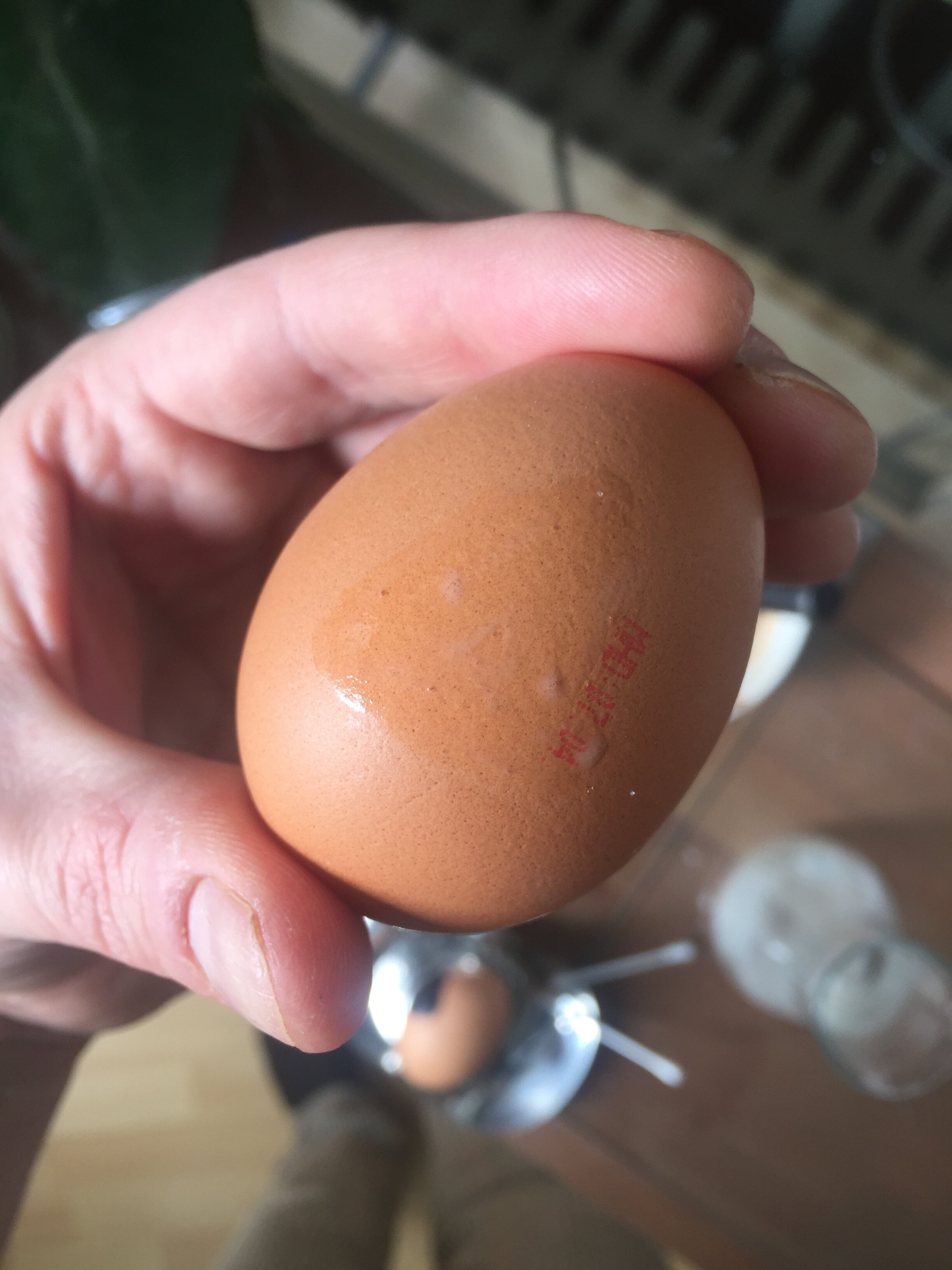
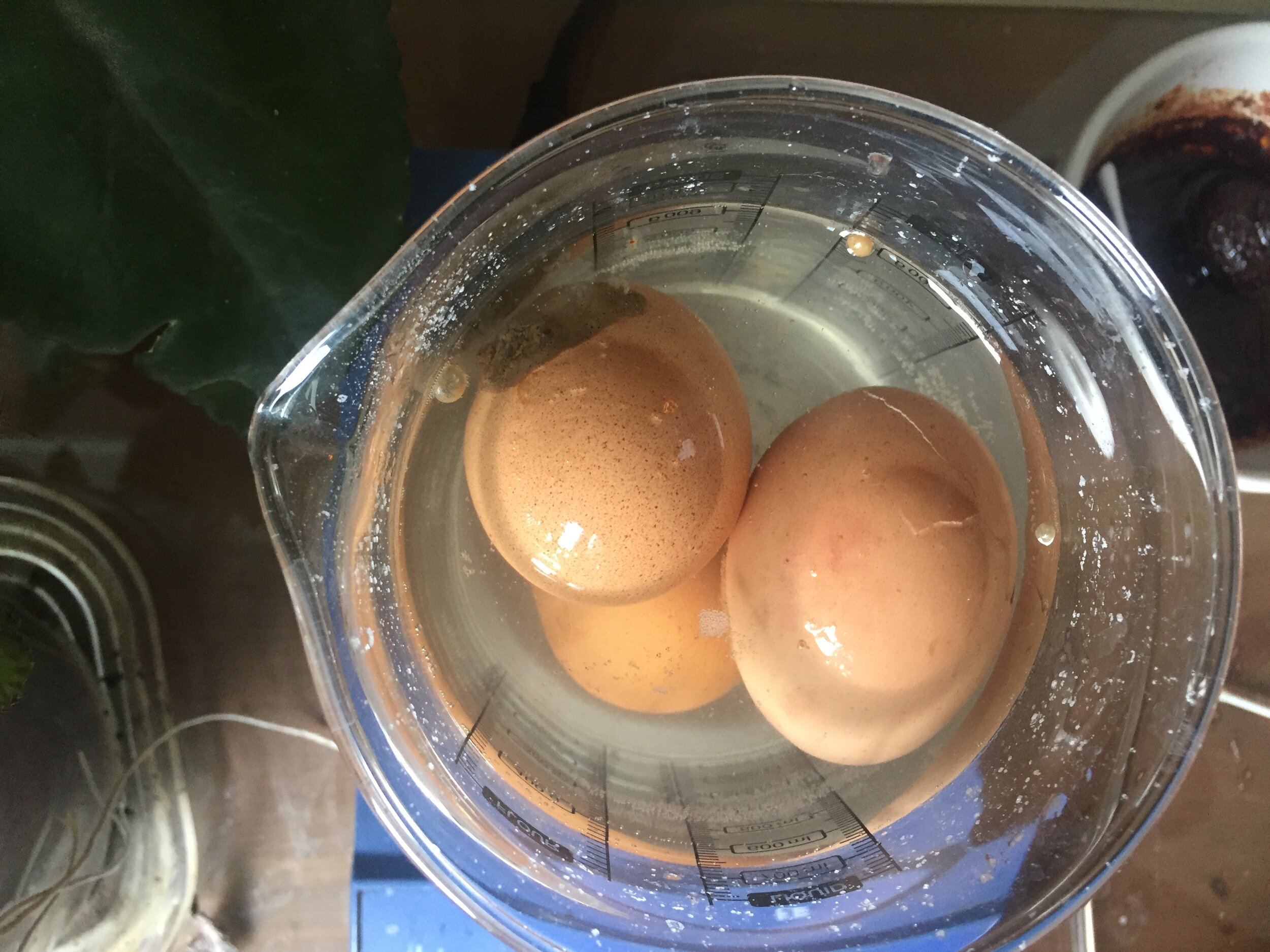
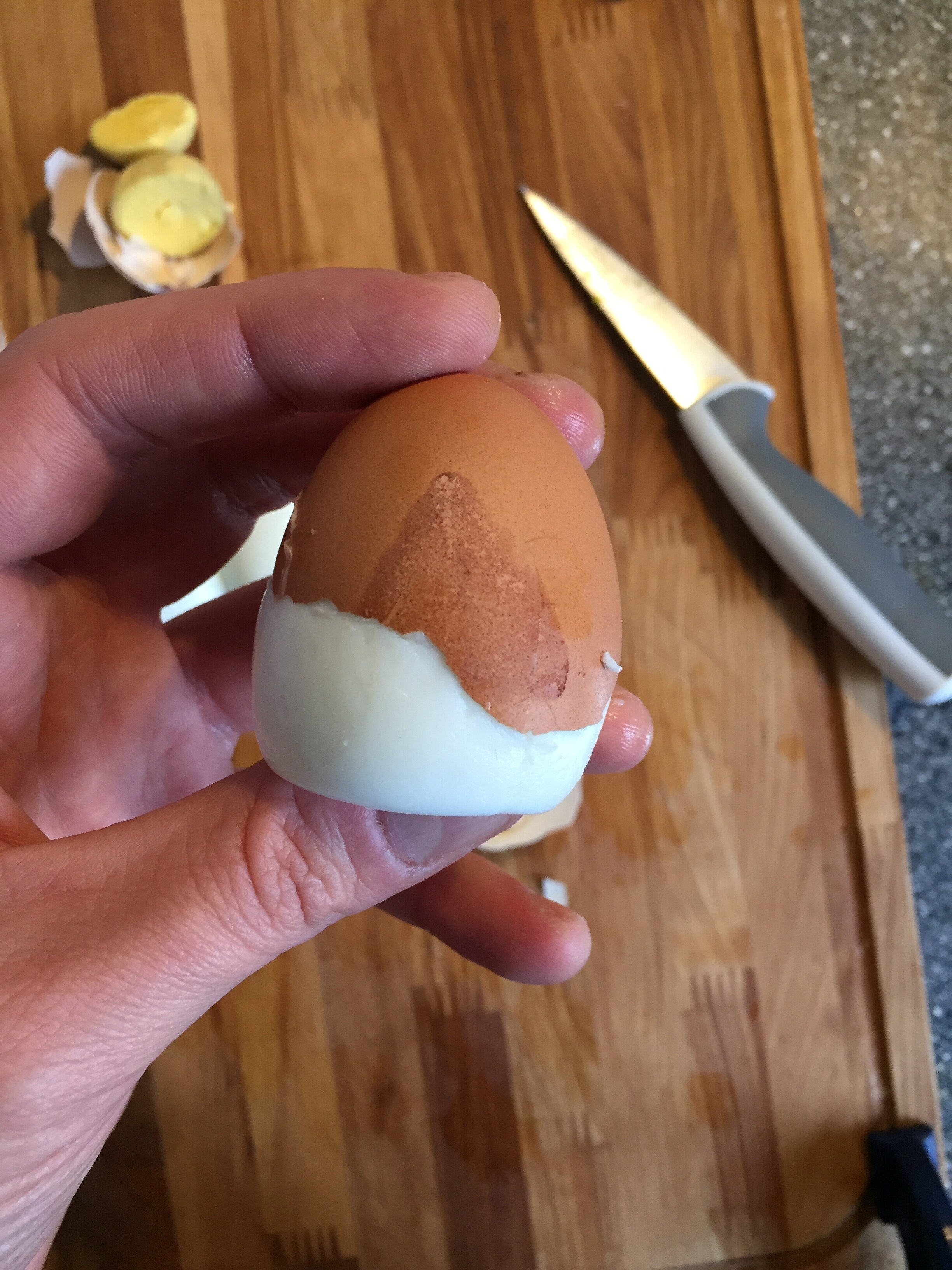
For now, here are Africanus’ and della Porta’s recipes for writing messages in eggs. I also tried to reproduce Africanus’ version, with and without oak gall (well, a tannin anyway). It didn’t work.

Julius Africanus’ recipe for leaving a secret message in an egg

“To make inscriptions on eggs. From Africanus.

“Grind up oak gall and alum with vinegar until it reaches the thickness of black ink. Use it to write whatever you want on the egg. Once the writing has dried in the sun, place the egg into a sharp brine. Once it has dried, boil it, and when you have peeled it, you will find the inscription.

“If you coat the egg all over with wax and inscribe it until the shell appears through the letters, then leave it to soak in vinegar overnight, on the next day, after removing the wax, you will find that the vinegar has made the outline of the letters transparent.”

Ὠὰ κατάγραπτα ποιῆσαι. Ἀφρικανοῦ.

Κικίδος καὶ στυπτηρίας μετὰ ὄξους τρίψας, ἕως γένηται πάχος μέλανος, ἐπίγραψον ἐξ αὐτοῦ ὃ θέλεις τῷ ὠῷ, καὶ ψυγείσης τῆς γραφῆς ἐν ἡλίῳ κατάθες τὸ ὠὸν εἰς ἅλμην δριμεῖαν, καὶ ψύξας ἕψησον, καὶ λεπίσας εὑρήσεις τὴν ἐπιγραφήν. Εἰ δὲ κηρῷ περιπλάσας τὸ ὠὸν ἐπιγράψεις ἄχρις ἂν φανῇ τὸ ἔλυτρον τοῖς γράμμασιν, εἶτα ἐάσεις ὄξει βρέχεσθαι τὴν νύκτα, τῇ ἑξῆς περιελὼν τὸν κηρόν, εὑρήσεις τῶν γραμμάτων τὸν τύπον ὑπὸ τοῦ ὄξους γενόμενον διαφανῆ.

Geoponica 14.10 (roughly 10th century, recipe originally 3rd century CE, probably)

Giambattista della Porta’s recipe for leaving a secret message in an egg

“If you want to make yellow letters appear on an egg white (it will work better when the egg is cooked): Boil an egg hard, roll it in wax, and engrave the letters on the wax with an iron point so that the marks go through. Place it into a solution of powdered alum and oak galls. Then put it into sharp vinegar and they will penetrate. And taking off the shell, you will see them on the white of the egg. Africanus instructs as follows: ‘grind oak galls and alum with vinegar, until they have the viscosity of ink. With it, inscribe whatever your want on the egg and once the writing has been dried by the sun, place the egg in sharp brine, and having dried it, cook it, peel, and you will find the inscription.’ I put it in vinegar and nothing happened, unless by ‘brine’, he meant sharp lye, what’s normally called capitellum.”

 Si vis autem ut litera supra albumen videantur croceae et rectius, ubi ovum excoctum fuerit: Coque ovum donec durescat et cera obline et insculpe literas stylo, ut liturae dehiscent, imponatur in humore, id est, ex gallis cum alumine tritis. Inde acri aceto impones et eae fient pentrabiles, quas cortice, detecto videbis in albumine ovi. Africanus ita docet. Gallas et alumen cum aceto terito, donec atramenti spissitudinem habeant, ex hoc quicquid libuerit ouo inscribito, et postquam scriptum Sole desiccatum fuerit, ouum in muriam acrem demittito, et resiccatum coquito, et decorticato, et reperies inscriptionem. Ego in acetum imposui, et nihil evenit, si per muriam non intelligat acre lixiviu, vulgo capitello dictum.

Giambattista della Porta, Magia Naturalis 16.4, 1590 (English, 1658)

View fullsize The Ingredients
The Ingredients
View fullsize Mixing the Ink and Inscribing
Mixing the Ink and Inscribing
View fullsize Control: Painting with Alum + Vinegar
Control: Painting with Alum + Vinegar
View fullsize Drying in the Sunshine
Drying in the Sunshine
View fullsize Placing the Eggs in Sharp Brine
Placing the Eggs in Sharp Brine
View fullsize Re-Drying
Re-Drying
View fullsize Boiling the Eggs
Boiling the Eggs
View fullsize The First Disappointment
The First Disappointment
View fullsize Inside of the Shell
Inside of the Shell
View fullsize Half Shell
Half Shell
View fullsize Results Summary
Results Summary
View fullsize Taking Control
Taking Control
View fullsize Letting it Dry
Letting it Dry
View fullsize Ink on Albumin
Ink on Albumin
View fullsize To be continued
To be continued
April 02, 2021 /Sean Coughlin
eggs, seasonal food, Geoponica, Julius Africanus, Giambattista della Porta, Wikipedia, experimental philology
Ancient Medicine, Philosophy
3 Comments

A leopard mosaic from the House of Masks on Delos, c. 100 BCE. At the Museum of Delos. Image by Zde via wikimedia commons.

Cat Bites

Humboldt-Universität zu Berlin
March 26, 2021 by Sean Coughlin in Ancient Medicine

“For the bites of lions, leopards and bears.

“Their bites are terrible as are the ones of those like them. Because these animals, ferocious and hooked-clawed as they are, entwine their piercing claws when they attack, bodies end up ripped to pieces. With relentless gnawing, they not only tear the flesh apart, but sometimes even shatter the bones, which also sever the adjacent nerves. Clearly, then, the parts of the body that encounter such great misfortunes are susceptible to the dangers of gangrene—for even the parts that remain attached suffer sepsis and bring on wide-spread ulceration.

“Therefore, wash out these kinds of wounds with vinegar. Remove and extract the bits of body and bone that have come off while washing. Then one must use plasters. And following the suppuration of the parts of the body that have been torn apart, provide follow-up treatment with sterilizing gauze and promote scaring (as with ordinary wounds). The plasters suitable for this are those catalogued under Prepared with salt and the like, whichever ones are the same.”

Πρὸς τὰ τῶν Λεόντων δήγματα καὶ Παρδάλεων καὶ Ἄρκτων

Δεινὰ δὲ καὶ τούτων καὶ τῶν τούτοις παραπλησίων τὰ δήγματα· ὅτι ἄλκιμα ὄντα ταῦτα τὰ ζῶα καὶ γαμψώνυχα συμπλέκεται, ὅπου δ' ἂν ἅψηται, καταπείροντα τοὺς ὄνυχας, διασπαράττει τὰ σώματα· τῇ δὲ ἐπιμονῇ τῆς μασήσεως οὐ μόνον τὰς σάρκας διασπαράττει ἀλλὰ καὶ τὰ ὀστᾶ ἐνίοτε κατάγνυσιν, ὑφ' ὧν καὶ τὰ παρακείμενα νύσσεται νεῦρα· εὔδηλον οὖν ὡς τὰ ταῖς τοιαύταις καὶ τοσαύταις συμφοραῖς περιπεσόντα σώματα οὐκ ἐκφεύγει τὸν τῆς ἀλλοτριώσεως κίνδυνον· καὶ γὰρ μένοντα σῆψιν ἀναδέχεται καὶ νομὰς ἐπιφέρει.

Ὄξει δ' οὖν καὶ τὰ τοιαῦτα τῶν τραυμάτων ἐκπλύνοντες καὶ περιελόντες καὶ κομισάμενοι τὰ ἀποπλυνόμενα σώματα καὶ τὰ ὀστᾶ, ἐμπλάστροις χρὴ παραλαβεῖν· καὶ μετὰ τὴν διαπύησιν τῶν σπαραχθέντων σωμάτων, τοῖς ἀνακαθαίρουσιν ἐμμότοις ἀποθεραπεύειν καὶ εἰς οὐλὴν ἄγειν, ὡς τὰ κοινὰ ἕλκη. Ἔμπλαστροι δὲ καὶ τούτοις ἁρμόδιοι, αἱ δι' ἁλῶν ἐπιγεγραμμέναι καὶ αἱ παραπλήσιοι, οἵα ἐστὶν αὕτη.

Aetius of Amida, Medical Books 13.3, 265,23–266,11 Zervos

March 26, 2021 /Sean Coughlin
Aetius of Amida, Medical Zoo, leopard, bear, lion, bestiary, medicines
Ancient Medicine
Comment
Laurel, or δάφνη (daphne), from the Naples Dioscorides, a late 6th or early 7th century manuscript is closely related to the Vienna Dioscorides. I love this manuscript for all the synonyms it records. Biblioteca Nazionale, Naples, ex-Vind. gr. 1, fo…

Laurel, or δάφνη (daphne), from the Naples Dioscorides, a late 6th or early 7th century manuscript is closely related to the Vienna Dioscorides. I love this manuscript for all the synonyms it records. Biblioteca Nazionale, Naples, ex-Vind. gr. 1, fol. 65r.

Herodian on the long peak of the Antonine Plague’s second wave

March 19, 2021 by Sean Coughlin in Ancient Medicine, Botany

I’ve stayed away from posts about plague recently, but it’s been nearly a year since Berlin went into its first lockdown and I’ve found myself revisiting stories about the Antonine Plague—especially about how the city’s doctors, politicians and ordinary citizens responded to a crisis that seemed to go on for ages (it nearly led to civil war according to some sources). Here’s a little bit from the historian Herodian on doctor-recommended treatments for the rich (the emperor Commodus) and the rest (the ordinary inhabitants of the city). The narrative is familiar: lack of social distancing, travel, close quarters with animals, awareness of a need for face-protection; but also, while the treatments for both rich and poor were roughly the same (viz., aromatherapy), the outcomes were not.

“It so happened at this time that Italy was in the grip of the plague. The suffering was especially intense in the city of Rome, as it was naturally overcrowded and received people from all over the world. And there was great destruction of animals and people.

“At that point, on the advice of some doctors, Commodus retired to Laurentum. For the town, being cooler and shaded by large laurel groves (hence the town’s name), seemed to be a safe place; and he is said to have withstood the corrupting power of the air by means of the fragrant vapours from the laurels and the pleasant shade of the trees.

“Meanwhile, at their doctors’ urging, those in the city filled their nostrils and ears with the most fragrant perfumes and continually used incense and aromatics, since some of the doctors said the fragrance, entering first, filled the sensory passages and prevented the corrupting power of the air from getting in; and if any should get in, it would be overpowered by [the fragrance’s] stronger power.

“Only—it made no difference: the sickness continued to peak for a long time, with great destruction of people and of all sorts of domesticated animals.”

συνέβη δὲ κατ' ἐκεῖνο καιροῦ λοιμώδη νόσον κατασχεῖν τὴν Ἰταλίαν· μάλιστα δὲ τὸ πάθος <ἐν> τῇ Ῥωμαίων πόλει ἤκμασεν ἅτε πολυανθρώπῳ τε οὔσῃ φύσει καὶ τοὺς πανταχόθεν ὑποδεχομένῃ, πολλή τέ τις φθορὰ ἐγένετο ὑποζυγίων ἅμα καὶ ἀνθρώπων. τότε ὁ Κόμοδος συμβουλευσάντων αὐτῷ τινῶν ἰατρῶν ἐς τὴν Λαύρεντον ἀνεχώρησεν· εὐψυχέστερον γὰρ ὂν τὸ χωρίον καὶ μεγίστοις κατάσκιον δαφνηφόροις ἄλσεσιν (ὅθεν καὶ τὸ ὄνομα τῷ χωρίῳ) σωτήριον εἶναι ἐδόκει, καὶ πρὸς τὴν τοῦ ἀέρος φθορὰν ἀντέχειν ἐλέγετο εὐωδίᾳ τε τῆς τῶν δαφνῶν ἀποφορᾶς καὶ τῇ τῶν δένδρων ἡδείᾳ σκιᾷ. ἀλλὰ καὶ οἱ κατὰ τὴν πόλιν κελευόντων τῶν ἰατρῶν μύρου εὐωδεστάτου τάς τε ὀσφρήσεις καὶ τὰ ὦτα ἐνεπίμπλασαν, θυμιάμασί τε καὶ ἀρώμασι συνεχῶς ἐχρῶντο, φασκόντων τινῶν τὴν εὐωδίαν φθάσασαν ἐμπιπλάναι τοὺς πόρους τῶν αἰσθήσεων καὶ κωλύειν δέχεσθαι τὸ φθορῶδες τοῦ ἀέρος, ἢ εἰ καί τι προεμπέσοι, κατεργάζεσθαι δυνάμει κρείττονι. πλὴν οὐδὲν ἧττον ἡ νόσος ἐπὶ πλεῖστον ἤκμασε, πολλῆς ἀνθρώπων φθορᾶς γενομένης πάντων τε ζῴων <τῶν> τοῖς ἀνθρώπων συνοίκων.

Herodian, History Following the Death of the Divine Marcus Aurelius 1.12.1–2

March 19, 2021 /Sean Coughlin
Herodian, plague, Commodus, perfume, aromatherapy
Ancient Medicine, Botany
Comment
“ἀνερρίφθω κύβος” : Cicero defends Quintus Ligarius to Caesar, who acquits him. Ligarius would later join the conspiracy to assassinate him. Depicted here in La clémence de César by Abel de Pujol, 1808. Painting at the Musée des Beaux-Arts de Valenc…

“ἀνερρίφθω κύβος” : Cicero defends Quintus Ligarius to Caesar, who acquits him. Ligarius would later join the conspiracy to assassinate him. Depicted here in La clémence de César by Abel de Pujol, 1808. Painting at the Musée des Beaux-Arts de Valenciennes, via wikimedia commons.

A Prescription for Julius Caesar

Humboldt-Universität zu Berlin
March 15, 2021 by Sean Coughlin in Ancient Medicine

“They say that Caesar had an epileptic fit brought on by an unending winter, but that he was later treated by drinking the juice of the Heraclean plant with the rennet from a seal. It’s not surprising if Caesar was able to get his hands on seal rennet. Aretas, however, the phylarch of Arab Scenitae, wrote a letter to Claudius Caesar about a treatment using birds. He says the liver of a vulture roasted along with the blood and taken with honey three times a week gives relief from epilepsy. Likewise, the heart of the vulture, when dried, taken with water in the same manner, is equally effective.”

Ὅτι τὸν Καίσαρά φασιν ἐξ ἀπείρου χειμῶνος ἐπιληψίᾳ περιπεσεῖν· θεραπευθῆναι δὲ ὕστερον ἡρακλείου βοτάνης χυλὸν σὺν πυτίᾳ φώκης ἑλκύσαντα. καὶ Καῖσαρ μὲν οὔπω θαυμαστὸν εἰ καὶ φώκης πυτίας ηὐπόρησεν· Ἀρέτας δὲ ὁ τῶν Σκηνιτῶν Ἀράβων φύλαρχος Κλαυδίῳ Καίσαρι γράφων ἐπιστολὴν περὶ τῆς δι' ὀρνέων θεραπείας φησίν, ἧπαρ γυπὸς σὺν τῷ αἵματι ὀπτὸν μετὰ μέλιτος διδόμενον ἐπὶ ἑβδομάδας τρεῖς ἀπαλλάττειν ἐπιληψίας, ὁμοίως δὲ καὶ τὴν καρδίαν τοῦ γυπός, ὅτε ξηρανθῇ, ἐν ὕδατι διδομένην τῷ ἴσῳ τρόπῳ ἰσχύειν.

Johannes Lydus, On the months of the year, 4.104

“Most historians say that Caesar was a seven-month child, and that’s why he changed the name of the seventh month of the sacred year to his own.”

Ὅτι οἱ πολλοὶ τῶν ἱστορικῶν φασι τὸν Καίσαρα ἑπτάμηνον τεχθῆναι, καὶ διὰ τοῦτο τὸν ἕβδομον μῆνα τοῦ ἱερατικοῦ ἐνιαυτοῦ εἰς τὴν οἰκείαν μεταβαλεῖν προσηγορίαν.

Johannes Lydus, On the months of the year, 4.105

“An oracle was delivered to the Romans by the Mother, that they are not to engage in sexual activity at all during July, if their bodies are to stay healthy.”

Χρησμὸς ἐδόθη Ῥωμαίοις πρὸς τῆς Μητρός, μηδ' ὅλως ἀφροδισίοις χρῆσθαι ἀνὰ πάντα τὸν Ἰούλιον μῆνα, εἴπερ αὐτοῖς ὑγιαίνειν τὰ σώματα μέλλοι.

Johannes Lydus, On the months of the year, 4.106

“When some people were suspicious of Marc Antony and Dolabella and urged Caesar to keep an eye on them, he said he wasn’t worried about plodding and portly people, but thin and pale ones, indicating Brutus and Cassius.”

Ἀντώνιον δὲ καὶ Δολοβέλλαν ὑφορωμένων ἐνίων καὶ φυλάττεσθαι κελευόντων, οὐ τούτους ἔφη δεδιέναι τοὺς βαναύσους καὶ λιπῶντας, ἀλλὰ τοὺς ἰσχνοὺς καὶ ὠχροὺς ἐκείνους, δείξας Βροῦτον καὶ Κάσσιον.

[Plutarch], Sayings of Gaius Caesar, c.14 (Moralia 206F)

“When the conversation at dinner turned to the best kind of death, Caesar said: ‘unexpected’.”

Λόγου δὲ παρὰ δεῖπνον ἐμπεσόντος περὶ θανάτου ποῖος ἄριστος ‘ὁ ἀπροσδόκητος’ εἶπε.

[Plutarch], Sayings of Gaius Caesar, c.15 (Moralia 206F)

March 15, 2021 /Sean Coughlin
epilepsy, idesofmarch, Julius Caesar, materia medica
Ancient Medicine
Comment
Luttrell psalter. 14th century. British Library Add MS 42130, fol. 62v. Via the British Library.

Luttrell psalter. 14th century. British Library Add MS 42130, fol. 62v. Via the British Library.

Holding it in

Humboldt-Universität zu Berlin
March 05, 2021 by Sean Coughlin in Ancient Medicine

“You can learn for yourself what I’m saying is true if you consider something that often happens to people. There are times when a biting humour builds up in the area around the anus and it makes us really need to go to the bathroom, but we are forced to hold it in because we are in the middle of some public business; once we’re done with it, we can’t go to the bathroom anymore and as a result we often we also get a headache and an upset stomach.”

ὅτι δὲ ἀληθές ἐστιν ὃ λέγω, πάρεστι μαθεῖν ἑκάστῳ τῶν πολλάκις ἡμῖν συμβαινόντων ἀναμνησθέντι. δακνώδης γοῦν ἐνίοτε χυμὸς εἰς τὰ κατὰ τὴν ἕδραν χωρία παραγενόμενος, ἐρεθίζει μὲν ἡμᾶς ἐπὶ τὴν ἔκκρισιν αὐτοῦ· κατασχεῖν δὲ αὐτὸν ἀναγκασθέντες, ἐπειδὰν ἐν πολιτικαῖς ὦμεν πράξεσιν, ἀπαλλαγέντες αὐτῶν οὐκέτ' ἀποκρίνομεν, αἰσθανόμεθά τε κἀκ τούτου πολλάκις τῆς κεφαλῆς ὀδυνηρᾶς γινομένης ἀνατρεπομένης τε τῆς γαστρός.

Galen, Matters of Health 6.10, 6.433 K. = 190,1–7 Koch

“For when people really need to poo but because they are held up in the agora or some other unsuitable place they hold it in for a long time, they are either no longer able to poo or their poo is small and dry. Why does this happen? Clearly it’s because effluvia have come off from them inside of us as well, from which it is clear that what is present in our intestines is also nourishment.”

οἱ γ(ὰρ) προθυμίᾳ γ(ινόμενοι) πρὸς τὸ διαχωρῆσαι,
καταλαμβανόμενοι δὲ ἐν ἀγορᾶι ἢ
ἐν ἀνεπιτηδείοις, εἶτα συσχόν-
τες ἐπὶ πλεῖον, οὐκέτι διαχωρο(ῦσιν)
ἢ διαχωροῦσιν ἐλάχιστά τε καὶ ξηρ(ά).
τίνος αἰ(τίας) γι(νομένης); δῆλον ὅτι ἀποφορᾶς καὶ ἐ̣ν(τὸς)
ἀπ' αὐτ(ῶν) γεγενημέν(ης). ἐξ ὧν φανερόν,
ὡς τροφή (ἐστιν) καὶ ἡ ἐν ἐντέροις παρακειμένη.

Anonymus Londinensis, Fragment 1,1–9 Diels


Thanks to Peter, Ralph and David for pointing these out.

March 05, 2021 /Sean Coughlin
Galen, Anonymus Londinensis, papyri, regimen, diet, popular medicine, poop
Ancient Medicine
Comment
Relief featuring a carpenter’s workshop with tools. Flavian era, second half of first century. At the Capitoline Museums. Image by Marie-Lan Nguyen via wikimedia commons.

Relief featuring a carpenter’s workshop with tools. Flavian era, second half of first century. At the Capitoline Museums. Image by Marie-Lan Nguyen via wikimedia commons.

Aristotle on Art and Nature: Tools

Humboldt-Universität zu Berlin
February 26, 2021 by Sean Coughlin in Ancient Medicine, Philosophy

“For just as sophisticated doctors and nearly everyone concerned with physical training agree that those who are to be good doctors or physical trainers need experience about nature, so too good legislators need experience of nature, perhaps even more than the former. For the former are craftsmen of only the body’s excellence; the latter who are craftsmen of the excellence of the soul and who profess to teach about the flourishing and failure of the state have in fact an even greater need of philosophy.

“For in all the other craftsmen’s arts the best tools have been discovered from nature, as in carpentry the level, straight-edge and compass (the ones, I take it, that are grasped through water and light and the rays of sunshine), relative to which when we are making a judgment we test what is adequately straight and smooth to our sensation; likewise the politician also needs to have some guidelines from nature and the truth itself relative to which he will distinguish what is just, what is noble and what is useful.”

ὥσπερ γὰρ τῶν ἰατρῶν ὅσοι κομψοὶ καὶ τῶν περὶ τὴν γυμναστικὴν οἱ πλεῖστοι σχεδὸν ὁμολογοῦσιν ὅτι δεῖ τοὺς μέλλοντας ἀγαθοὺς ἰατροὺς ἔσεσθαι καὶ γυμναστὰς περὶ φύσεως ἐμπείρους εἶναι, οὕτω καὶ τοὺς ἀγαθοὺς νομοθέτας ἐμπείρους εἶναι δεῖ τῆς φύσεως, καὶ πολύ γε μᾶλλον ἐκείνων. οἱ μὲν γὰρ τῆς τοῦ σώματος ἀρετῆς εἰσι δημιουργοὶ μόνον, οἱ δὲ περὶ τὰς τῆς ψυχῆς ἀρετὰς ὄντες καὶ περὶ πόλεως εὐδαιμονίας καὶ κακοδαιμονίας διδάξειν προσποιούμενοι πολὺ δὴ μᾶλλον προσδέονται φιλοσοφίας.

καθάπερ γὰρ ἐν ταῖς ἄλλαις τέχναις ταῖς δημιουργικαῖς ἀπὸ τῆς φύσεως εὕρηται τὰ βέλτιστα τῶν ὀργάνων, οἷον ἐν τεκτονικῇ στάθμη καὶ κανὼν καὶ τόρνος † * τὰ μὲν ὕδατι καὶ φωτὶ καὶ ταῖς αὐγαῖς τῶν ἀκτίνων ληφθέντων, πρὸς ἃ κρίνοντες τὸ κατὰ τὴν αἴσθησιν ἱκανῶς εὐθὺ καὶ λεῖον βασανίζομεν, ὁμοίως δὲ καὶ τὸν πολιτικὸν ἔχειν τινὰς ὅρους δεῖ ἀπὸ τῆς φύσεως αὐτῆς καὶ τῆς ἀληθείας, πρὸς οὓς κρινεῖ τί δίκαιον καὶ τί καλόν καὶ τί συμφέρον.

*Pistelli marks this passage with a crux; other editors have tried various solutions, none very satisfying. I’ve looked at the mss. available online, but they all preserve the same text. In their reconstruction of the Protrepticus, Doug and Monte think a line is missing (p.52 of the pdf here). Ronja is working on some compelling solutions to explain what’s going on philosophically. I think it might be an interpolation, τὰ μὲν … ληφθέντων being originally a marginal note: maybe Aristotle (or Iamblichus) didn’t bother giving examples of the kinds of tools “discovered from nature” and so someone early in the tradition wrote in some examples of the kinds of things he might have had in mind and this was later brought into the text.

Aristotle ap. Iamblichus, Protrepticus 10, 54,12–55,3 Pistelli


February 26, 2021 /Sean Coughlin
art and nature, Aristotle, Iamblichus, Doctors, art
Ancient Medicine, Philosophy
Comment

Manto, daughter of Tiresias, stirs a fire. French, mid-15th century. British Library ms. Royal 16 G V, fol. 33r

About Ashes

Humboldt-Universität zu Berlin
February 17, 2021 by Sean Coughlin in Ancient Medicine, Botany

“Ash. That’s what the remnant of burnt wood is called, which is a composite of contrary substances and qualities. For it contains within itself something earthy on the one hand, and on the other what is as it were smoky or sooty or whatever you want to call. These latter parts of it are very fine and when the ash is soaked in water and strained they are carried off with it; whatever earthy stuff remains behind becomes weak and not biting since it imparted the hot power to the lye water.

“Not all ash has precisely the same mixture; rather, it varies somewhat according to differences in the materials burned. Dioscorides—I have no idea why—says ash has an astringent power, but in fact fig ashes are free from any such quality because unlike oak, holm oak, strawberry tree, Valonia oak, mastic, ivy and anything else like these the fig tree itself doesn’t exhibit an astringent quality in any of its parts, but is mostly full of a strong, hot and acrid sap. Indeed, ash from astringent wood is very astringent and I’ve been known to use it on occasion to stop bleeding when no other drug was available; but no one should ever use fig ash for this, for since it is mixed with something detergent it is extremely acrid and caustic and differs in both respects from ash made of oak wood: first because the smoky material in it is much more acrid; and second because the (as it were) earthy material in it, which in the others is fairly astringent, is in this case detergent like in the ash of spurge.

“Lime is also a species of ash, being composed of finer parts than the ash from wood, inasmuch as stones need to be roasted much more intensely to be turned into ash—but for all that it also has a great deal of fire within it. And for this reason, when it is washed it becomes a drug that dries without biting, even more so if it is washed two or three times. It becomes considerably dispersing when it is washed with sea water. We’ll talk about it when we come to the discussion about things extracted from mines.”

δʹ. Περὶ τέφρας.

Τέφρα. τῶν κεκαυμένων ξύλων τὸ λείψανον οὕτω προσαγορεύεται, σύνθετον ὑπάρχον ἐξ ἐναντίων οὐσιῶν τε καὶ ποιοτήτων. ἔχει γὰρ ἐν αὑτῷ τὸ μέν τι γεῶδες, τὸ δ' οἷον αἰθαλῶδες ἢ λιγνυῶδες ἢ ὅπως ἂν ἐθέλῃ τις καλεῖν. ταυτὶ μὲν οὖν τὰ μόρια λεπτομερῆ τ' ἐστὶ καὶ βρεχομένης ὕδατι τῆς τέφρας καὶ διηθουμένης συναποφέρεται. ὅσον δ' ὑπολείπεται γεῶδες, ἀσθενὲς καὶ ἄδηκτον γίγνεται ἐν τῇ κονίᾳ τὴν θερμὴν δύναμιν ἀποτιθέμενον.

οὐχ ἅπασα δὲ τέφρα τὴν αὐτὴν ἀκριβῶς ἔχει κρᾶσιν, ἀλλὰ κατὰ τὴν τῆς καυθείσης ὕλης διαφορὰν ὑπαλλάττεται. Διοσκορίδης δὲ οὐκ οἶδ' ὅπως στυπτικὴν αὐτὴν ἔχειν φησὶ τὴν δύναμιν. καίτοι γε ἡ συκίνη πάσης ἀπήλλακται τοιαύτης ποιότητος, ὅτι καὶ αὐτὸ τὸ δένδρον οὐχ ὥσπερ δρῦς καὶ πρῖνος καὶ κόμαρος καὶ φηγὸς καὶ σχῖνος καὶ κισσὸς, ὅσα τ' ἄλλα τοιαῦτα, τὴν στρυφνὴν ἐπιφαίνει ποιότητα κατ' οὐδὲν ἑαυτοῦ μέρος, ἀλλ' ἔστιν ὀποῦ πλῆρες ὅλον ἰσχυροῦ καὶ θερμοῦ καὶ δριμέος. ἐκ μὲν δὴ τῶν στρυφνῶν ξύλων ἡ τέφρα στυπτικὸν οὐκ ὀλίγον ἔχει, καὶ ἔγωγέ ποτε δι' αὐτῆς ἐπισχὼν αἱμοῤῥαγίας οἶδα, μηδενὸς ἑτέρου παρόντος φαρμάκου. τῇ συκίνῃ δ' οὐκ ἄν τις εἰς τοῦτο χρήσαιτό ποτε, πολὺ γὰρ αὕτη γε τὸ δριμὺ καὶ τὸ καυστικὸν ἔχει τῷ ῥυπτικῷ μεμιγμένον καὶ κατ' ἄμφω διενήνοχε τῆς ἐκ τῶν δρυΐνων ξύλων, ὅτι τε τὸ αἰθαλῶδες ἐν αὐτῇ πολλῷ δριμύτερόν ἐστι καὶ ὅτι τὸ οἷον γεῶδες, ἐν ἐκείναις μὲν ὑποστῦφόν πώς ἐστιν, ἐν ταύτῃ δὲ ῥυπτικὸν, ὥσπερ ἐν τῇ τῶν τιθυμάλλων.

ἔστι δὲ καὶ ἡ τίτανος εἶδός τι τέφρας, λεπτομερεστέρα μὲν οὖσα τῆς ἐκ τῶν ξύλων, παρ' ὅσον ἀκριβέστερον οἱ λίθοι κατοπτᾶσθαι δέονται πρὸς τὸ γενέσθαι τέφραν, ὅμως μὴν ἔχουσα καὶ αὐτὴ τὸ οἷον ἐμπύρευμα πολύ. καὶ διὰ τοῦτο πλυθεῖσα ξηραντικὸν ἀδήκτως γίνεται φάρμακον, καὶ μᾶλλον, εἰ δὶς ἢ καὶ τρὶς πλυθείη. διαφορητικὴ δ' ἱκανῶς γίνεται θαλάσσῃ πλυθεῖσα. λεχθήσεται δὲ ὑπὲρ αὐτῆς κᾀπειδὰν περὶ τῶν μεταλλευομένων ὁ λόγος ἡμῖν γίγνηται.

Galen, On Simple Drugs 8.19.2, 12.138–140 K.

February 17, 2021 /Sean Coughlin
Galen, pharmacology, drugs, medicines
Ancient Medicine, Botany
Comment
Cake on a pedestal. First century fresco from the Villa Poppaea in Pompeii. Image via the Archaeological Park of Pompeii.

Cake on a pedestal. First century fresco from the Villa Poppaea in Pompeii. Image via the Archaeological Park of Pompeii.

Mardi Gras with Galen: a recipe for ancient Roman pancakes

Humboldt-Universität zu Berlin
February 15, 2021 by Sean Coughlin in Ancient Medicine

Here’s a recipe (well, sort of) and description of how pancakes were cooked in ancient Rome. Some things to note: Galen points out the word for ‘pancake’ is pronounced differently by Attic and Asiatic Greek speakers, where the α and the η are switched: ταγηνῖται (tagenitai) vs. τηγανῖται (teganitai). The word for ‘pan’, τάγηνον (tagenon), doesn’t seem to undergo this vowel shift. It is cognate with tajine, but a tajine is more like the ancient kribanos, which Galen mentions in relation to the more common kind of cake, itrion (ἴτριον), known as libum in Latin (a nice recipe here; I like this how-to video). Galen associates these cakes with country people and very poor city people who he tells us make their bread out of whatever they have around. I also think it is interesting how long it takes Galen to describe something as familiar (at least to a North American) as flipping a pancake. Flipping a cake must not have been a very common thing to do (I suppose it still isn’t something one does to most cakes).

“Now would be a good time to talk about all those other cakes that they make from wheat flour. The ones called tagenitai [pancakes] by the Attic speakers but teganitai by us Greek speakers in Asia are prepared solely with olive oil. The oil is placed in a pan that is set on a smokeless fire and once it’s hot wheat flour that’s been mixed with lots of water is poured onto it. After it has cooked for a short time in the oil, it sets and thickens like soft cheese solidifying in baskets. At this point the cooks turn it round, bringing the upper side underneath so that it comes into contact with the pan and turning the side that used to be underneath and is sufficiently cooked so that it becomes the top; once the side underneath has set, they turn it round again two or three times until they think it has been cooked through.

“Now, it’s clear that this is thick-humoured, able to block the stomach, and productive of raw humours. That’s why some people mix honey with it and others sea salt as well. This would be a “kind” or “type” (or whatever your want to call it) of flat-cake, like many other such types of flat-cakes made from whatever’s at hand by country people and very poor people in the city. Likewise all those unleavened cakes they bake in a kribanos then remove and put immediately into warm honey so that it soaks them through, these too are a kind of flat-cake, as are all dishes prepared from cakes with honey.”

Περὶ δὲ τῶν ἄλλων πεμμάτων, ὅσα σκευάζουσιν ἐξ ἀλεύρου πυρίνου, καιρὸς ἂν εἴη λέγειν. οἱ μὲν οὖν ταγηνῖται παρὰ τοῖς Ἀττικοῖς ὀνομαζόμενοι, παρ' ἡμῖν δὲ τοῖς κατὰ τὴν Ἀσίαν Ἕλλησι τηγανῖται σκευάζονται δι' ἐλαίου μόνου. βάλλεται δὲ τὸ μὲν ἔλαιον εἰς τάγηνον ἐπικείμενον ἀκάπνῳ πυρί, καταχεῖται δ' αὐτῷ θερμανθέντι τὸ τῶν πυρῶν ἄλευρον ὕδατι δεδευμένον πολλῷ. διὰ ταχέων οὖν ἑψόμενον ἐν τῷ ἐλαίῳ συνίσταται καὶ παχύνεται παραπλησίως ἁπαλῷ τυρῷ τῷ κατὰ τοὺς ταλάρους πηγνυμένῳ. τηνικαῦτα δ' ἤδη καὶ στρέφουσιν οἱ σκευάζοντες αὐτό, τὴν μὲν ἄνωθεν ἐπιφάνειαν ἐργαζόμενοι κάτωθεν, ὡς ὁμιλεῖν τῷ ταγήνῳ, τὸ δ' αὐτάρκως ἡψημένον, ὃ κάτωθεν ἦν πρότερον, εἰς ὕψος ἀνάγοντες, ὡς ἐπιπολῆς εἶναι, κἀπειδὰν ἤδη καὶ τὸ κάτω παγῇ, στρέφουσιν αὖθις αὐτὸ δίς που καὶ τρίς, ἄχριπερ ἂν ὅλον ὁμαλῶς αὐτοῖς ἡψῆσθαι δόξῃ.

εὔδηλον οὖν, ὅτι παχύχυμόν τε τοῦτ' ἐστὶ καὶ σταλτικὸν γαστρὸς καὶ χυμῶν ὠμῶν γεννητικόν. διὸ καί τινες αὐτῷ μιγνύουσι μέλιτος, εἰσὶ δ' οἳ καὶ τῶν θαλαττίων ἁλῶν. εἴη δ' ἂν ἤδη τοῦτό γε πλακοῦντός τι γένος ἢ εἶδος ἢ ὅπως ἂν ὀνομάζειν ἐθέλῃς, ὥσπερ καὶ ἄλλα πολλὰ τοιαῦτα πλακούντων εἴδη συντιθέασιν αὐτοσχεδίως οἵ τε κατ' ἀγρὸν ἄνθρωποι καὶ τῶν κατὰ πόλιν οἱ πενέστατοι. τοιγαροῦν καὶ ὅσα διὰ κριβάνου τῶν ἀζύμων πεμμάτων ὀπτῶσιν, εἶτ' ἀφελόντες ἐμβάλλουσιν εὐθέως εἰς μέλι θερμόν, ὡς δέξασθαι δι' ὅλων ἑαυτῶν αὐτό, καὶ ταῦτα πλακοῦντός τι γένος ἐστὶ καὶ τὰ διὰ τῶν ἰτρίων σκευαζόμενα μετὰ μέλιτος πάντα.

Galen, On the Capacities of Foods 1.3 (6.490–492 K.)


Update 22 February 2021

My nieces (with my sister’s help) decided to try out Galen’s recipe along with some traditional pancakes. They used some very light olive oil and some locally milled whole wheat flour. Here’s a quick video.


February 15, 2021 /Sean Coughlin
Galen, dinner parties, recipe, cooking, diet
Ancient Medicine
1 Comment
Eros chasing a fawn. Lekythos or oil-flask, c. early 5th century, attributed to the Pan Painter. At the Boston Museum of Fine Arts, image via their website.

Eros chasing a fawn. Lekythos or oil-flask, c. early 5th century, attributed to the Pan Painter. At the Boston Museum of Fine Arts, image via their website.

Love Doctor: Aretaeus on Love-Sickness and Melancholy

Humboldt-Universität zu Berlin
February 12, 2021 by Sean Coughlin in Ancient Medicine

“There’s a story that some incurably melancholic person fell in love with a girl and when the doctors could do nothing to help, love cured him. I think however that he was in love from the start and that he was feeling down and disheartened because of the bad luck he was having with the girl and so seemed to ordinary people to be melancholic. He had no idea at that point that it was love; but when he realized his love for the girl, he stopped feeling down and he got rid of his anger and sorrow and the joy sobered him up out of his sad state. For his mind was restored by doctor love.”

λόγος ὅτι τῶν τοιῶνδέ τις ἀνηκέστως ἔχων, κούρης ἤρα τε καὶ τῶν ἰητρῶν οὐδὲν ὠφελούντων ὁ ἔρως μιν ἰήσατο· δοκέω δὲ ἔγωγε ἐρᾶν μὲν αὐτὸν ἀρχῆθεν, κατηφέα δὲ καὶ δύσθυμον [ἢ] ὑπ' ἀτυχίης τῆς κούρης ἔμμεναι καὶ μελαγχολικὸν δοκέειν τοῖσι δημότῃσιν. οὗτος οὔτε μὴν ἦν ἔρωτα ἐγγιγνώσκων, ἐπεὶ δὲ τὸν ἔρωτα ξυνῆψε τῇ κούρῃ, παύεται τῆς κατηφείης, καὶ διασκίδνησι ὀργήν τε καὶ λύπην, χάρμῃ δὲ ἐξένηψε τῆς δυσθυμίης· καθίσταται γὰρ τὴν γνώμην ἔρωτι ἰητρῷ.

Aretaeus, Causes and Signs of Chronic Diseases 1.5.8, 41,4–11 Hude


February 12, 2021 /Sean Coughlin
Medicine of the mind, Aretaeus, love sickness, mental health
Ancient Medicine
Comment
  • Newer
  • Older
 

CATEGORIES

  • Ancient Medicine
  • Botany
  • Events
  • Philosophy

SEARCH


RECENT POSTS

Featured
Dec 31, 2025
Botany, Philosophy
Concerning a Variant in the de Fuentes Manuscript
Dec 31, 2025
Botany, Philosophy
Dec 31, 2025
Botany, Philosophy
Dec 25, 2025
Ancient Medicine
How to smell nice: Galen's advice for doctors
Dec 25, 2025
Ancient Medicine
Dec 25, 2025
Ancient Medicine
Dec 23, 2025
Ancient Medicine
More on how not to talk to patients
Dec 23, 2025
Ancient Medicine
Dec 23, 2025
Ancient Medicine
Dec 13, 2025
Ancient Medicine
"Patroclus died as well" (How Not to Talk to Patients)
Dec 13, 2025
Ancient Medicine
Dec 13, 2025
Ancient Medicine
Sep 18, 2023
Ancient Medicine
Galen, Simple Drugs, Book 11, Preface (II)
Sep 18, 2023
Ancient Medicine
Sep 18, 2023
Ancient Medicine