Ancient Medicine

  • Home
  • About
  • Contact
Frontispiece to an 1820s edition of 'Aristotle's Masterpiece', a spurious 17th century sex manual, brilliantly covered here by Mary Fissell.

Frontispiece to an 1820s edition of 'Aristotle's Masterpiece', a spurious 17th century sex manual, brilliantly covered here by Mary Fissell.

Advice for having children

February 08, 2018 by Sean Coughlin in Ancient Medicine

From the works of Athenaeus. Preparation for Producing Children.

"Those entering into the production of children should be in a very strong state with respect to soul and body. That is, the soul [must be] tranquil and neither in pain, distress, nor seized with some other passion, while the body [must be] healthy and in no way generally diminished. It is not from those who are tranquil and healthy, but those who are sick that sicknesses arise [in offspring], both in the whole body and in each part of it. For this reason, in fact, it is useful to prepare by regimen, making use of exercises that are sufficient and separate from any bad passions, and of foods that are easy to digest, productive of good humors, nutritious, and moderately wet and warm, [while] refraining from those that are too hot: acidic juice, rue, cardamom, rocket, savory, onion, garlic, generally, foods that are pungent, sour, bitter and salty. And in addition, let them behave well with respect to these things even on the days beforehand, so that the semen that is collected is sufficient and has been concocted, and so that an impulse and suggestion for sex should truly be inflamed, because the body is excited. For those who constantly have sexual intercourse gather seeds that are raw and unripe, as Andreas says. In general, one should give an interval [between periods] of pregnancy to those women planning on producing children. For, in general women who are constantly pregnant become very malnourished and grow very ill in their bodies, and the offspring they give birth to are in about the same state. The equivalent appears to happen also in the case of plants. For plants that frequently bear and produce much fruit also grow old faster, while plants that are sterile and produce little fruit [grow old] after a longer period of time. Thus, trees which often produce a great amount of fruit decayed due to the abundance, because their nature was exhausted on the fruit."

ἐκ τῶν Ἀθηναίου. παρασκευὴ πρὸς παιδοποιΐαν.

«τοὺς δ' ἐπὶ παιδοποιΐαν ἰόντας καὶ ψυχῇ καὶ σώματι χρὴ διακεῖσθαι κράτιστα· τοῦτο δ' ἐστὶ τῆς μὲν ψυχῆς εὐσταθούσης καὶ μήτε λύπαις μήτε μερίμναις σὺν πόνοις μήτε ἄλλῳ πάθει κατεχομένης, τοῦ δὲ σώματος ὑγιαίνοντος καὶ κατὰ μηδὲν ἁπλῶς ἐλασσουμένου· ἀπὸ δὲ τῶν εὐσταθῶν καὶ τῶν ὑγιεινῶν οὐχί, ἀλλὰ τῶν νοσερῶν, [ὑγιεῖ καὶ] νοσερὰ καθ' ὅλον τε τὸν ὄγκον καὶ καθ' ἕκαστον αὐτοῦ μέρος· διὸ καὶ προδιαιτᾶσθαι χρήσιμον, γυμνασίοις μὲν αὐτάρκως καὶ χωρὶς πάσης κακοπαθείας κεχρημένους, τροφαῖς δ' εὐκατεργάστοις καὶ εὐχύμοις καὶ εὐτρόφοις καὶ μετρίως ὑγροτέραις καὶ θερμοτέραις, ἀπεχομένους τῶν θερμαντικωτέρων, ὀποῦ, πηγάνου, καρδάμου, εὐζώμου, θύμβρας, κρομμύων, σκορόδων, κοινῶς τῶν δριμέων καὶ ὀξέων καὶ πικρῶν καὶ ἁλυκῶν. καὶ πρὸς τούτοις εὐτακτείτωσαν δὴ καὶ ταύτας τὰς ἔμπροσθεν ἡμέρας, ὅπως ἱκανόν τε καὶ πεπεμμένον ὑπάρχῃ τὸ συνηγμένον σπέρμα, καὶ ὁρμὴ καὶ ὑπόμνησις καῇ γε περὶ τῆς μίξεως, ὀργῶντος τοῦ σώματος· οἱ γὰρ συνεχῶς πλησιάζοντες ὠμὰ καὶ ἄωρα τρυγῶσι τὰ σπέρματα, καθά φησιν Ἀνδρέας. καθόλου δὲ ταῖς παιδογονίας προνοουμέναις διάλειμμα δοτέον τῆς συλλήψεως· αἱ γὰρ συνεχῶς καθόλου συλλαμβάνουσαι αὐταί τε ἀτροφώταται καὶ κακοφυέστεραι γίνονται τοῖς σώμασι καὶ τὰ βρέφη τίκτουσι καὶ αὐτὰ παραπλήσια. τὸ δ' ἀνάλογον ἔοικε συμβαίνειν καὶ περὶ τὰ φυτά· τὰ γὰρ πολύφορα καὶ πολύκαρπα καὶ αὐτὰ θᾶττον καταγηρῶσιν, τὰ δὲ στεριφὰ καὶ ὀλιγόκαρπα χρονιώτερα. πολλάκις οὖν ὑπερκαρπήσαντες δένδροι δι' εὐθένειαν εὐρωτίασαν διὰ τὸ ἐξαναλῶσαι τὴν φύσιν εἰς τοὺς καρπούς.»

Oribasius, Collectiones medicae (libri incerti) 23 (115,33-116,20 Raeder)


February 08, 2018 /Sean Coughlin
children, babies, regimen, Andreas, botanical metaphors, Athenaeus of Attalia
Ancient Medicine
Comment
Dürer's 1514 engraving of St. Jerome in his study: Hieronymus im Gehäus, copyright SLUB / Deutsche Fotothek.

Dürer's 1514 engraving of St. Jerome in his study: Hieronymus im Gehäus, copyright SLUB / Deutsche Fotothek.

Athenaeus of Attalia's Advice on Old Age

Humboldt-Universität zu Berlin
March 26, 2017 by Sean Coughlin in Ancient Medicine

In this fragment, Athenaeus give his reflections on the kind of person we should strive to be in old age if we want to remain healthy. Works on "dietetics" (Περὶ ὑγιεινῆς διαίτης) or lifestyle were common in the ancient world; but, Athenaeus pushes the field quite far into all areas of human life. Here, he speaks to the physical, psychological, and social aspects of old-age and he advocates for changes in lifestyle that will best preserve the health of both mind and body. In this respect, his advice sounds remarkably modern.

Athenaeus of Attalia On Healthy Regimen in Old Age

"Old age requires a more exact regimen and additional aids. For the psychic and physical capacities [ψυχικαί τε καὶ φυσικαὶ δυνάμεις] which hold us together and preserve us lose their strength, their functions are brought to an end, and the body wrinkles and becomes malnourished, loose and dry. Whenever, therefore, the capacity which keeps the body straight, which offers resistance against the things that cause us injury from outside , and which fights against certain spermatic principles and natural necessities [κατά τινας σπερματικοὺς λόγους καὶ φυσικὰς ἀνάγκας], should give way under foot [i.e., decline], the body is easily affected and easily injured, requiring [only] a small cause and chance influence for harm.

"At the start, then, from an early age, one should also take precautions for the time of old age. For as those who wear out their cloak in the summer spend the winter in tatters, so those who, in their youth, neglect their bodily strength suffer the clothes of old age with great difficulty. And at this age especially, one should strive after gentleness and magnanimity, since such a person is not burdensome to everyone, but is longed for by all and cared for with goodwill and sympathy. Endeavour to have people living with you who are pleasing and not irksome, with whom it is the sweetest custom to engage in desirable conversation. And spend time in delightful places, and, in general, always live in good cheer. But, if this is not possible, for the most part, [give yourself time] to be at leisure. And be engaged in the care of oneself rather than [caring] for others, so that, of the urgent symptoms in each season that have to do with the care of the body, none should be deemed worthy of postponing. For, as having grown weary in the course of time, old age requires more rest.

"Best is the old age of those who carry-on in culture and rational studies, because of their diligence and the self-control of this way of life, because of the tranquility of their soul, and because they are always at leisure and find relief in their own works and the works of their predecessors. For what better companion might a man of reason discover for himself, or with what might he occupy himself that is even more pleasant, if he has given up the study of such great people? How great is the joy and how much the elation a soul receives, inquiring together with the predecessors of philosophy and medicine, and with the other champions of universal learning, and frequently trying one’s hand in [these inquiries] alongside them?"

τοῖς δὲ παρακμάζουσιν ἁρμόζει δίαιτα ὑφειμένη καὶ ψυχῆς καὶ σώματος, τά τε γυμνάσια, ὁποῖά ποτε ἂν ᾖ, κατὰ λόγον ἀεὶ τούτων ὑφαιρετέον, τῆς δυνάμεως αὐτῶν μειουμένης. καὶ τὰς τροφὰς ἐκ προσαγωγῆς συσταλτέον, τῆς ἕξεως αὐτῶν ἀρχὴν ψύξεως λαμβανούσης. τὸ δὲ γῆρας ἀκριβεστέρας μὲν διαίτης, περισσοτέρας δ’ ἐπικουρίας δεόμενον τυγχάνει· αἱ γὰρ συνέχουσαι καὶ διασῴζουσαι ἡμᾶς ψυχικαί τε καὶ φυσικαὶ δυνάμεις μαραίνονται, καὶ τὰ τούτων ἔργα καταλύονται, καὶ τὸ σῶμα ῥακοῦται καὶ ἄτροφον καὶ χαῦνον καὶ ξηρὸν γίνεται. ὅταν οὖν ἡ μὲν διευθύνουσα τὸ σῶμα δύναμις καὶ τοῖς ἔξωθεν λυμαινομένοις ἡμῖν ἀντερείδουσα καὶ μαχομένη κατά τινας σπερματικοὺς λόγους καὶ φυσικὰς ἀνάγκας ὑπὸ πόδας χωρῇ, τὸ δὲ σῶμα εὐπαθὲς ὑπάρχον καὶ εὐαδίκητον, μικρᾶς αἰτίας χρεία καὶ ῥοπῆς τῆς τυχούσης πρὸς βλάβην.

ἄνωθεν μὲν οὖν ἀπὸ τῆς πρώτης ἡλικίας καὶ προνοητέον τοῦ γήρως χρόνῳ· ὡς γὰρ οἱ τὴν χλαῖναν ἐν τῷ θέρει κατατρίψαντες ἐν τῷ τρίβωνι τὸν χειμῶνα διάγουσιν, οὕτως οἱ ἐν τῇ νεότητι τὴν ῥώμην καταλύσαντες τὸν τοῦ γήρως χιτῶνα σφόδρα δυσκόλως φέρουσιν. ζηλωτέον δ’ ἐν τῇδε τῇ ἡλικίᾳ μάλιστα πραότητι καὶ μεγαλοψυχίᾳ· ὁ γὰρ τοιοῦτος ἀβαρὴς καὶ ποθεινὸς παρὰ πᾶσι καὶ ἐπιμελείας τυγχάνων μετ’ εὐνοίας τινὸς καὶ συμπαθείας. σπουδάζειν δὲ καὶ τοὺς συζῶντας ἔχειν εὐαρεστουμένους καὶ μὴ ὀχληρούς, μεθ’ ὧν ὡς ἥδιστα εἰώθει καὶ ὁμιλιῶν ἐνάρχεσθαι ποθεινῶν καὶ ἐν τόποις ἐπιτερπεστέροις διατρίβειν καὶ καθόλου ζῆν μετ’ εὐθυμίας τὸν ἅπαντα χρόνον· εἰ δὲ μή γε, τὸν πλεῖστον ἑαυτὸν σχολάζειν καὶ πρὸς τὴν ἑαυτοῦ μᾶλλον ἢ πρὸς τὴν ἑτέρων ἀσχολεῖσθαι θεραπείαν, ἵνα μηδὲν ὑπερθέσεως ἠξιῶται τῶν καθ’ ἕκαστον καιρὸν κατεπειγόντων πρὸς τὴν τοῦ σώματος ἐπιμέλειαν· τὸ γὰρ γῆρας ὥσπερ κεκοπιακὸς ἐν τῷ προεληλυθότι χρόνῳ ἀναπαύσεως δεῖται περισσοτέρας.

ἄριστον δὲ γῆρας τῶν ἐν παιδείᾳ καὶ μαθήσει λογικῇ διαφερόντων, διά τε τὴν προσοχὴν καὶ τὴν νῆψιν τῆς διαίτης καὶ διὰ τὴν τῆς ψυχῆς εὐστάθειαν καὶ διὰ τὸ σχολάζειν ἀεὶ καὶ προσαναπαύεσθαι τοῖς τε ἑαυτῶν καὶ τοῖς τῶν προγενεστέρων πόνοις· τίνα γὰρ εὕροι νοῦν ἔχων ἀνὴρ συνομιλητὴν ἑαυτοῦ βελτίονα, ἢ τίσιν ἂν ἥδιστα συνδιατρίβοι παρεὶς τὰς τοιαύτας καὶ τηλικούτων ἀνδρῶν πραγματείας; πηλίκον δὲ χάρμα καὶ πόσον ἔπαρμα ψυχὴ λαμβάνει, συζητοῦσα τοῖς προγενεστέροις τῶν φιλοσόφων τε καὶ ἰατρῶν καὶ τοῖς ἄλλοις τοῖς προϊσταμένοις τῶν ἐγκυκλίων μαθημάτων καὶ παρεγχειροῦσα τούτοις πολλάκις;

Athenaeus of Attalia, ap. Oribasius, libri incerti 39 (CMG VI 2,2 140,9-141,9 Raeder)

March 26, 2017 /Sean Coughlin
regimen, lifestyle, old age, habits, Medicine of the mind, philosophy, gerontology, Athenaeus of Attalia, soul
Ancient Medicine
Comment
Wrestlers training. Scene depicted on the marble base of a funerary kouros (naked youth), found in Athens, c. 510-500 BC. From the National Archaeological Museum in Athens. 

Wrestlers training. Scene depicted on the marble base of a funerary kouros (naked youth), found in Athens, c. 510-500 BC. From the National Archaeological Museum in Athens. 

Habituation and the health of mind and body

Humboldt-Universität zu Berlin
March 09, 2017 by Sean Coughlin in Ancient Medicine

Athenaeus of Attalia was one of the first doctors we know to work out a unified medical theory that covered both mental and physical health and habits. Before Athenaeus it was more often the business of philosophers to talk about good and bad mental habits, and of doctors to talk about physical habits like eating and exercise. Athenaeus, however, consciously brings philosophy and medicine together into one discipline, speaking interchangeably about habits of either mind or body. He calls the effects of these behaviours, "habituation", and our habituation in turn determines what things are good for us and what things are bad.

Athenaeus thinks of habituation as a kind of "state" or "innate disposition", but he also calls it (perhaps following Aristotle) "second nature", probably to emphasize that its effects on both body and mind can be quite permanent. There's a long tradition in Greco-Roman thought that treats art as something subordinate to nature; however, physicians (and farmers) were well aware that art can get the upper hand. Here, Athenaeus explains how. His thoughts were preserved by Oribasius.

"From the works of Athenaeus. On Habituation.

"Habituation is a state of the soul or body established over time with respect to benefit or harm when we are healthy or sick. For habit over time establishes something through itself in the soul and in the body, and this sometimes makes something beneficial, sometimes [something] harmful. Not only is it strong in times of health, but it often extends even into times of illness. And a habit that lasts for a long time is like an acquired nature. For this reason, if any self-mover undergoes a change [?], it is dangerous and introduces disease. Of these [changes], changes of place make a big difference: for change from healthy [places] to more diseased ones produces a greater and more serious alteration, while the [change] from diseased [places] to healthy ones [produces] a smaller [alteration] in both magnitude and duration. Indeed, every change, especially a sudden one, and most especially one which is not customary and unusual, alters bodies for the worse for the reason we gave. Habituation is so powerful that those who have been seized by it cannot exist separately [from it], being held in its bonds. An athlete, for example, has difficulty recovering: if he wishes to return to his original way of life by suddenly abolishing his acquired disposition, just like a second nature, then he will quickly be destroyed, because a way of life continued for a long time is (so to speak) a powerful form of being accustomed. Thus, a sudden departure from habit makes a great difference. For this reason it drives out of their proper place of rest those who do not abolish the earlier habituation gradually and by means of another, different habituation."

Ἐκ τῶν Ἀθηναίου. Περὶ συνηθείας.[1]

Συνήθειά ἐστιν ἕξις ψυχῆς ἢ σώματος ἐν χρόνῳ κατεσκευασμένη πρὸς ὠφέλειάν τε καὶ βλάβην ὑγιαινόντων τε καὶ νοσούντων· τὸ γὰρ ἔθος ἐν χρόνῳ κατασκευάζει τι δι’ ἑαυτοῦ περὶ τὴν ψυχὴν καὶ τὸ σῶμα, καὶ τοῦτό ποτε μὲν ἐπ’ ὠφέλειαν[2] ποιεῖ τινα, ποτὲ δὲ καὶ ἐπὶ βλάβην. καὶ οὐ μόνον ἐφ’ ὑγιαινόντων ἰσχύει, διατείνει δὲ πολλάκις καὶ πρὸς τοὺς νοσοῦντας. τὸ δὲ πολυχρόνιον ἔθος οἷον φύσις ἐστὶν ἐπίκτητος· διὸ πᾶν τὸ κινοῦν ἑαυτὸ μεταβάλλει, ἐπισφαλὲς καὶ προσαγωγὸν εἰς νόσον. τούτων δὲ διαφέρουσιν αἱ μεταβολαὶ τῶν τόπων· ἡ μὲν γὰρ ἐξ ὑγιεινῶν εἰς νοσερώτερα μεταβολὴ μείζονα ποιεῖ τὴν ἀλλοίωσιν καὶ χαλεπωτέραν, ἡ δ’ ἐκ νοσερῶν εἰς ὑγιεινὰ ἐλάσσονα καὶ τῷ μεγέθει καὶ τῷ χρόνῳ. πᾶσα μέντοι μεταβολή, καὶ μάλιστα αἰφνίδιος, καὶ ὡς ἔνι μάλιστα ἀσυνήθης καὶ ξένη, ἐπὶ τὸ χεῖρον μετακινεῖ τὰ σώματα δι’ ἣν ἀπεδώκαμεν αἰτίαν. οὕτως δ’ ἰσχυρὸν ἡ συνήθεια, ὥστε τοὺς ληφθέντας ὑπ’ αὐτῆς μηδὲ χωρισθῆναι δύνασθαι δεσμῷ κατεχομένους· δυσανάληπτος γὰρ ἀθλητής, εἰ θέλει πρὸς τὸν πρῶτον ἐπανελθεῖν βίον αἰφνιδίως τὴν ἐπίκτητον διάθεσιν ὥσπερ δευτέραν τινὰ φύσιν καταλύων, συντόμως ἀναλυθήσεται· οἷον γὰρ τρόπος ὁ πολυχρόνιος ἐθισμὸς ἰσχυρός. οὕτως ὁ αἰφνίδιος ἐξεθισμὸς μεγάλας ἔχει τὰς διαφοράς· διόπερ ἐξίστησι τῆς ἰδίας καταπαύσεως τοὺς μὴ ἐκ προσαγωγῆς καὶ δι’ ἑτέρας πάλιν συνηθείας τὴν προτέραν καταλύοντας συνήθειαν.

Athenaeus ap. Oribasius, libri incerti 17 (CMG VI 2,2 106,8-29 Raeder)

[1] cf. Sextus Empiricus, PH 1.146.3-4: ἔθος δὲ ἢ συνήθεια (οὐ διαφέρει γάρ) πολλῶν ἀνθρώπων κοινὴ πράγματός τινος παραδοχή. Sextus treats "habituation" and "habit" as synonyms, whereas Athenaeus considers habituation to be the result of habits over a long period of time.

[2] Must be ἐπ ὠφελειᾳ / ἐπὶ βλάβῃ

March 09, 2017 /Sean Coughlin
Habituation, wrestling, second nature, habits, mental health, regimen, nature, Athenaeus of Attalia
Ancient Medicine
Comment
The Dead Sea near Ein Bokek in February 2017

The Dead Sea near Ein Bokek in February 2017

Strabo and Galen on the Dead Sea

Humboldt-Universität zu Berlin
February 27, 2017 by Sean Coughlin in Ancient Medicine

Strabo on the Dead Sea

"[42] Lake Sirbonis* is very large. Some have said it is 1000 stadia in circumference. It extends along the sea-coast, having a length a little bit more than 200 stadia. It is deep, and has extremely heavy water, so that one doesn't need to swim [to stay afloat]—rather, when someone wades into it, even just up to the waist, he is immediately buoyed up. [The lake] is full of asphalt. At random times, it rises up with bubbles like boiling water from the middle of its depths. The surface [of the lake] bulges and has the appearance of a ridge. A great amount of soot is also carried up [with the asphalt], which is smoky but invisible to the eye. Copper, silver, and anything shiny--even gold--is tarnished by it. From the tarnishing of their utensils, the inhabitants know that the asphalt is beginning to rise up, and they prepare for collecting it by making rafts of reeds. Asphalt is lumps of earth which are liquefied by heat, blown upwards [to the surface] and dispersed, then changed again into a hard mass by cold water (such as the water in this lake), so that it needs to be cut and chopped. It then floats on the surface because of the nature of the water, in which, as we said, one does not need to swim [to stay afloat], nor does anyone who wades into it sink, but is buoyed up to the surface. Those who sail out to the asphalt on rafts cut up and carry back as much as each of them is able [to carry].

"[43] That’s what actually happens. Posidonius, however, says the locals, who are sorcerers, pretend to harden the asphalt with incantations, urine and other foul-smelling liquids, which they pour over and then squeeze out of it; next, they cut it up. Perhaps, however, there is in fact some such property in urine, since chrysocolla is formed in the bladders of those with kidney stones and from children’s urine. It’s reasonable that this affection occurs in the middle of the lake, because the source of fire is in the middle, as is the majority of the asphalt. The rising up is random because the movement of fire, as with the other pneumata, has no obvious order. Such things also [happen] in Apollonia in Epirus.

"[44] They offer many other proofs that the country is fiery. For instance, they point out that some ragged rocks around Masada have been scorched; that there are caves everywhere; that the soil is ashy; that drops of pitch fall from the cliffs and that rivers boil with a far-reaching stench; and that there are scattered dwellings in ruins. Thus, we believe the rumours spread by the local inhabitants, that there were once thirteen cities situated here, one of which was the metropolis, Sodom: an area around [Sodom] of about 60 stadia was saved; but, earthquakes and eruptions of fire and hot water filled with asphalt and sulphur caused the lake to burst its banks and the rocks to be seized by fire; and of the cities, some were swallowed by the earthquake, others were abandoned by those who were able to flee. Eratosthenes, however, claims the opposite—that the country was a lake, but most of it was uncovered by a flood, as in Thessaly."

*From Falconer's notes: "Strabo here commits the singular error of confounding the Lake Asphaltites, or the Dead Sea, with the Lake Sirbonis. Letronne attempts to explain the origin of the error. According to Josephus, the Peræa, or that part of Judæa which is on the eastern side of the Jordan, between the lake of Tiberias and the Dead Sea, contained a district (the exact position of which is not well known, but which, according to Josephus, could not be far from the Lake Asphaltites) called Silbonitis. The resemblance of this name to Sirbonis probably misled our author."

Ἡ δὲ Σιρβωνὶς λίμνη πολλὴ μέν ἐστι· καὶ γὰρ χιλίων σταδίων εἰρήκασί τινες τὸν κύκλον· τῇ μέντοι παραλίᾳ παρεκτέταται μικρῷ τι πλέον τῶν διακοσίων σταδίων μῆκος ἐπιλαμβάνουσα, ἀγχιβαθής, βαρύτατον ἔχουσα ὕδωρ, ὥστε μὴ δεῖν κολύμβου, ἀλλὰ τὸν ἐμβάντα καὶ μέχρι ὀμφαλοῦ εὐθὺς ἐξαίρεσθαι· μεστὴ δ' ἐστὶν ἀσφάλτου· αὕτη δὲ ἀναφυσᾶται κατὰ καιροὺς ἀτάκτους ἐκ μέσου τοῦ βάθους μετὰ πομφολύγων ὡς ἂν ζέοντος ὕδατος· κυρτουμένη δ' ἡ ἐπιφάνεια λόφου φαντασίαν παρέχει· συναναφέρεται δὲ καὶ ἄσβολος πολλή, καπνώδης μὲν πρὸς δὲ τὴν ὄψιν ἄδηλος, ὑφ' ἧς κατιοῦται καὶ χαλκὸς καὶ ἄργυρος καὶ πᾶν τὸ στιλπνὸν μέχρι καὶ χρυσοῦ· ἀπὸ δὲ τοῦ κατιοῦσθαι τὰ σκεύη γνωρίζουσιν οἱ περιοικοῦντες ἀρχομένην τὴν ἀναβολὴν τοῦ ἀσφάλτου, καὶ παρασκευάζονται πρὸς τὴν μεταλλείαν αὐτοῦ, ποιησάμενοι σχεδίας καλαμίνας. ἔστι δ' ἡ ἄσφαλτος γῆς βῶλος, ὑγραινομένη μὲν ὑπὸ θερμοῦ καὶ ἀναφυσωμένη καὶ διαχεομένη, πάλιν δὲ μεταβάλλουσα εἰς πάγον ἰσχυρὸν ὑπὸ τοῦ ψυχροῦ ὕδατος, οἷόν ἐστι τὸ τῆς λίμνης ὕδωρ, ὥστε τομῆς καὶ κοπῆς δεῖσθαι· εἶτ' ἐπιπολάζουσα διὰ τὴν φύσιν τοῦ ὕδατος, καθ' ἣν ἔφαμεν μηδὲ κολύμβου δεῖσθαι, μηδὲ βαπτίζεσθαι τὸν ἐμβάντα ἀλλ' ἐξαίρεσθαι· προσπλεύσαντες δὲ ταῖς σχεδίαις κόπτουσι καὶ φέρονται τῆς ἀσφάλτου ὅσον ἕκαστος δύναται.

Τὸ μὲν οὖν συμβαῖνον τοιοῦτον· γόητας δὲ ὄντας σκήπτεσθαί φησιν ἐπῳδὰς ὁ Ποσειδώνιος τοὺς ἀνθρώπους καὶ οὖρα καὶ ἄλλα δυσώδη ὑγρά, ἃ περικαταχέαντας καὶ ἐκπιάσαντας πήττειν τὴν ἄσφαλτον, εἶτα τέμνειν· εἰ μή τίς ἐστιν ἐπιτηδειότης τῶν οὔρων τοιαύτη, καθάπερ καὶ ἐν ταῖς κύστεσι τῶν λιθιώντων, καὶ ἐκ τῶν παιδικῶν οὔρων ἡ χρυσόκολλα συνίσταται· ἐν μέσῃ δὲ τῇ λίμνῃ τὸ πάθος συμβαίνειν εὔλογον, ὅτι καὶ ἡ πηγὴ τοῦ πυρὸς καὶ τῆς ἀσφάλτου κατὰ μέσον ἐστὶ καὶ τὸ πλῆθος· ἄτακτος δὲ ἡ ἀναφύσησις, ὅτι καὶ ἡ τοῦ πυρὸς κίνησις οὐκ ἔχει τάξιν ἡμῖν φανεράν, ὥσπερ καὶ ἄλλων πνευμάτων πολλῶν. τοιαῦτα δὲ καὶ τὰ ἐν Ἀπολλωνίᾳ τῇ Ἠπειρώτιδι.

Τοῦ δ' ἔμπυρον τὴν χώραν εἶναι καὶ ἄλλα τεκμήρια φέρουσι πολλά· καὶ γὰρ πέτρας τινὰς ἐπικεκαυμένας δεικνύουσι τραχείας περὶ Μοασάδα καὶ σήραγγας πολλαχοῦ καὶ γῆν τεφρώδη, σταγόνας τε πίττης ἐκ λισσάδων λειβομένας καὶ δυσώδεις πόρρωθεν ποταμοὺς ζέοντας, κατοικίας τε ἀνατετραμμένας σποράδην· ὥστε πιστεύειν τοῖς θρυλουμένοις ὑπὸ τῶν ἐγχωρίων, ὡς ἄρα ᾠκοῦντό ποτε τρισκαίδεκα πόλεις ἐνταῦθα, ὧν τῆς μητροπόλεως Σοδόμων σώζοιτο κύκλος ἑξήκοντά που σταδίων· ὑπὸ δὲ σεισμῶν καὶ ἀναφυσημάτων πυρὸς καὶ θερμῶν ὑδάτων ἀσφαλτωδῶν τε καὶ θειωδῶν ἡ λίμνη προπέσοι καὶ [αἱ] πέτραι πυρίληπτοι γένοιντο, αἵ τε πόλεις αἳ μὲν καταποθεῖεν, ἃς δ' ἐκλίποιεν οἱ δυνάμενοι φυγεῖν. Ἐρατοσθένης δέ φησι τἀναντία, λιμναζούσης τῆς χώρας ἐκρήγμασιν ἀνακαλυφθῆναι τὴν πλείστην, καθάπερ τὴν Θετταλίαν.

Strabo, Geography 16.2.42-4

Galen on the Dead Sea

"[When you taste] the water of the lake in Syrian Palestine—which some call the Dead Sea, others the Asphalt Lake—it is possible to taste not only saltiness, but even bitterness."

τὸ δὲ τῆς ἐν Παλαιστίνῃ Συρίᾳ λίμνης ὕδωρ, ἣν ὀνομάζουσιν οἱ μὲν θάλασσαν νεκρὰν, οἱ δὲ λίμνην ἀσφαλτῖτιν, ἔστι μὲν καὶ γευομένοις οὐχ ἁλυκὸν μόνον, ἀλλὰ καὶ πικρόν.

Galen, On Simple Drugs 4.20, 11.690K

"If you thoroughly heat something salty, you will have something bitter. Thus, the water of the Asphalt Lake becomes bitter, since it is surrounded by a place that is hollow and hot [i.e., a valley] and is roasted by the sun. For this reason, too, it is more bitter in the summer than the winter. And when you draw some water from it, if you were to put it in a hollow vessel in sunny place, like we also did during the summer time, it is immediately obvious to you that it becomes much more bitter than it [was]. All these things are sufficient evidence for what was said a little earlier about the generation of the bitter. But I have not yet said everything about why my discussion has turned to the Asphalt Lake. For it is clear that there isn’t any animal or plant that grows in that water; but also, while both of the rivers which empty into it have many large fish, especially the one near Jericho which they call Jordan, not one of the fish goes beyond the mouths of the rivers. And if anyone who caught them were to throw them into the lake, he would see they quickly die. Thus, the strictly bitter is hostile to all plants and animals, and it is arid and dry and its nature is like thick smoke produced during roasting. In fact, the water from that lake is not strictly bitter, since the salts are not the same, but they call them Sodomite [salts] after the hills called Sodom which surround the lake; and many of the inhabitants use them for just as many things as we use other kinds of salt. Not only is their capacity to dry greater than the other salts, but also [their capacity] to attenuate, for which reason they violently heat [things] more thoroughly than the other salts. For all the other salts also have a kind of faint astringency, through which they firm up and compress preserved meats, most especially when [the salts] are granules and hard to break."

ὅ τι γὰρ ἂν ἁλυκὸν ἐπὶ πλέον ἐκθερμήνῃς, ἔσται σοι πικρόν. οὕτω γοῦν καὶ αὐτὸ τὸ τῆς ἀσφαλτίτιδος λίμνης ὕδωρ ἐν κοίλῳ καὶ θερμῷ χωρίῳ περιεχόμενον ἐξοπτώμενόν θ' ὑπὸ τοῦ ἡλίου γίγνεται πικρόν. διὰ τοῦτό γέ τοι καὶ τοῦ θέρους μᾶλλον ἢ χειμῶνός ἐστι πικρόν. καὶ εἰ ἀρυοάμενος αὐτοῦ τι καταθείης ἐν ἀγγείῳ κοίλῳ καὶ προσηλίῳ χωρίῳ, καθάπερ καὶ ἡμεῖς ἐποιήσαμεν ὥρᾳ θέρους, αὐτίκα μάλα πικρότερον αὐτοῦ φαίνεταί σοι γεγονός. ἀλλὰ ταῦτα μὲν ἅπαντα τοῖς ὀλίγον ἔμπροσθεν ὑπὲρ τῆς τοῦ πικροῦ γενέσεως εἰρημένοις ἱκανῶς μαρτυρεῖ. οὗ δ' ἕνεκεν ὁ λόγος ἐπὶ τὴν ἀσφαλτῖτιν ἐξετράπετο λίμνην, οὔπω μοι πᾶν λέλεκται. φαίνεται γὰρ ἐν ἐκείνῳ τῷ ὕδατι μήτε ζῶον ἐγγιγνόμενόν τι μήτε φυτὸν, ἀλλὰ καὶ τῶν εἰς αὐτὴν ἐμβαλόντων ποταμῶν ἀμφοτέρων, μεγίστους καὶ πλείστους ἐχόντων ἰχθύας, καὶ μάλιστα τοῦ πλησίον Ἰεριχοῦντος, ὃν Ἰορδάνην ὀνομάζουσιν, οὐδ' εἷς τῶν ἰχθύων ὑπερβαίνει τὰ στόματα τῶν ποταμῶν. κἂν εἰ συλλαβὼν δέ τις αὐτοὺς ἐμβάλοι τῇ λίμνῃ, διαφθειρομένους ὄψεται ταχέως· οὕτως τ' ἀκριβῶς πικρὸν ἅπασίν ἐστι καὶ ζώοις καὶ φυτοῖς πολέμιον, αὐχμῶδές τε καὶ ξηρὸν καὶ τὴν φύσιν οἷόν περ αἴθαλος ὑπὸ τῆς κατοπτήσεως γεγενημένον. καίτοι γε οὐδὲ τὸ τῆς λίμνης ἐκείνης ὕδωρ ἀκριβῶς ἐστι πικρὸν, ὅτι μηδ' οἱ ἅλες αὐτοὶ, προσαγορεύουσι δ' αὐτοὺς Σοδομηνοὺς ἀπὸ τῶν περιεχόντων τὴν λίμνην ὀρῶν ἃ καλεῖται Σόδομα, καὶ χρῶνται πολλοὶ τῶν περιοίκων εἰς ὅσα περ ἡμεῖς τοῖς ἄλλοις ἁλσί. δύναμις δ' αὐτῶν οὐ ξηραντικὴ μόνον ἐπὶ μᾶλλόν ἐστι τῶν ἄλλων ἁλῶν, ἀλλὰ καὶ λεπτυντικὴ, διότι μᾶλλον τῶν ἄλλων ἐξώπτηνται. πᾶσι μὲν γὰρ τοῖς ἁλσὶν ὑπάρχει τι καὶ στυπτικὸν ἀμυδρὸν, ᾧ δὴ καὶ σφίγγουσι καὶ πιλοῦσι τὰ ταριχευόμενα τῶν κρεῶν καὶ μάλισθ' ὅταν ὦσι χόνδροι τε καὶ δύσθραυστοι.

Galen, On Simple Drugs 4.20 , 11.693-4 K

February 27, 2017 /Sean Coughlin
Strabo, Dead Sea, asphalt, Ein Bokek, Israel, Jericho, Jordan River, Sodom, Galen, materia medica
Ancient Medicine
Comment
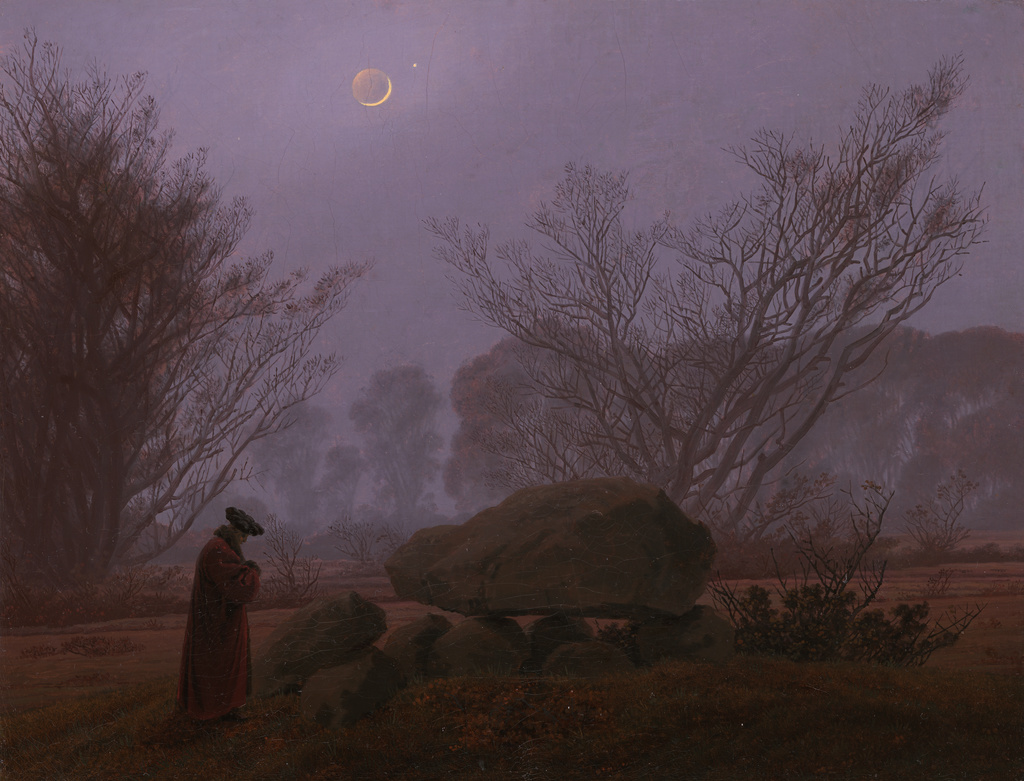
Caspar David Friedrich (1774 - 1840), A Walk at Dusk (around 1830-35). From the J. Paul Getty Museum, Los Angeles, distributed via the Getty's Open Content Program.

Caspar David Friedrich (1774 - 1840), A Walk at Dusk (around 1830-35). From the J. Paul Getty Museum, Los Angeles, distributed via the Getty's Open Content Program.

More from Michael of Ephesus on dreams

Humboldt-Universitaet zu Berlin
February 02, 2017 by Sean Coughlin in Philosophy

Michael is again talking about his dreams.  Here, he comments on a passage from On prophesying by dreams. Aristotle says in this passage that dreams are more vivid when they involve things we are anxious or thinking about. Michael disagrees--dreams about our anxieties (or even our recent conscious thoughts) are not the only ones that can be extremely vivid. We can have dreams about things that are not on our minds, as well, that feel just as bright and real. As an example, he mentions a dream he had about a colleague who died when he was young, and whom he (curiously) distinguishes from his current, more famous, colleague and collaborator on ‘the discourses’. The names of both have been lost to time.

"And in fact [we have vivid dreams] even if something else should appear to us, [something] which we are not [currently] thinking about. Like the time I saw my colleague in a dream—not my famous [colleague], who is alive and working with me on the discourses (τοὺς λόγους), but another one who, because of the quick approach of death, wrote down only a few works in philosophy—anyway, I saw the one who died long ago in a dream; he was discussing things with me which I had not thought about during that whole month, or even the month before, [but which I] had thought about a lot in earlier times. For both my questions to him and his answers to me were about the soul."

καὶ γὰρ κἂν ἄλλο τι ἡμῖν φαίνηται, οὗπερ οὐ φροντίζομεν· ὥσπερ ἐμοὶ ἰδόντι τὸν ἐμὸν ἑταῖρον, οὐχὶ τὸν κλεινόν μοι τουτονί, ὅστις ἔτι μοι ζῶν συμπονεῖ περὶ τοὺς λόγους, ἀλλ' ἄλλον ὀλίγους ἐν φιλοσοφίᾳ πόνους καταβεβληκότα διὰ τὴν τοῦ θανάτου σύντομον προσέλευσιν, ἐγὼ γοῦν ἐκεῖνον πάλαι θανόντα εἶδον καθ' ὕπνον διαλεγόμενόν μοι, περὶ ὧν ἐγὼ κατ' ἐκεῖνον ὅλον τὸν μῆνα καὶ ἔτι τὸν πρὸ ἐκείνου οὐκ ἐφρόντισα, πρότερον πολλὰ φροντίσας· ἦσαν γὰρ περὶ ψυχῆς αἱ ἐμαί τε πρὸς ἐκεῖνον ἐρωτήσεις κἀκείνου πρός με αἱ ἀποκρίσεις.

Michael of Ephesus, In parva naturalia commentaria, CAG 22.1, 85,3-11 Wendland

February 02, 2017 /Sean Coughlin
Michael of Ephesus, dreams, Parva Naturalia, Commentaries, Death, Memory
Philosophy
Comment
Dinner in Pompei. Da Pompei, Casa del Granduca di Toscana, IC 2, 27 Napoli, Museo Archeologico Nazionale. From the exhibition Mito e Natura that took place at the Palazzo Reale in Milan (31 July 2015 - 10 January 2016). Image from the Mila…

Dinner in Pompei. Da Pompei, Casa del Granduca di Toscana, IC 2, 27 Napoli, Museo Archeologico Nazionale. From the exhibition Mito e Natura that took place at the Palazzo Reale in Milan (31 July 2015 - 10 January 2016). Image from the Milan Museum Guide.

Athenaeus of Attalia on meats by season

Humboldt-Universität zu Berlin
January 12, 2017 by Sean Coughlin in Ancient Medicine

I once read somewhere that there are antecedents to Aristotle's system of animal classification in Greek classifications of kinds of foods. And it isn't hard to find references in the Historia Animalium to kinds of animals that are edible, kinds which are more or less nutritious, and the times of year when they are particularly good to eat. For example, HA v. 30 notes male cicadas are better to eat before mating, while female cicadas are better to eat after mating. And HA viii. 13 notes that fish that live close to the shore are more nutritious than those that live in the deep sea. I find it difficult to understand how these categories would have been useful for the biologist; and Aristotle himself doesn't mention them much at all when he gets into the causal treatises on animals.

But even if Aristotle is not ultimately interested in them, it is possible the culinary categories in the Historia Animalum are coming from Aristotle's sources. And in Greek medicine we find such categories playing an important role in works on nutrition. In these contexts, they help to answer a fundamental question: what foods are healthy, when are the healthiest, and how can I know?

Today, it seems we tend to associate the "when" question with fruits and vegetables. But, animals, too, are seasonal foods. There's even a Huffington Post article on this from a few years ago. Animals are better or worse for eating at different times, just like apples and cucumbers. And even though food production does not rely as much on natural cycles as it did, there are still traces of this knowledge in foods we associate with seasonal holidays: e.g., goose at Christmas, or lamb at Pesach or Easter.

Here is an example of a medical text concerning seasonal meats. It is from Oribasius' Medical Collections, but it seems to come originally from Athenaeus of Attalia, which would put it sometime around the end of the first century BCE and the beginning of the first century CE.

"Pigs <after> spring-time are very bad until the setting of the Pleiades in autumn, but from then until spring are excellent. Goats are very bad throughout the winter, but during the spring they start to get better until the setting of Arcturus. And sheep, these are worst throughout the winter, but after the [spring] equinox fatten-up until the summer solstice; cattle, on the other hand, [fatten-up] when the grass goes to seed, while the spring is ending, and all summer long. Of birds, some are excellent throughout the winter, namely whichever appear during the winter: the blackbird, thrush and ringdove. Throughout the autumn, francolins, also blackcaps, fig-pecker and greenfinch, and quails are then fattest. Chickens throughout the winter are not in quite their best shape, especially at the time of the south winds. The turtle dove is best at autumn."

Σύες μὲν <μετὰ > τὴν ἐαρινὴν ὥραν εἰσὶ κάκιστοι μέχρι Πλειάδος δύσεως φθινοπωρινῆς, τὸ δ’ ἐντεῦθεν μέχρι ἦρος κάλλιστοι. αἶγες δὲ τὸν μὲν χειμῶνα κάκισται, τοῦ δ’ ἦρος ἄρχονται κρείσσους γίνεσθαι μέχρι Ἀρκτούρου δύσεως. πρόβατα δὲ καὶ ταῦτα τὸν μὲν χειμῶνα κάκιστα, μετὰ δὲ τὴν ἰσημερίαν πιαίνεται μέχρι τροπῶν θερινῶν· αἱ δὲ βόες, ὅταν ἡ πόα ἐκκαρπῇ ἦρός τε παυομένου καὶ τῷ θέρει παντί. τῶν δ’ ὀρνίθων οἱ μὲν κατὰ χειμῶνα κάλλιστα ἔχουσιν, ὅσοι γε ἐπιφαίνονται χειμῶνος, ὁ κόσσυφός τε καὶ ἡ κίχλα καὶ φάσσα· οἱ δ’ ἀτταγῆνες κατὰ τὸ φθινόπωρον καὶ μελαγκόρυφοι συκαλίς τε καὶ χλωρὶς καὶ ὄρτυγες τηνικαῦτα πιότατοι. ἀλεκτορίδες τὸν μὲν χειμῶνα οὐ πάνυ εὐσωματοῦσι καὶ μάλιστα ἐν νοτίοις· ἡ δὲ τρυγὼν ἐν φθινοπώρῳ καλλίστη. τῶν δ’ ἰχθύων οἱ μὲν ἐν τῇ κυήσει κάλλιστοι, κάρις, κάραβος καὶ τὰ μαλάκια, τευθίς, σηπία, τὰ δ’ ὅταν ἄρχηται ἐπωάζεσθαι, ὥσπερ οἱ κέφαλοι, ὑπερπλησθέντες δ’ οὗτοι τῶν κυημάτων λεπτοὶ καὶ ἄτροφοι καὶ ἔτι μᾶλλον τεκόντες. ὁ δὲ θύννος πιότατος μετ’ Ἀρκτοῦρον, θέρους δὲ χείρων.

Oribasius, Collectiones Medicae I 3, CMG VI 1,1 8,27-9,7 Raeder

January 12, 2017 /Sean Coughlin
seasonal food, Aristotle, Oribasius, seasons, Athenaeus of Attalia
Ancient Medicine
Comment
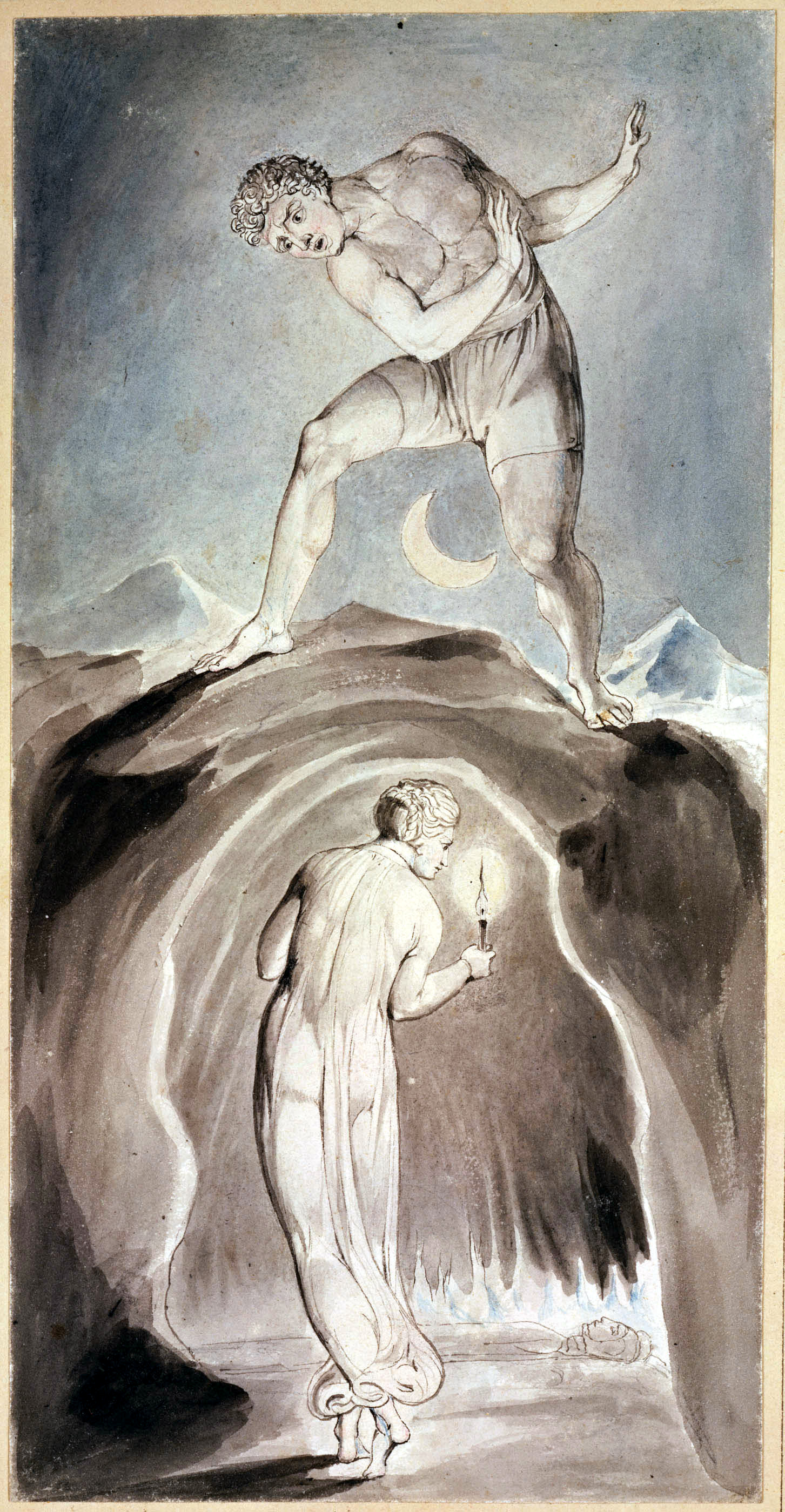
“The Soul Exploring the Recesses of the Grave” from William Blake’s The Grave (1806). Public domain via the University of Adelaide.

“The Soul Exploring the Recesses of the Grave” from William Blake’s The Grave (1806). Public domain via the University of Adelaide.

A Neoplatonist’s Hymn

Humboldt-Universität zu Berlin
January 04, 2017 by Sean Coughlin in Philosophy

“I once heard someone singing

Two souls were passing on, and one said to the other, where must we go?* 

Some time later, I heard another person singing the tune and the rhythm to which Two souls were passing on was sung, but the words and the meaning were not the ones from before. Instead they were

The First Reason leads me and again downward brings me.**

Like I said, both this song and the earlier song were sung to the same rhythm. When [my soul] had been moved here and there by [this] rhythm, I remembered the place I had first heard it, then [I remembered] the man who sang it, and then the [lyrics] ‘Two souls were passing on’ and the rest. There are, then, certain traces in the soul which follow one another by necessity, in which it is impossible that [the memories] that come next will not follow once [the soul] is set in motion.”

πάλιν ἤκουσά του ᾄδοντος “δύο ψυχαὶ ἐξήρχοντο, καὶ μία πρὸς ἄλλην ἔλεγε, ποῖ πορευτέον”.* μετὰ δέ τινας χρόνους ἤκουσα ἄλλου ᾄδοντος τὸ μὲν μέλος καὶ τὸν ῥυθμὸν ἐκεῖνον, καθ' ὃν ᾔδετο τὸ “δύο ψυχαὶ ἐξήρχοντο”, ἡ δὲ λέξις καὶ ἡ ἔννοια οὐκ ἐκείνη, ἀλλ' ἦν ὅτι “ὁ νοῦς ὁ πρῶτος ἄγει με καὶ πάλιν κάτω φέρει”. ᾔδετο οὖν, ὥσπερ εἶπον, τῷ αὐτῷ ῥυθμῷ καὶ ταῦτα καὶ ἐκεῖνα· ἀφ' οὗ ῥυθμοῦ πρῶτον ἀνεμνήσθην κινηθεὶς ὧδε κἀκεῖσε τὸν τόπον, ἐν ᾧ ἤκουσα τοῦ ῥυθμοῦ, εἶτα τὸν ᾄδοντα ἄνθρωπον, καὶ τότε τὸ “δύο ψυχαὶ ἐξήρχοντο” καὶ τὰ ἑξῆς. εἰσὶ μὲν οὖν τύποι τινὲς ἐξ ἀνάγκης ἀκολουθοῦντες ἀλλήλοις, ἐν οἷς ἀδύνατόν ἐστι τούτου κινηθέντος μὴ ἕπεσθαι καὶ τὸν ἑξῆς.

Michael of Ephesus, In parva naturalia commentaria, CAG 22.1, 24,23-25,3 Wendland

*This song does not come up with a TLG search, except for the paraphrase in “Themistius” (Sophonias?), in Parva Naturalia, CAG 5.6 8,25.

**I haven’t found this song in a TLG search either, except for the “Themistius” paraphrase: in PN CAG 5.6 8,27-8.

January 04, 2017 /Sean Coughlin
Michael of Ephesus, Death, Song, Hymns, Ancient music, Memory, Recollection, soul
Philosophy
Comment
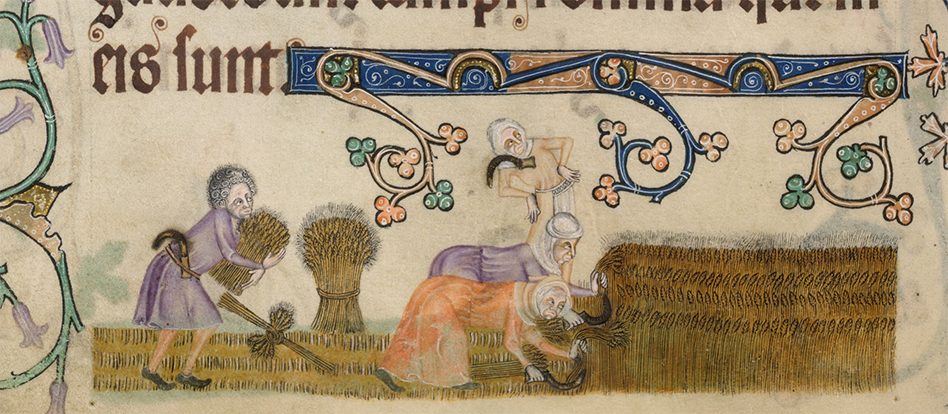
Harvesting with tunics. Detail from British Library Add MS 42130, the Luttrell Psalter, f.172v. From the British Library digitised manuscripts collection.

Harvesting with tunics. Detail from British Library Add MS 42130, the Luttrell Psalter, f.172v. From the British Library digitised manuscripts collection.

Advice for autumn weather

Humboldt-Universität zu Berlin
September 22, 2016 by Sean Coughlin in Ancient Medicine

“At times when it varies between hot and cold on the same day, one must expect the illness of autumn.”

Ἐν τῇσιν ὥρῃσιν, ὅταν τῆς αὐτῆς ἡμέρης ὁτὲ μὲν θάλπος, ὁτὲ δὲ ψῦχος γένηται, φθινοπωρινὰ τὰ νουσήματα προσδέχεσθαι χρή.

Hippocrates, Aphorisms III 4, IV 483 Littré

“When it comes to the weather in late autumn, one must be extremely cautious, since it is variable. Therefore, you mustn’t go walking around barefoot in the early morning and the afternoon, and you mustn’t jump into cold water naked. You also mustn’t go harvesting crops without your tunic on, even if you think the cold air is pleasant and gratifying—it is so difficult to prepare for bad weather, especially when the damage slips in with what seems pleasant. Stay away from the cool breezes coming off of rivers and lakes—they not only cool you down, but they also moisten your dispositions. And make sure to guard against rich foods, like thick and astringent new wines, crackers made from very fine flour, dates, raisins, eggs, snails, grape hyacinths, very meaty fish, sliced sausages, lamb, and mutton. Also, don’t forget to get a bit of exercise.”

τὰς δ’ ἐν τῷ μετοπώρῳ πολλῷ μᾶλλον δεῖ εὐλαβεῖσθαι· γίνονται γὰρ μετ’ ἀνωμαλίας. δεῖ τοίνυν μήτε ἀνυποδέτους περὶ τὸν ὄρθρον καὶ τὸ δείλης διάγειν μήτε ἀσκέπως εἰς ψυχρὸν ὕδωρ ἐμβαίνειν μήτε ἀχίτωνας θερίζοντας διὰ τὸ κεχαρισμένον καὶ ἡδὺ τῆς ψύξεως· τοσοῦτον γὰρ τὸ κακὸν δυσφύλακτον ὅσῳπερ καὶ τὴν ἡδονὴν ὑποδύεται τὸ βλάπτον. ἐκκλιτέον δὲ καὶ τὰς ὑπαίθρους κοίτας καὶ τὰς ἀπὸ τῶν ποταμῶν καὶ λιμνῶν ἀποπνεούσας αὔρας· οὐ γὰρ μόνον ψύχουσιν, ἀλλὰ καὶ ὑγραίνουσι τὰς ἕξεις. φυλακτέον δὲ καὶ τὰ πολύτροφα καὶ τὰ παχυντικὰ τῶν προσφερομένων, οἷον οἶνον νέον καὶ παχὺν καὶ στυπτικόν, ἄρτον σεμιδαλίτην ἄζυμον, φοίνικας, σταφίδας, ὠά, κοχλίας, βολβούς, ἰχθύων τοὺς πολυσάρκους, ταρίχων τοὺς τεμαχιστούς, κρεῶν τὰ ἄρνεια καὶ προβάτεια. οὐκ ἀμελητέον δ’ οὐδὲ τῶν γυμνασίων.

Athenaeus of Attalia in Oribasius, Medical Collections libri incerti 41, CMG VI 2,2 148,4-16 Raeder

“Autumn is less hot than summer, but less cold than winter. Thus, it is not simply hot or cold, since it is both, and neither of them in excess. But there is a different problem with it, one Hippocrates also mentioned in the Aphorisms, when he says: “whenever it varies between hot and cold on the same day, one must expect the illnesses of autumn” (Aphorisms III 4). And surely this is what makes autumn most likely to bring about illness: the variability of the mixture. So, it is not right to call it cold and dry, since it is not observed to be cold in itself, like winter, but compared with summer it is colder. And yet it is not evenly well mixed, like the spring, but it is different from that season in that it does not have a consistent good mixture and evenness through the whole day. For it is much hotter during midday than at dawn or dusk. Also, unlike spring, it is not precisely balanced between wet and dry, but it tends towards dryness. It has less dryness than summer, but not as much as it lacks heat. Clearly, then, as autumn is not to be called simply, as those others say, cold and dry. It has neither in extreme; sure, the dry does predominate over the wet, and one might rightly call it dry. But with respect to the difference between hot and cold, it is a mixture of both and it is variable.”

Ἀλλὰ καὶ τὸ φθινόπωρον ἧττον μὲν ἢ τὸ θέρος θερμόν, ἧττον δ' ἢ ὁ χειμὼν ψυχρόν. ὥστε ταύτῃ μὲν οὔτε θερμὸν ἁπλῶς οὔτε ψυχρόν, ἀμφότερα γάρ ἐστι, καὶ οὐδέτερον ἄκρως. ἕτερον δέ τι πρόσεστιν αὐτῷ κακόν, ὅπερ ἐπεσημήνατο καὶ Ἱπποκράτης ἐν Ἀφορισμοῖς εἰπών· ‘ὁκόταν τῆς αὐτῆς ἡμέρης ὁτὲ μὲν θάλπος, ὁτὲ δὲ ψῦχος ποιέῃ, φθινοπωρινὰ τὰ νοσήματα προσδέχεσθαι χρή’. καὶ τοῦτό γ'ἐστὶ τὸ μάλιστα νοσῶδες ἐργαζόμενον τὸ φθινόπωρον, ἡ ἀνωμαλία τῆς κράσεως. οὐκ ὀρθῶς οὖν εἴρηται ψυχρὸν καὶ ξηρόν, οὐ γάρ ἐστι ψυχρὸν αὐτὸ καθ' αὑτὸ θεωρούμενον, ὥσπερ ὁ χειμών, ἀλλὰ τῷ θέρει παραβαλ|λόμενον ἐκείνου ψυχρότερον. οὐ μὴν οὐδ' ὁμαλῶς εὔκρατον, ὡς τὸ ἔαρ, ἀλλ' ἐν τούτῳ δὴ καὶ μάλιστα διενήνοχεν ἐκείνης τῆς ὥρας, ὅτι τὴν εὐκρασίαν τε καὶ τὴν ὁμαλότητα διὰ παντὸς ἴσην οὐ κέκτηται. πολὺ γὰρ θερμότερόν ἐστι κατὰ τὴν μεσημβρίαν ἢ κατὰ τὴν ἕω τε καὶ τὴν ἑσπέραν. ὑγρότητος δὲ καὶ ξηρότητος οὐκ ἀκριβῶς μέν ἐστι μέσον, ὡς τὸ ἔαρ, ἀλλ' ἐπὶ τὸ ξηρότερον ῥέπει. λείπεται δὲ κἀν τούτῳ τοῦ θέρους, οὐ μὴν τοσοῦτόν γ' ὅσον θερμότητι. δῆλον οὖν, ὡς οὐδὲ τὸ φθινόπωρον ἁπλῶς οὕτω ῥητέον, ὡς ἐκεῖνοι λέγουσι, ψυχρόν τ' εἶναι καὶ ξηρόν. ἄκρως μὲν γὰρ οὐδέτερόν ἐστιν, ἐπικρατεῖ δ' ἐν αὐτῷ τὸ ξηρὸν τοῦ ὑγροῦ καὶ δικαίως ἂν λεχθείη ταύτῃ μὲν ξηρόν, ἐν δὲ τῇ κατὰ θερμότητα καὶ ψυχρότητα διαφορᾷ μικτὸν ἐξ ἀμφοῖν καὶ ἀνώμαλον.

Galen, De temperamentis i 4, I 527-528 Kühn

September 22, 2016 /Sean Coughlin
autumn, regimen, firstdayoffall, Athenaeus of Attalia, whatsfordinner
Ancient Medicine
Comment
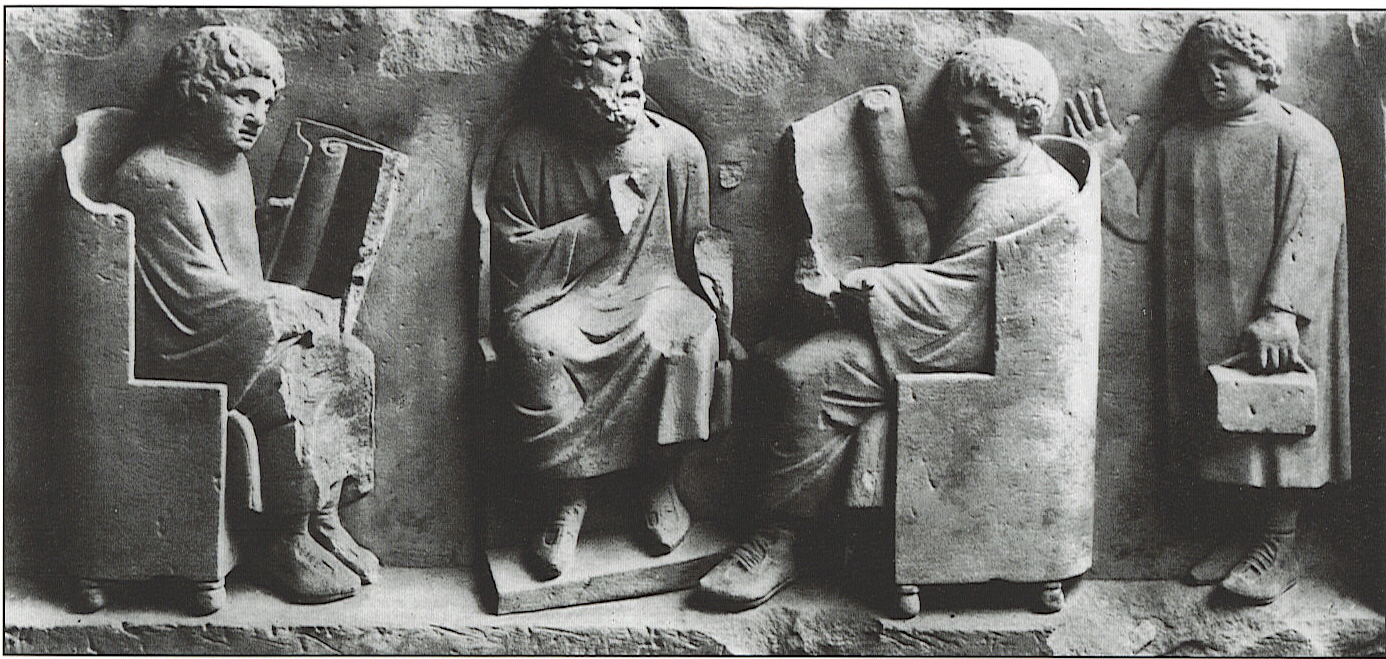
A young boy arrives late for class. Detail from a funerary monument (c. 185 CE),&nbsp;found at Neumagen near Trier and held at the Rheinisches Landesmuseum Trier. Image unattributed, found at The Classics Library.

A young boy arrives late for class. Detail from a funerary monument (c. 185 CE), found at Neumagen near Trier and held at the Rheinisches Landesmuseum Trier. Image unattributed, found at The Classics Library.

Athenaeus’ Back to School Advice

Humboldt-Universität zu Berlin
September 14, 2016 by Sean Coughlin in Ancient Medicine

A fragment from the lost works of Athenaeus of Attalia, preserved in Oribasius, libri incerti 39:

“From six and seven-years, give your children over to gentle and benevolent elementary school teachers. Educators who teach using a combination of persuasion and compassion, and who offer lots of praise as well, are successful teachers and will encourage the children more. Also, their teaching is accompanied with joy and relaxation, and when the soul is relaxed and joyful, it contributes a good deal to the body’s thriving. But those educators who are relentless with their punishments will end up making the children miserable, fearful, and hostile to education. When they thrash their students, they are forcing them to learn and memorize things at the exact same moment they are being punished—in other words, when the children are least likely to be able to think! Also, don't oppress new students for the whole day with lessons. Instead, give over a greater portion of the day to amusement. In fact, we see among children who are pretty strong and mature for their age that, when they are always working hard at their lessons, their bodies become thoroughly corrupted.

“Twelve-year old children should go to geometry teachers as well as elementary teachers, and they should start taking gym. Also, their helpers and supervisors should be sound-minded and not completely inexperienced. This way, you know they will keep track of the proper times and portions of food, exercise, baths, sleep and everything else that has to do with being healthy. I feel I need to say this because most people spend a lot of of money hiring someone to groom their horse, making sure to choose a person who is careful and experienced; but, regarding a supervisor for their children, the same people will hire someone with no experience, or who is completely useless, and who cannot help at all in matters of life.”

ἀπὸ δὲ τῶν ϛˊ καὶ ζˊ ἐτῶν τούς τε παῖδας καὶ τὰς κόρας γραμματισταῖς παραδιδόναι πραέσι καὶ φιλανθρώποις· οἱ μὲν γὰρ προσαγόμενοι τὰ παιδία καὶ πειθοῖ καὶ παρακλήσει διδάσκοντες, πολλάκις δὲ καὶ ἐπαινοῦντες, ἐπιτυγχάνουσι προτρέπονταί τε αὐτοὺς μᾶλλον καὶ μετὰ χαρᾶς καὶ ἀνέσεως διδάσκουσιν (ἡ δ’ ἄνεσις καὶ χαρὰ τῆς ψυχῆς εἰς εὐτροφίαν σώματος μεγάλα συμβάλλεται)· οἱ δ’ ἐπικείμενοι τῇ διδασκαλίᾳ καὶ πικροὶ ταῖς ἐπιπλήξεσι δουλοπρεπεῖς αὐτοὺς <καὶ> καταφόβους ποιοῦσι καὶ ἀλλοτρίους πρὸς τὰς μαθήσεις· δέροντες γὰρ μανθάνειν καὶ μνημονεύειν ἀναγκάζουσιν ἐν αὐταῖς ὄντας ταῖς πληγαῖς, ὅτε καὶ τοῦ φρονεῖν ἔξω γεγόνασιν. οὐκ ἀναγκαῖον δ’ οὐδὲ δι’ ὅλης τῆς ἡμέρας θλίβειν τοὺς ἀρτιμαθεῖς, μερίδα δὲ διδόναι παιδιᾷ αὐτῶν πλείονα· ὁρῶμεν γὰρ καὶ τῶν ἰσχυροτέρων καὶ τετελειωμένων ταῖς ἡλικίαις τοὺς ἐπιμελῶς καὶ ἀδιαλείπτως προσεδρεύοντας τοῖς μαθήμασι καταφθειρομένους τοῖς σώμασιν.

τοὺς δὲ δωδεκαετεῖς τῶν παίδων πρός τε γραμματικοὺς φοιτᾶν ἤδη καὶ γεωμέτρας καὶ τὸ σῶμα γυμνάζειν· ἀναγκαῖον δὲ νουνεχεῖς εἶναι τούς τε παιδαγωγοὺς αὐτῶν καὶ τοὺς ἐπιστάτας καὶ μὴ τελείως ἀπείρους, ὅπως τούς τε καιροὺς καὶ τὰς συμμετρίας ἴδωσι τροφῆς, γυμνασίων, λουτρῶν, ὕπνου, τῶν ἄλλων τῶν κατὰ τὴν δίαιταν· οἱ γὰρ πολλοὶ τῶν ἀνθρώπων ἱπποκόμους μὲν πλείονος ὠνοῦνται τοὺς ἐπιμελεῖς καὶ ἐμπείρους ἐκλεγόμενοι, παιδαγωγοὺς δὲ τῶν τέκνων καθιστᾶσι τοὺς ἀπείρους καὶ ἀχρήστους ἤδη γεγονότας καὶ μηδὲν ἔτι δυναμένους ὑπηρετεῖν τῶν κατὰ τὸν βίον.

Oribasius, libri incerti 39.3-5, CMG VI 2,2 138,28-139,15 Raeder

September 14, 2016 /Sean Coughlin
back to school, regimen, Oribasius, education, Medicine of the mind, history of education, Athenaeus of Attalia
Ancient Medicine
1 Comment
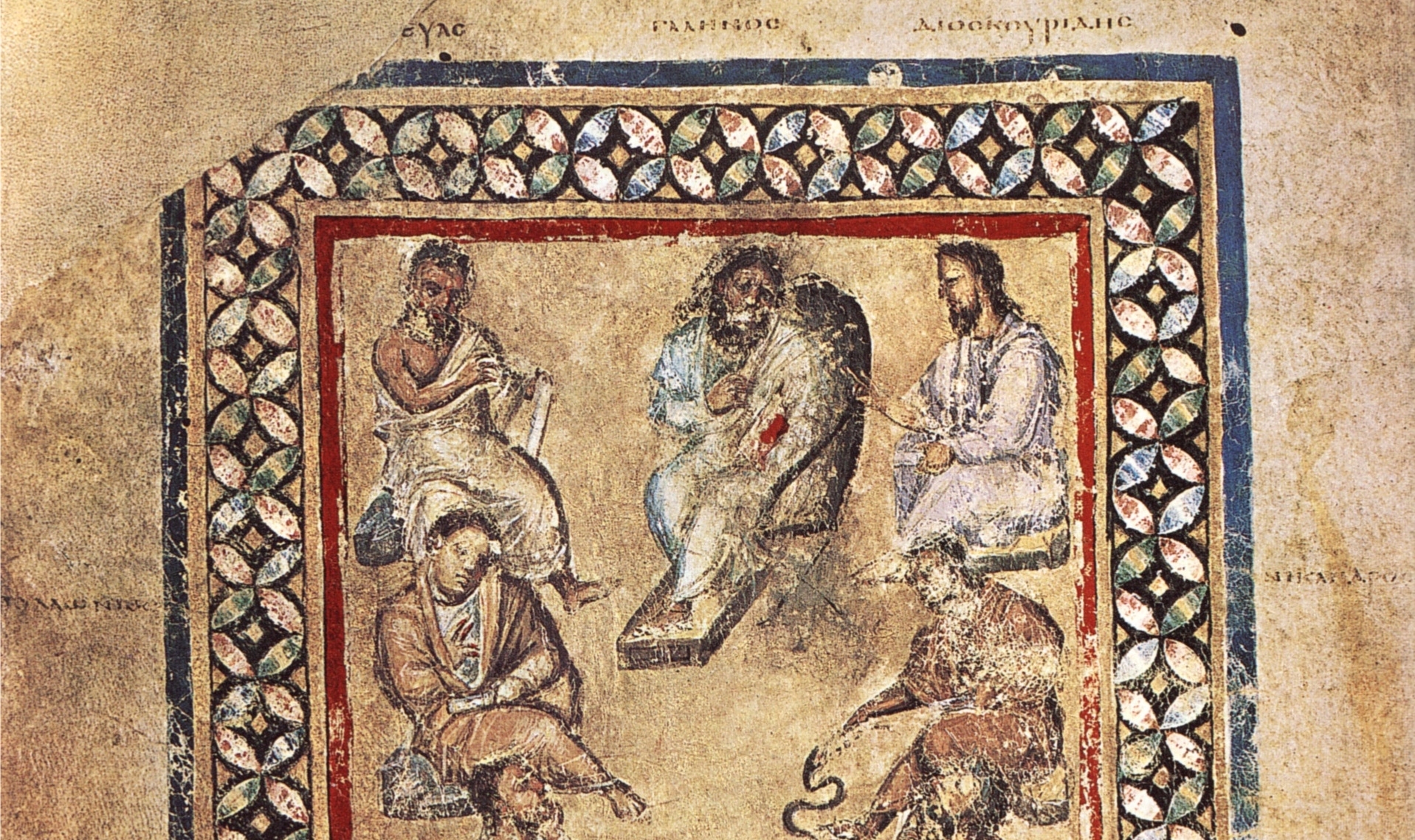
Image: folio 3v of the Vienna Dioscorides MS (produced around 500 CE). Public domain via Wikimedia Commons.&nbsp;Clockwise from left: Apollonius (unclear which one); Krateus; Galen; Dioscorides; Nicander. Included on folio 3v but not pictured here: …

Image: folio 3v of the Vienna Dioscorides MS (produced around 500 CE). Public domain via Wikimedia Commons. Clockwise from left: Apollonius (unclear which one); Krateus; Galen; Dioscorides; Nicander. Included on folio 3v but not pictured here: Andreas and Rufus.

Solids, Liquids, Gases

September 02, 2016 by Sean Coughlin in Ancient Medicine

On the style of Epidemics 6, Wesley Smith (who translated the text for the Loeb Classical Library) writes: 

“[The Epidemics] are technical prose from a time when prose was coming into being and authors were realizing its potential: unique jottings by medical people in the process of creating the science of medicine.”

Hippocrates VII: Epidemics 2 & 4-7, Harvard University Press, 1994, p.2

The Epidemics is a text without a model, an attempt to capture in writing the experience and practice of medicine. The style, Smith thinks, manifests this naivety. He refers to it as the text’s “innocence” — innocent from later conventions and styles that would come to characterize medical and scientific writing. This innocence makes the Epidemics (like other Hippocratic writings) quite unique; it also makes it quite difficult to read.

Later medical texts look almost nothing like the Epidemics. Medical writers pretty quickly developed standards of exposition that made their writing easier to follow, and one of the effects of this standardization was that a medical text came to be recognizable as such, a distinct form of writing with its own questions, rules, vocabulary and order.

This innovation is already evident in the fourth century, in Diocles’ writings. He had structured his writing on regimen according to times of day, with each time divided into parts dealing with appropriate foods and exercises. Writers on disease, too, began to structure their works: some, according to the location of diseases from head to toe; some, by diseases according to whether they were acute or chronic; some into sections on cause and treatment. And a standard form of medical text, called Remedies  (Peri Boêthêmatôn) was developed by the Pneumatist school, which divided remedies according to the way they acted on the body.

Certainly some authors were not as clear as all this. Dioscorides’ Materia Medica (Peri Hulês) follows a notoriously obscure structure, something later authors complained about. It would have been easier, they thought, if he had ordered things alphabetically. But this just shows that doctors were thinking about the form medical writing should take, and began to adopt standards to avoid the type of obscurity we find in the Epidemics. 

Epidemics 6, however, was also canonical, at least to those sympathetic to Hippocratic medicine. The style of the text may have been obscure, but most everyone who practiced Hippocratic-style medicine would have been familiar with it. And interpreting the text became a way of debating new ideas about what medicine is and how it should be practiced.

Evidence of a tradition of interpretation exists, preserved for the most part by Galen, but also in earlier authors like Dioscorides and Athenaeus and later ones like Palladius. For these Hippocratic doctors, the Epidemics could not simply be read. It needed to be deciphered. And part of the game of interpretation seems to have been to show that, whatever new idea they were promoting, the insight was already present in the writings of Hippocrates (or by showing, especially in the case of Epidemics 6, that parts of it were not by Hippocrates at all, and so could be ignored).

Now, one passage from Epidemics 6 was generally agreed to be a kind of keystone for the whole work. It is found at Epidemics 6.8.7:

“Things from the small tablet to be observed. Regimen consists in repletion and evacuation of foods and drinks. Changes of these: what from what, how it is. Odors: pleasant, noxious, filling, tempting. Changes, from what kinds of things, how they are. The pneumata that come in or go out, [solid] bodies also. Better sounds, and those that harm. And of the tongue, what things are evoked by what. Pneuma, what is hotter to the tongue, colder, thicker, thinner, dryer, wetter, filled up, less and greater. From what come changes, what out of what kinds of things, how they are. Things that contain, impart impulse, or are contained. Speech, silence, saying what one wishes. The words, what one says, either loud or many, truthful or fraudulent. (Smith trans., modified)”

τὰ ἐκ τοῦ σμικροῦ πινακιδίου σκεπτέα. δίαιτα γίνεται πλησμονῇ, κενώσει, βρωμάτων, πομάτων· μεταβολαὶ τούτων, οἷα ἐξ οἵων, ὡς ἔχει. ὀδμαὶ τέρπουσαι, λυποῦσαι, πιμπλῶσαι, πειθόμεναι· μεταβολαὶ, ἐξ οἵων οἵως ἔχουσιν. τὰ ἐσπίπτοντα, ἢ ἐξιόντα πνεύματα, ἢ καὶ σώματα. ἀκοαὶ κρείσσονες, αἱ δὲ λυποῦσαι. καὶ γλώσσης, ἐξ οἵων οἷα προκαλεῖται. πνεῦμα, τὸ ταύτη θερμότερον, ψυχρότερον, παχύτερον, λεπτότερον, ξηρότερον, ὑγρότερον, πεπληρωμένον, μεῖόν τε καὶ τὸ πλεῖον· ἀφ' ὧν αἱ μεταβολαὶ, οἷαι ἐξ οἵων, ὡς ἔχουσιν. τὰ ἴσχοντα, ἢ ὁρμῶντα, ἢ ἐνισχόμενα. λόγοι, σιγὴ, εἰπεῖν ἃ βούλεται· λόγοι, οὓς λέγει, ἢ μέγα, ἢ πολλοὶ, ἀτρεκεῖς, ἢ πλαστοί. (V 344-6 Littré)

(I’ve adopted some of the changes suggested by Smith in the Loeb text and ignored others. Notably, I’ve left out “σώματα” after “ἐνισχόμενα”, following Littré, since as Littré pointed out, no one in antiquity mentions it being there.)

This text has puzzled interpreters for a long time. It is elliptical, confident, and somewhat mysterious. But later doctors saw in it the basis of a system: a list of observations that need to be made in order to assess the health of a patient. 

Two aspects of the list were to become especially important in later medical writers. One is the distinction of pneuma into hot, cold, thick, thin, wet or dry. This distinction has an interesting history that I hope to come back to. But here I want to focus on the distinction of things into “containing, imparting impulse, and contained (τὰ ἴσχοντα, ἢ ὁρμῶντα, ἢ ἐνισχόμενα).” 

We have been working on tracing this distinction for a paper we’re writing on the Pneumatist school. It came to be associated with a way of understanding human physiology that would have a long influence: the division of the constituents of the body into solid parts, humours, and pneuma. It is explicitly mentioned in Galen, the pseudo-Galenic Introduction, pseudo-Alexander on Fevers. It might be in Nicolaus of Damascus On Plants. And in De causis contentivis, especially in chapter 4, Galen hints that it played some role in Pneumatist physiology and causal theory. 

This left us with a bit of a puzzle. How did a distinction of the body into containing parts, parts imparting impulse, and contained parts come to be identified with solids, liquids and gases? This is far from obvious and there is nothing in the text of the Epidemics that suggests it. Why would anyone have interpreted the text this way? Why did it become widely accepted? And how is it related to other ways of describing human physiology, for example, in terms of the elements (...interesting that the distinction is absent from the Definitiones...)?

We looked through the literature, but didn’t find anything substantial. So I thought I would gather all the texts here to make them available. Some of them are still untranslated, and there are likely more texts than the ones below. I will continue to translate and add more as we find them. But hopefully it will be something of a start to sorting out how this interpretation of Epidemics 6 came about and why it became so influential.


I
The Pseudo-Galenic author of Introduction or The Physician

“Others say the human is in fact composed out of three compounds, as well, from wet things, dry things and pneumata. Hippocrates calls them things containing, things contained and things which impart impulse. Containing are whatever are solid bodies—bones, nerves, veins and arteries—out of which muscles, flesh, and every mass of the body are compounded, both internal and external structures. Contained are the wet things carried in the channels and scattered through the whole body, what Hippocrates calls the four humours previously mentioned. Things which impart impulse are the pneumata. According to the ancients, there are two pneumata: psychic and natural. The Stoics also add a third: hectic, which they call a state.”

οἱ δὲ ἐκ τῶν τριῶν καὶ συνθέτων τὸν ἤδη γενώμενον ἄνθρωπον ἐκ τῶνδέ φασι συγκεῖσθαι, ἔκ τε τῶν ὑγρῶν καὶ ξηρῶν καὶ πνευμάτων. καλεῖ δὲ αὐτὰ Ἱπποκράτης ἴσχοντα, ἰσχόμενα καὶ ἐνορμῶντα. ἴσχοντα μὲν οὖν ἐστιν ὅσα στερεὰ, ὀστᾶ καὶ νεῦρα καὶ φλέβες καὶ ἀρτηρίαι, ἐξ ὧν οἵ τε μύες καὶ αἱ σάρκες καὶ πᾶς ὁ τοῦ σώματος ὄγκος πέπλεκται, τῶν τε ἐντὸς καὶ τῶν ἐκτὸς τὰ συγκρίματα. ἰσχόμενα δέ ἐστι τὰ ὑγρὰ τὰ ἐν τοῖς ἀγγείοις ἐμφερόμενα καὶ κατὰ πᾶν τὸ σῶμα διεσπαρμένα, ἅπερ καλεῖ Ἱπποκράτης χυμοὺς τέσσαρας τοὺς προειρημένους. ἐνορμῶντα δέ ἐστι τὰ πνεύματα. πνεύματα δὲ κατὰ τοὺς παλαιοὺς δύο ἐστὶ, τό τε ψυχικὸν καὶ τὸ φυσικόν. οἱ δὲ Στωϊκοὶ καὶ τρίτον εἰσάγουσι τὸ ἑκτικὸν, ὃ καλοῦσιν ἕξιν.

[Galen] Introductio 9, 14.696.14-697.8 K

“Hippocrates, then, put forward three, saying the elements of man are things contained, containing and imparting impulse, through which he included all the elements of those who came after him, as well as elemental physiology and the aetiology of things contrary to nature. But those after him, I don't know why, divide this divine and truly Asclepian medicine into three, although it is really a unity, and they dispersed the parts that make it up. (i) Some referred only to the humours [when explaining] the composition of things according to nature and the cause of things contrary to nature, as Praxagoras and Herophilus [did]. Others posited the solid bodies as the primary and elemental things, and believed that things are composed out of these and the causes of diseases originate from them, as Erasistratus and Asclepiades [did]. And those around Athenaeus and Archigenes claim that all the natural things are created only by means of the pneuma pervading through them and that all the diseases are governed by it, because it [sc. the pneuma] is the thing affected first – for this reason they are called Pneumatists.”

Ἱπποκράτης μὲν οὖν διὰ τριῶν κεχώρηκεν, εἰπὼν στοιχεῖα ἀνθρώπου ἴσχοντα, ἰσχόμενα, ἐνορμῶντα, δι' ὧν τὰ πάντα τῶν μετ' αὐτὸν περιείληφε στοιχεῖα καὶ τὴν κατὰ στοιχείων φυσιολογίαν τε καὶ αἰτιολογίαν τῶν παρὰ φύσιν· οἱ δὲ μετ' αὐτὸν οὐκ οἶδ' ὅπως μίαν οὖσαν τὴν θείαν ταύτην καὶ ἀληθῶς Ἀσκληπιοῦ ἰατρικὴν τριχῇ διανειμάμενοι καὶ διασπάσαντες τὰ ἐν αὐτῇ συμφυῆ μέρη, οἱ μὲν μόνοις τοῖς χυμοῖς τῶν τε κατὰ φύσιν τὴν σύστασιν καὶ τῶν παρὰ φύσιν τὴν αἰτίαν ἀνέθεσαν, ὡς Πραξαγόρας καὶ Ἡρόφιλος. οἱ δὲ τὰ στερεὰ σώματα τὰ ἀρχικὰ καὶ στοιχειώδη ὑποθέμενοι, τά τε φύσει συνεστῶτα ἐκ τούτων καὶ τῶν νόσων τὰς αἰτίας ἐντεῦθεν λαμβάνουσιν, ὡς Ἐρασίστρατος καὶ Ἀσκληπιάδης· οἱ δὲ περὶ Ἀθήναιον καὶ Ἀρχιγένην μόνῳ τῷ διήκοντι δι' αὐτῶν πνεύματι καὶ τὰ φυσικὰ συνεστάναι τε καὶ διοικεῖσθαι καὶ τὰ νοσήματα πάντα, τούτου πρωτοπαθοῦντος γίνεσθαι ἀπεφήναντο, ὅθεν καὶ πνευματικοὶ χρηματίζουσι.

[Galen], Introductio 9, 698.12-699.10 K


II
Nicolaus of Damascus, Plants (distinct tradition?)

“A plant has three powers, the first derived from the element of earth, the second from that of water, the third from that of fire. From the earth the plant derives its growth, from water its cohesion, and from fire the union of the cohesion of the plant. We see much the same thing in vessels of pottery, which contain three elements—clay, which is, as it were, the material of pottery; secondly, water, which binds the pottery together; and, thirdly, fire, which draws its parts together, until it completes the process of manufacture.”

Τὸ δένδρον τρεῖς ἔχει δυνάμεις, πρώτην ἐκ τοῦ γένους τῆς γῆς, δευτέραν ἐκ τοῦ γένους τοῦ ὕδατος, τρίτην ἐκ τοῦ γένους τοῦ πυρός. ἀπὸ τῆς γῆς γάρ ἐστιν ἡ ἔκφυσις τῆς βοτάνης, ἀπὸ τοῦ ὕδατος ἡ σύμπηξις, ἀπὸ τοῦ πυρὸς ἡ ἕνωσις τῆς συμπήξεως τοῦ φυτοῦ. Βλέπομεν δὲ πολλὰ τούτων καὶ ἐν τοῖς ὀστρακώδεσιν. Εἰσὶ γὰρ ἐν τούτοις τρία, πηλός, ἐξ οὗ γίνεται πλίνθος ὀστρακώδης, δεύτερον ὕδωρ, ὅπερ ἐστὶ τὸ στερεοῦν τὰ ὀστρακώδη, τρίτον τὸ πῦρ τὸ συνάγον τὰ μέρη αὐτοῦ, ἔστ’ ἂν δι‘ αὐτοῦ πληρωθείη ἡ τούτου γένεσις.

[Aristotle], De Plantis 2.1


III
The Pseudo-Alexandrian author of Fevers

Φανερὸν μὲν οὖν διὰ τούτων καὶ ὡς τρία μόνα τὰ ἐν ἡμῖν, ἐν οἷς ἡ παρὰ φύσιν θερμότης, μόρια, χυμοί, πνεύματα· τὰ αὐτὰ δὲ καὶ παρ' Ἱπποκράτει ἴσχοντα, ἰσχόμενα καὶ ἐνορμῶντα καλεῖται, ἴσχοντα μὲν τὰ μόρια, ἃ καὶ στερεὰ προσαγορεύεται, ἰσχόμενα δὲ οἱ χυμοί, ἐνορμῶντα δέ γε τὰ πνεύματα, ἕκαστον ἐκ τῆς ἰδίας δυνάμεως τὴν προσηγορίαν ἁρμόζουσαν εἰληφός. 

Ἴσχει μὲν γὰρ καὶ κατέχει τὰ στερεά, ἐνίσχεται δὲ καὶ ἐμπεριέχεται ὑπὸ τούτων τὰ ὑγρά τε καὶ διαρρέοντα, ταὐτὸν δὲ εἰπεῖν οἱ χυμοί, ὁρμᾷ δὲ τὰ ἐν ἡμῖν πνεύματα, λεπτομερεστάτης οὐσίας ὄντα καὶ θερμοτάτης, καὶ ῥᾷστα διὰ πάντων χωροῦντα τῶν μορίων τοῦ σώματος.

[Alexander], De febribus 17.1-2


IV
Galen, Differences of Fevers

νῦν δὲ ἀρκεῖ τό γε τοσοῦτον γινώσκειν, ὅπερ, οἶμαι, καὶ ὁ Ἱπποκράτης ἐνδεικνύμενος ἔλεγε, τὰ ἴσχοντα καὶ τὰ ἐνισχόμενα καὶ τὰ ἐνορμῶντα· ἴσχοντα μὲν αὐτὰ τὰ στερεὰ μόρια τοῦ σώματος, ἐνισχόμενα δὲ τὰ ὑγρὰ, ἐνορμῶντα δὲ τὰ πνεύματα προσαγορεύων.

Galen, De differentiis febrium, 7.278.11 K


V
Galen, On Tremor, Palpitation, Spasm and Rigor

μέμνηται δέ πως αὐτῶν ὧδε, τὰ ἴσχοντα λέγων, καὶ τὰ ἐνισχόμενα, καὶ τὰ ἐνορμῶντα· ἴσχοντα μὲν τὰ στερεὰ καλῶν, περιέχει γὰρ καὶ ἀποστέγει τὰ ὑγρά· ἐνισχόμενα δὲ, τὰ ὑγρὰ, περιέχεται γὰρ ὑπὸ τῶν στερεῶν· ἐνορμῶντα δὲ τὰ πνεύματα, πάντῃ γὰρ ἐξικνεῖται τοῦ σώματος ἐν ἀκαρεῖ χρόνῳ ῥᾳδίως τε καὶ ἀκωλύτως.

Galen, De tremore, palpitatione, convulsione et rigore, 7.597.3-9 K


VI
Galen, Commentary on Epidemics 6
(only available in Pfaff’s German translation of the Arabic summary, online at the CMG)

(V 346, 5.6 L[ittré]) Hippocrates: Das Enthaltende und das Eindringende und das Enthaltene.

Galen: Auch diese Worte erklärt jeder von den Kommentatoren anders. Die beste Erklärung ist nach meiner Meinung die Erklärung derjenigen, welche sagen, daß er unter ‘das Enthaltende’ die festen Grundkörper [solid parts] und unter ‘das Eindringende’ oder ‘das Durchdringende’—diese Worte werden auf diese beiden Arten geschrieben—die Winde [pneumata] und unter ‘das Enthaltene’ die Feuchtigkeiten [humors], die die Körper enthalten, verstehe. Hippokrates verlange also, daß man von diesen drei Dingen aus, aus denen jeder lebende Körper bestehe, untersuche und erforsche, welches die Natur und die Kraft eines jeden von ihnen sei.

Galen, In Hippocratis Epidemiarum librum VI commentaria I-VI, CMG V 10,2,2 p.446 Wenkebach


VII
Palladius, Overview of on Fevers

Ἰστέον ὅτι τῶν πυρετῶν τρία εἰσὶ τὰ γένη· τὰ μὲν γὰρ αὐτῶν ἐπὶ ὑγροῖς γίνονται καὶ ἐξάπτονται, τὰ δὲ ἐπὶ στερεοῖς, τὰ δὲ ἐπὶ πνεύμασι, περὶ ὧν ὁ Ἱπποκράτης λέγει ἴσχοντα, ἰσχόμενα καὶ ἐνορμῶντα, ἴσχοντα μὲν καλῶν τὰ στερεά, ἰσχόμενα δὲ τὰ ὑγρά, ἐνορμῶντα δὲ τὰ πνεύματα. Ὁ δὲ Γαληνὸς ἀναφέρει ὅτι ἀναμέμικται ἔν τε ταῖς ἀρτηρίαις ἁπάσαις διὰ πολλῶν ὀπῶν ἅμα πνεούσαις ἡ ἀερώδης οὐσία τῷ αἵματι καὶ κατὰ τὴν καρδίαν οὐδὲν ἧττον, ὡς ἂν σύρρους ὑπάρχουσα πάσαις αὐταῖς.

Palladius, Synopsis de febribus, 4.1-2

September 02, 2016 /Sean Coughlin
Alexander, Hippocratic Commentary, Pneumatist School, humors, pneuma, Nicolaus of Damascus, Doctors, Hippocrates, pseudogalenica, Palladius, physiology, Epidemics, Athenaeus of Attalia, Galen
Ancient Medicine
Comment
  • Newer
  • Older
 

CATEGORIES

  • Ancient Medicine
  • Botany
  • Events
  • Philosophy

SEARCH


RECENT POSTS

Featured
Dec 31, 2025
Botany, Philosophy
Concerning a Variant in the de Fuentes Manuscript
Dec 31, 2025
Botany, Philosophy
Dec 31, 2025
Botany, Philosophy
Dec 25, 2025
Ancient Medicine
How to smell nice: Galen's advice for doctors
Dec 25, 2025
Ancient Medicine
Dec 25, 2025
Ancient Medicine
Dec 23, 2025
Ancient Medicine
More on how not to talk to patients
Dec 23, 2025
Ancient Medicine
Dec 23, 2025
Ancient Medicine
Dec 13, 2025
Ancient Medicine
"Patroclus died as well" (How Not to Talk to Patients)
Dec 13, 2025
Ancient Medicine
Dec 13, 2025
Ancient Medicine
Sep 18, 2023
Ancient Medicine
Galen, Simple Drugs, Book 11, Preface (II)
Sep 18, 2023
Ancient Medicine
Sep 18, 2023
Ancient Medicine