Ancient Medicine

  • Home
  • About
  • Contact

Fresco of a woman looking in a mirror, 1st c., Villa of Arianna at Stabiae (Castellammare di Stabia), Naples National Archaeological Museum. Image by Carole Raddato via Wikimedia commons, cc-by-sa-2.0.

Aristotle on menstruating women and mirrors

Humboldt-Universität zu Berlin
July 26, 2020 by Sean Coughlin in Ancient Medicine

“It is hard to believe that the man who set aside so widespread, tenacious and respectable a belief (sc. in the divine origin of prophetic dreams) accepted as fact the superstition that when a menstruous woman looks into the mirror its surface takes on a reddish tinge which may be difficult to remove.”

W.K.C. Guthrie, Review: Aristotle. Parva Naturalia. A revised text with introduction and commentary by Sir David Ross. (Oxford, Clarendon Press 1955. Pp. xi 355. Price £2.). Philosophy, 31 (118), 274-276.

“The story of the staining of the mirror by the eyes of a menstruating woman is thus a rationalization of a pre-existing superstition, the correctness of which Aristotle was not inclined to question, because he believed himself capable of explaining it.”

“Bei der Geschichte der Befleckung des Spiegels durch die Augen einer menstruierenden Frau haben wir es also mit einer Rationalisierung eines bereits vorhandenen Aberglaubens zu tun, dessen Richtigkeit Aristoteles nicht in Frage zu stellen geneigt war, weil er zu seiner Erklärung sehr wohl fähig zu sein glaubte.”

Philip van der Eijk, Aristoteles. De insomniis, De divinatione per somnum, Übersetzt und erläutert von Philip J. van der Eijk. Berlin: Akademie Verlag, 1994, p. 182.

Superstition

I’ve been collecting texts related to a passage On Dreams where Aristotle says menstruating women tarnish a mirror when they look at it.

I think this has to be the strangest passage in Aristotle. It is not the frighteningly casual misogyny. Aristotle could have questioned his sources, something he often does, like when he questions seers’ beliefs about prophesying by dreams or when he questions fishermen’s reports of parthenogenic fish in the second book of Generation of Animals. Instead, his credulity in this case just goes to show how deeply he believed in the corrupting influence of women. The way he says it, it’s like he’s saying the most obvious thing in the world: when menstruating women look at a very bright mirror, a cloudy, bloody spot forms on the surface. If it’s a new mirror, then getting the stain out is very difficult; if it’s an older mirror, it’s easier. Like most of the men we are about to encounter, questioning this does not come up.

But for now, let’s suppose he’s picking up a common superstition. For a superstition, it is extremely specific. It’s not a lot of detail, but still weirdly specific enough to wonder if he had polished some such mirrors himself.

First, he says the mirrors need to be very clean (i.e., bright), so probably a highly polished bronze. Second, he says the newer the mirror, the harder it is to remove the tarnish, which means it can be buffed out, it just takes some work.

In fact, one thing about Aristotle’s description that makes it different from other reports of this phenomenon (all of which were written by people after Aristotle, by the way) is this kind of detail. We’ll see Pliny’s description, which is closer to what I would expect from superstition—with all his fear-mongering about menstrual blood sterilizing trees, killing bees, and giving dogs rabies, not to mention dimming mirrors, rusting metal, and dulling the edges of swords, and all given with no attempt to explain any of this nonsense.

Philip van der Eijk, whose commentary is the only detailed look at the Aristotle passage, points to parallels similar to Pliny in Columella De re rustica XI 3, 50; Geoponica XII 20, 5 and 25, 2; and Solinus, Collectanea Rerum Mirabilium I 54-56 (PJvdE p. 184). And indeed, they simply seem to take over Pliny’s account.

Aristotle, however, focuses not just on the fact that women causes mirrors to dim, or even cause bloody spots to appear on them, but on variations of the phenomenon, both with respect to the object affected (new vs. old mirrors) and on the type of effect (easy vs. hard to remove).

There’s a part of me that wants to find some explanation for this, to start from the assumption that the phenomenon was real, even though menstrual blood had nothing to do with it.

Did women’s bronze mirrors in particular show spots of rust? Was there some ingredient common to cosmetics or bronze polish or something which got onto fingers and then onto the mirror—something like soda (sodium carbonate) or white lead (lead carbonate)?

I found a website that explains how to get all sorts of different patinas on bronze or copper using different chemicals, but nothing really stuck out. And there is absolutely no record of this phenomenon anywhere at all apart from these weird passages.

So: was what Aristotle described a common superstition among the Greeks and Romans? Not really. It’s mentioned about ten times, and even then, rarely with the detail Aristotle goes into.

Is it plausibly a real phenomenon? That bronze tarnishes, sure. But that a specific rust-red patina shows up on bronze mirrors, or on specifically the kind of bronze alloy used for mirrors in antiquity? Who knows, but I’d be very curious to find out.

Explanations

I won’t get too much into the details here. Aristotle thinks that the eyes of menstruating women act on the mirror, via the air, I guess by changing the colour of the air, which changes the colour on the surface of the mirror. How he could have felt this is a satisfactory explanation is a mystery to me. Proclus, when he reports it, associates it with the arts of magicians and sympathetic relationality. Granted, sympathy hadn’t been thought up in Aristotle’s time, but I think Proclus probably couldn’t stand Aristotle’s explanation, and so he threw a reference to it in his discussion of the cave allegory in order to help him out.

Incredibly, Michael of Ephesus doesn’t even mention it. His commentary on Aristotle’s explanation is almost as weird as Aristotle’s explanation itself. He writes as if Aristotle was talking about an echo: if a menstruating woman looks at herself in a mirror, the small detail of the red in her eyes’ will be reflected back to her (we need to keep in mind here that mirrors back then would not have had the clarity and brightness of mirrors today); but on any other surface, it would not be.

Marsilio Ficino uses another analogy. He likens it to condensation. As breath condenses on a cold piece of glass, so the visual ray, which is a spirituous substance obviously, condenses on the cold, smooth, dense mirror when it touches it leaving a spot of blood. Before and after this passage, Ficino assimilates this explanation to the explanation of the evil eye and other forms of optical contagion. In all these cases, the contagion doesn’t operate sympathetically, but more like poisoning: if the visual ray, which is vaporized blood, condenses inside the body of someone else, then the blood, which was originally harmful (as it would be if it came from a person who was ill or menstruating or whatever), causes a change for the worse.

Another thing: these explanations totally re-describe the phenomenon: Aristotle is thinking of something like tarnish or rust. Proclus, however, ends up describing something else, like looking through red glasses or something. Michael thinks the phenomenon is seeing blood spots in the eyes via the mirror. And Ficino thinks a spot of blood (not tarnish) appears on the mirror.

Now, Aristotle is not an extramissionist: he doesn’t think sight is analogous to touch, i.e., that visual rays go out of the eye and touch objects, bringing back information about them. At least he’s not usually an extramissionist—there is all the stuff in the Meteorology where he seems to be.

Aristotle also doesn’t think particles leave surfaces and then come to our eyes (the standard criticism of this view is that if they did, we could never see things as big as mountains, since they could not fit into our pupil).

Instead, he thinks objects act on the air which acts on our eyes. And here he is trying to explain that the reverse is true as well: our eyes act on the air, which acts on objects. And he thinks this happens all the time, but in mirrors it is especially noticeable since they are especially sensitive to these changes. So sensitive in fact that the image can (so to speak) burn into the mirror.

So Ficino’s explanation is not Aristotle’s, because Ficino is an extramissionist. Michael’s explanation is not Aristotle’s either (I think he’s embarrassed at the text too and trying to save it). Meanwhile, Proclus is doing his own thing, trying to make it into a kind of magical illusion.

Aristotle, however, although he doesn’t use the term, is treating the process as one akin to alchemy, where the nature of a metal is changed into something else. And by extension, whether the intends to or not, he is conceiving of women as alchemists by nature.

Texts

Aristotle, On Dreams

“A sign that the sense-organs sense even a small difference quickly is what happens in the case of mirrors, a subject which, even on its own, someone might pause to inquire into and puzzle about. At the same time, from the same facts it is clear that, just as sight is acted upon, so it also produces some effect. For in the case of very clean mirrors, when menstruating women observe their reflection, the surface of the mirror becomes like a bloody cloud. And if the mirror is new, it is not easy to wipe off a stain like this; if it is old, however, it is easier.

“The cause, as we said, is that sight is not only affected by the air, but it also produces a certain effect and change. For the eye is a bright object and has colour. Therefore, it is reasonable that during menstruation, the eyes are affected, just like any other bodily part, for they are naturally veiny. For this reason, when menstruation occurs because of a disturbance and bloody inflammation, while to us the difference in the eyes is not evident, it is nevertheless present (for the nature of semen and the menstrual fluid is the same). The air is changed by the eyes, and since the air near the mirror is continuous [with it], it produces an effect like the one it was affected with, and then it produces the effect on the surface of the mirror.

“As with cloaks, those that are especially clean are quickest to be stained. For a clean mirror accurately shows whatever it receives, and an especially clean one shows even the smallest changes. The bronze mirror, because of how smooth it is, is especially sensitive to any touch (one should think about the air’s touch like a kind of friction, like wiping-off or washing), and because it is clean, it becomes evident, no matter its size. But the cause of stains not leaving quickly from new mirrors is cleanliness and smoothness. For through them, the stain permeates both deeply and all over: deeply because of their cleanliness, all over because of their smoothness. In the case of old mirrors, however, the stain does not remain, because the stain cannot penetrate in the same way, but only superficially.

“From this it is evident that change is caused even by small differences, that sensation is quick, and that the sense-organ of colours is not only affected, but produces an effect in return. Evidence for what we’ve described are facts about wines and perfumery. For oil, when it has been prepared, quickly takes on the scents of things close by, and wines are affected in the same way. For they not only acquire the scents of things thrown into them or mixed in with them, but also the things placed near or growing near the vessels.”

ὅτι δὲ ταχὺ τὰ αἰσθητήρια καὶ μικρᾶς διαφορᾶς αἰσθάνεται, σημεῖον τὸ ἐπὶ τῶν ἐνόπτρων γινόμενον· περὶ οὗ καὶ αὐτοῦ ἐπιστήσας σκέψαιτό τις ἂν καὶ ἀπορήσειεν. ἅμα δ' ἐξ αὐτοῦ δῆλον ὅτι ὥσπερ καὶ ἡ ὄψις πάσχει, οὕτω καὶ ποιεῖ τι. ἐν γὰρ τοῖς ἐνόπτροις τοῖς σφόδρα καθαροῖς, ὅταν τῶν καταμηνίων ταῖς γυναιξὶ γινομένων ἐμβλέψωσιν εἰς τὸ κάτοπτρον, γίνεται τὸ ἐπιπολῆς τοῦ ἐνόπτρου οἷον νεφέλη αἱματώδης· κἂν μὲν καινὸν ᾖ τὸ κάτοπτρον, οὐ ῥᾴδιον ἐκμάξαι τὴν τοιαύτην κηλίδα, ἐὰν δὲ παλαιόν, ῥᾷον.

αἴτιον δέ, ὥσπερ εἴπομεν, ὅτι οὐ μόνον πάσχει ἡ ὄψις ὑπὸ τοῦ ἀέρος, ἀλλὰ καὶ ποιεῖ τι καὶ κινεῖ, ὥσπερ καὶ τὰ λαμπρά· καὶ γὰρ ἡ ὄψις τῶν λαμπρῶν καὶ ἐχόντων χρῶμα. τὰ μὲν οὖν ὄμματα εὐλόγως, ὅταν ᾖ τὰ καταμήνια, διακεῖται ὥσπερ καὶ ἕτερον μέρος ὁτιοῦν· καὶ γὰρ φύσει τυγχάνουσι φλεβώδεις ὄντες. διὸ γινομένων τῶν καταμηνίων διὰ ταραχὴν καὶ φλεγμασίαν αἱματικὴν ἡμῖν μὲν ἡ ἐν τοῖς ὄμμασι διαφορὰ ἄδηλος, ἔνεστι δέ (ἡ γὰρ αὐτὴ φύσις σπέρματος καὶ καταμηνίων), ὁ δ' ἀὴρ κινεῖται ὑπ' αὐτῶν, καὶ τὸν ἐπὶ τῶν κατόπτρων ἀέρα συνεχῆ ὄντα ποιόν τινα ποιεῖ καὶ τοιοῦτον οἷον αὐτὸς πάσχει· ὁ δὲ τοῦ κατόπτρου τὴν ἐπιφάνειαν.

ὥσπερ δὲ τῶν ἱματίων, τὰ μάλιστα καθαρὰ τάχιστα κηλιδοῦται· τὸ γὰρ καθαρὸν ἀκριβῶς δηλοῖ ὅ τι ἂν δέξηται, καὶ τὸ μάλιστα τὰς ἐλαχίστας κινήσεις. ὁ δὲ χαλκὸς διὰ μὲν τὸ λεῖος εἶναι ὁποιασοῦν ἁφῆς αἰσθάνεται μάλιστα (δεῖ δὲ νοῆσαι οἷον τρίψιν οὖσαν τὴν τοῦ ἀέρος ἁφὴν καὶ ὥσπερ ἔκμαξιν καὶ ἀνάπλυσιν), διὰ δὲ τὸ καθαρὸν ἔνδηλος γίνεται ὁπηλικηοῦν οὖσα. τοῦ δὲ μὴ ἀπιέναι ταχέως ἐκ τῶν καινῶν κατόπτρων αἴτιον τὸ καθαρὸν εἶναι καὶ λεῖον· διαδύεται γὰρ διὰ τῶν τοιούτων καὶ εἰς βάθος καὶ πάντῃ, διὰ μὲν τὸ καθαρὸν εἰς βάθος, διὰ δὲ τὸ λεῖον πάντῃ. ἐν δὲ τοῖς παλαιοῖς οὐκ ἐμμένει, ὅτι οὐχ ὁμοίως εἰσδύεται ἡ κηλὶς ἀλλ' ἐπιπολαιότερον.

ὅτι μὲν οὖν καὶ ὑπὸ τῶν μικρῶν διαφορῶν γίνεται κίνησις, καὶ ὅτι ταχεῖα ἡ αἴσθησις, καὶ ὅτι οὐ μόνον πάσχει, ἀλλὰ καὶ ἀντιποιεῖ τὸ τῶν χρωμάτων αἰσθητήριον, φανερὸν ἐκ τούτων. μαρτυρεῖ δὲ τοῖς εἰρημένοις καὶ τὰ περὶ τοὺς οἴνους καὶ τὴν μυρεψίαν συμβαίνοντα. τό τε γὰρ παρασκευασθὲν ἔλαιον ταχέως λαμβάνει τὰς τῶν πλησίον ὀσμάς, καὶ οἱ οἶνοι τὸ αὐτὸ τοῦτο πάσχουσιν· οὐ γὰρ μόνον τῶν ἐμβαλλομένων ἢ ὑποκιρναμένων ἀλλὰ καὶ τῶν πλησίον τοῖς ἀγγείοις τιθεμένων ἢ πεφυκότων ἀναλαμβάνουσι τὰς ὀσμάς.

Aristotle, On Dreams, Chapter 2, 459b23–460a32*

*In the 1935 Loeb, the Greek of this passage is translated into Latin instead of English ffs!

Pliny the Elder, Natural History

“But it is not easy that anything should be discovered that is more monstrous than woman’s menstrual fluid. New wine turns sour by coming near it, crops that are touched become barren, grafts whither, seeds of the garden dry up, fruit of trees by which she sits falls off, the brightness of mirrors are dimmed by reflecting her, the edge of iron is dulled, the brightness of ivory, bee hives die, bronze and even iron are seized by rust, and the air is seized by an awful smell. Dogs become rabid by tasting it and their bite is infected by an incurable poison. In fact, bitumen, too, which has an otherwise pliable and sticky nature and which floats at certain times of the year on the lake of Judaea, which is called Asphaltites, is not able to be divided up, as it sticks to everything it makes contact with, except a thread which is infected with this slime. Also ants, the tiniest animal, and sensitive to its presence, reject the tasty fruit which it was carrying never to return to it again.”

sed nihil facile reperiatur mulierum profluvio magis monstrificum. acescunt superventu musta, sterilescunt tactae fruges, moriuntur insita, exuruntur hortorum germina, fructus arborum, quibus insidere, decidunt, speculorum fulgor aspectu ipso hebetatur, acies ferri praestringitur, eboris nitor, alvi apium moriuntur, aes etiam ac ferrum robigo protinus corripit odorque dirus aera; in rabiem aguntur gustato eo canes atque insanabili veneno morsus inficitur. quin et bituminum sequax alioqui ac lenta natura in lacu Iudaeae, qui vocatur Asphaltites, certo tempore anni supernatans non quit sibi avelli, ad omnem contactum adhaerens praeterquam filo quem tale virus infecerit. etiam formicis, animali minimo, inesse sensum eius ferunt abicique gustatas fruges nec postea repeti.

Plinii Naturalis Historia 7.64–65

Proclus, Commentary on Plato’s Timaeus

“For even the shadows [i.e., on the wall the cave], which they say the images correspond to, have a nature of this kind. For these are likenesses of bodies and shapes, and they are in total sympathy with those things from which they arise, as it is also clear from the magic arts which profess to do things with images and shadows. And why mention only their powers? For even irrational animals have them, without any rational activity. For the hyena, they say, when it wants to eat, it casts its shadow on top of a resting dog and makes the dog a meal.* And Aristotle says that when a menstruating women looks into a mirror, the mirror and the reflected image are stained with blood.”

καὶ γὰρ αἱ σκιαί, αἷς τὰ εἴδωλα συζυγεῖν φησιν, τοιαύτην ἔχουσι φύσιν· καὶ γὰρ αὗται σωμάτων εἰσὶ καὶ σχημάτων εἰκόνες, καὶ παμπόλλην ἔχουσιν πρὸς τὰ ἀφ' ὧν ἐκπίπτουσιν συμπάθειαν, ὡς δηλοῖ καὶ ὅσα μάγων τέχναι πρός τε τὰ εἴδωλα δρᾶν ἐπαγγέλλονται καὶ τὰς σκιάς. καὶ τί λέγω τὰς ἐκείνων δυνάμεις; ἃ καὶ τοῖς ἀλόγοις ἤδη ζῴοις ὑπάρχει πρὸ λόγου παντὸς ἐνεργεῖν. ἡ γὰρ ὕαινα, φασί, τὴν τοῦ κυνὸς ἐν ὕψει καθημένου πατήσασα σκιὰν καταβάλλει καὶ θοίνην ποιεῖται τὸν κύνα· καὶ γυναικὸς καθαιρομένης, φησὶν Ἀριστοτέλης, εἰς ἔνοπτρον ἰδούσης αἱματοῦται τό τε ἔνοπτρον καὶ τὸ ἐμφαινόμενον εἴδωλον.

Proclus, In Platonis rem publicam commentaria 1.290

*I’ve talked about the magic of the hyena here.

Michael of Ephesus, Commentary on Aristotle’s On Dreams

“And so this is the general idea [of what Aristotle wrote], but in the passage, “for sight, too, is a bright object and one that has colour”, ‘sight’ means the whole eye. Also, he says that “it is reasonable” that the eyes change during the period of menstruation. For since the whole body changes at that time, necessarily the eyes also change. After talking about ‘the eyes’ in the neuter, he shifts and talks about them in the masculine, saying ‘for they [masculine] are naturally veiny’. For the eyes [masculine] are veiny. He also says that, as among menstruating women, a certain bloody affection is produced around the eyes, so too it happens to us during the emission of semen. This is not obvious when we look into a mirror because of the fact that semen is naturally white.

‘The bronze mirror, because of how smooth it is, is especially sensitive to any touch.’

“The phrase ‘is especially sensitive’ can be paraphrased as, ‘it makes stains on it that are especially sensible and obvious to us.’ For just as noises are produced especially on smooth bodies because of the fact that the air on them is not broken up or in general divided up into very fine parts, so too on smooth mirrors the blemish becomes obvious because of the fact that they are continuous and unitary, so to speak, because of the extreme smoothness of the mirror. But on those that are not smooth they are not observed, since they are divided up into very fine parts because of the unevenness of the reflecting surface, and what is very fine is not easily sensed. Therefore, the smoothness is the cause of continuity, while the cleanliness is productive of the clarity. For if it were clean but not smooth, then it will not produce sensation since it is broken up into small parts due to the unevenness. It is clear that, in the case of clean mirrors, stains become visible deep down. But that sensation that is quick also apprehends the images from the sensible object quickly, this is not clear.

‘Evidence for what we’ve described are facts about wines and perfumery.’

“Having said ‘that change is caused even by small differences,’ as proof of it he adds what happens in the case of perfumery: ‘For oil, when it has been prepared, quickly takes on the scents of things close by.’ For the scent of something close by, when it changes the oil, gives it a share of its own scent.”

Ἡ μὲν οὖν διάνοια αὕτη, ἐν δὲ τῇ λέξει τῇ «καὶ γὰρ ἡ ὄψις τῶν λαμπρῶν καὶ ἐχόντων χρῶμα» ὄψιν τὸν ὅλον ὀφθαλμὸν εἴρηκε. λέγει δὲ καὶ ὅτι εὐλόγως ἐν τῷ τῶν καταμηνίων καιρῷ τὰ ὄμματα μεταβάλλει· τοῦ γὰρ σώματος ὅλου τότε μεταβάλλοντος ἀνάγκη συμμεταβάλλειν καὶ τὰ ὄμματα. εἰπὼν δὲ τὰ «ὄμματα,» τρέψας εἶπε τὴν λέξιν ἀρρενικῶς εἰπών· «καὶ γὰρ φύσει τυγχάνουσι φλεβώδεις ὄντες·» οἱ γὰρ ὀφθαλμοὶ φλεβώδεις. λέγει δὲ καὶ ὅτι, ὥσπερ ἐπὶ τῶν γυναικῶν γινομένων τῶν καταμηνίων γίνεταί τι πάθος περὶ τὰ ὄμματα αἱματικόν, οὕτω γίνεται καὶ ἡμῖν ἐν τῇ τοῦ σπέρματος προέσει. οὐ φαίνεται δὲ ἐνορῶσιν εἰς τὸ κάτοπτρον διὰ τὸ τὸ σπέρμα φύσει λευκὸν εἶναι.

ὥσπερ δὲ τῶν ἱματίων, τὰ μάλιστα καθαρὰ τάχιστα κηλιδοῦται· τὸ γὰρ καθαρὸν ἀκριβῶς δηλοῖ ὅ τι ἂν δέξηται, καὶ τὸ μάλιστα τὰς ἐλαχίστας κινήσεις. ὁ δὲ χαλκὸς διὰ μὲν τὸ λεῖος εἶναι ὁποιασοῦν ἁφῆς αἰσθάνεται μάλιστα (δεῖ δὲ νοῆσαι οἷον τρίψιν οὖσαν τὴν τοῦ ἀέρος ἁφὴν καὶ ὥσπερ ἔκμαξιν καὶ ἀνάπλυσιν), διὰ δὲ τὸ καθαρὸν ἔνδηλος γίνεται ὁπηλικηοῦν οὖσα. τοῦ δὲ μὴ ἀπιέναι ταχέως ἐκ τῶν καινῶν κατόπτρων αἴτιον τὸ καθαρὸν εἶναι καὶ λεῖον· διαδύεται γὰρ διὰ τῶν τοιούτων καὶ εἰς βάθος καὶ πάντῃ, διὰ μὲν τὸ καθαρὸν εἰς βάθος, διὰ δὲ τὸ λεῖον πάντῃ. ἐν δὲ τοῖς παλαιοῖς οὐκ ἐμμένει, ὅτι οὐχ ὁμοίως εἰσδύεται ἡ κηλὶς ἀλλ' ἐπιπολαιότερον.

«Ὁ δὲ χαλκὸς διὰ τὸ λεῖος εἶναι ὁποιασοῦν ἁφῆς αἰσθάνεται μάλιστα.»

Τὸ «αἰσθάνεται μάλιστα» ἴσον ἐστὶ τῷ ‘αἰσθητὰς μάλιστα καὶ διαδήλους ἡμῖν ποιεῖ τὰς ἐν αὐτῷ κηλῖδας’. ὥσπερ γὰρ ἐν τοῖς λείοις σώμασι μάλιστα γίνεται ὁ ψόφος διὰ τὸ μὴ θραύεσθαι ἐν αὐτοῖς τὸν ἀέρα μηδ' ὅλως εἰς λεπτότατα κατακερματίζεσθαι, οὕτω καὶ ἐν τοῖς λείοις κατόπτροις αἱ κηλῖδες διάδηλοι γίνονται διὰ τὸ μένειν συνεχεῖς καὶ ὡς εἰπεῖν μία διὰ τὴν τοῦ κατόπτρου λειότητα. ἐν δὲ τοῖς μὴ λείοις οὐχ ὁρῶνται, ὅτι κατακερματίζονται εἰς λεπτότατα διὰ τὴν τοῦ ἐνόπτρου ἀνωμαλίαν· τὸ δὲ λεπτότατον οὐκ εὐαίσθητον. τὸ μὲν οὖν λεῖόν ἐστιν αἴτιον τῆς συνεχείας, τὸ δὲ καθαρὸν τοῦ διαδήλους γίνεσθαι. κἂν γὰρ ᾖ καθαρὸν μὴ λεῖον δέ, εἰς μικρὰ κατακερματισθὲν διὰ τὴν ἀνωμαλίαν οὐ ποιήσει αἴσθησιν. ὅτι δὲ ἐν τοῖς καθαροῖς ἐνόπτροις εἰς βάθος ἐμφαίνονται αἱ ἐν αὐτοῖς κηλῖδες, δῆλον. ὅτι δὲ καὶ ἡ αἴσθησις ταχεῖα καὶ ταχέως ἀντιλαμβάνεται τῶν ἀπὸ τῶν αἰσθητῶν εἰδώλων, οὐδὲ τοῦτο ἄδηλον.

«Μαρτυρεῖ δὲ τοῖς εἰρημένοις καὶ τὰ περὶ τοὺς οἴνους καὶ τὴν μυρεψίαν συμβαίνοντα.»

Εἰπὼν «ὅτι μὲν οὖν καὶ ὑπὸ τῶν μικρῶν διαφορῶν γίνεται κίνησις,» πίστιν τούτου παράγει τὰ περὶ τὴν μυρεψίαν γινόμενα. «τὸ γὰρ παρασκευασθὲν ἔλαιον ταχέως λαμβάνει τὰς τῶν πλησίον ὀσμάς·» ἡ γὰρ ὀσμὴ τοῦ πλησίον κινήσασα τὸ ἔλαιον μετέδωκεν αὐτῷ τῆς οἰκείας ὀσμῆς.

Michael of Ephesus In de insomniis commentaria, 66,4–67,9 Wendland

Marsilio Ficino, Commentary on Plato’s Symposium or On Love

“Aristotle writes that women, when they are menstruating, often make their mirror dirty with bloody specks when they look into it. I believe it happens for the following reason, because spirit [pneuma], which is the vapor of blood, appears to be blood so subtle that it escapes the eye’s observation, but when it condenses on the surface of the mirror, it becomes clearly visible. If it comes into contact with some less compact material, like a piece of cloth or wood, it cannot be seen because it does not remain on its surface, but penetrates into it. If it comes into contact with something dense but rough, like stones, bricks and the like, it is dissipated and broken up by the unevenness of its body. But on account of its hardness, the mirror keeps the spirit on the surface, on account of its evenness and smoothness, it prevents it from breaking up, and on account of its coolness, it condenses the extremely fine mist of the spirit into droplets. For the same reason, whenever we open our both and breath forcefully on glass, we sprinkle its surface with very fine saliva like dew. This is because the breath expelled from the saliva, when condensed on this material, returns to being saliva.”

Scribit Aristoteles, mulieres quando sanguis menstruus defluit, intuitu suo speculum sanguineis guttis sepe fedare. Quod ex eo fieri arbitror quia spiritus, qui vapor sanguinis est, sanguis quidam tenuissimus videtur esse, adeo ut aspectum effugiat oculorum, sed in speculi superficie factus crassior clare perspicitur. Hic si in rariorem materiam aliquam, ceu pannum aut lignum incidat, ideo non videtur quia in superficie rei illius non restat, sed penetrat. Si in densam quidem, sed asperam, sicuti saxa, lateres et similia, corporis illius inequalitate dissipatur et frangitur. Speculum autem propter duritiem sistit in superficie spiritum ; propter equalitatem lenitatemque servat infractum ; propter nitorem, spiritus ipsius radium iuvat et auget ; propter frigiditatem, rarissimam illius nebulam cogit in guttulas. Eadem ferme ratione quotiens hiantibus faucibus obnixe hanelamus in vitrum, eius faciem tenuissimo quodam salive rore conspergimus. Siquidem alitus a saliva evolans in ea materia compressus relabitur in salivam.

Marsilio Ficino, De amore: Commentarium in Convivium Platonis 7.4
July 26, 2020 /Sean Coughlin
Aristotle, Alchemy, Magic, magic animals, Michael of Ephesus, Proclus, Marsilio Ficino, casual misogyny, Pliny
Ancient Medicine
6 Comments
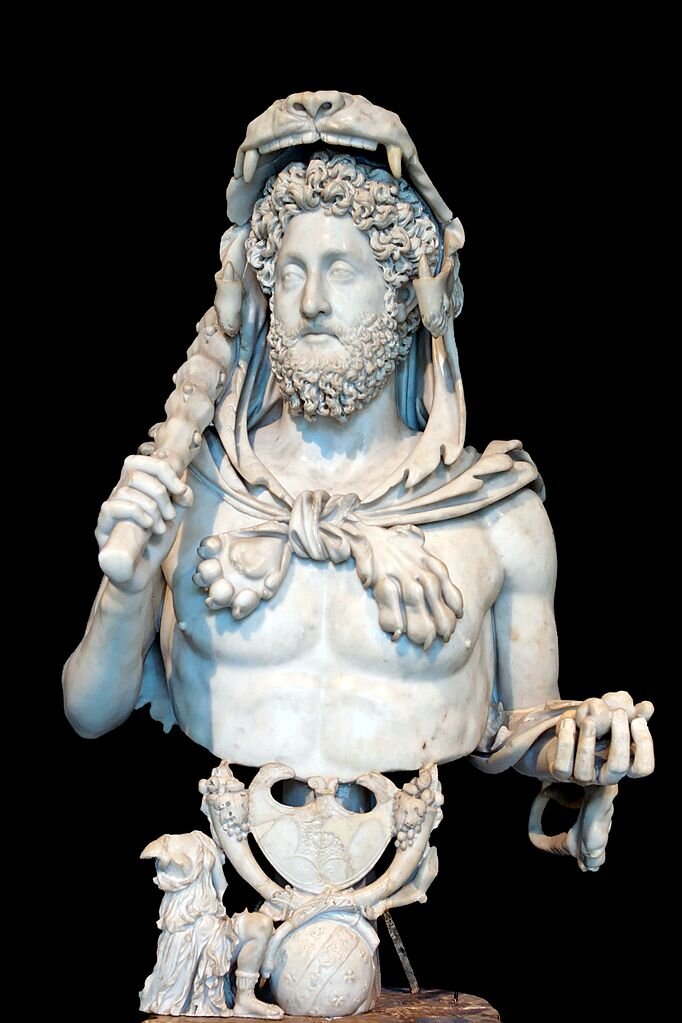
Commodus dressed up as Heracles. At the Capitoline Museum in Rome. Photo by Marie-Lan Nguyen (2006) via wikimedia commons.

Commodus dressed up as Heracles. At the Capitoline Museum in Rome. Photo by Marie-Lan Nguyen (2006) via wikimedia commons.

Worse than the worst of plagues: Cassius Dio on Commodus’ reign and the second wave of the Antonine plague

Humboldt-Universität zu Berlin
April 20, 2020 by Sean Coughlin in Ancient Medicine

“A sickness occurred greater than any I have known—in fact, two thousand often died on a single day in Rome. Many people were also killed in another way, not only in the city, but throughout practically the whole Empire, by evil men: for they would smear little needles with some deadly drugs and for a fee would inject the poison into others, a thing which also happened during the time of Domitian. And while these people died without even a word, Commodus ended up more troublesome to the Romans than all the diseases and criminals together, because among other reasons the people were forced to assign to him out of fear and by command those things which had been bestowed out of respect upon his father through a vote.

“He actually ordered that Rome’s name be changed to ‘Commodiana,’ its army called ‘the Commodians,’ and the day on which these motions were passed ‘Commodiana Day.’ Among the many names he took for himself, one was Herakles. He gave Rome the nickname, ‘Immortal Blessed Inhabited Colony of the Earth,’ since he wanted it to be thought of as his own colony. A golden statue was made in his honour, a thousand pounds in weight, along with a bull and a cow. And finally, all the months of the year were named after him, so that they were counted as follows: Amazon, Undefeated, Lucky, Pious, Lucius, Aelius, Aurelius, Commodus, August, Herakles, Roman, Excellency. For he had taken on different names at different times, but Amazon and Excellency he applied to himself constantly, to show he was absolutely in every way preeminently superior to all people—that is how preeminently insane this piece of shit turned out to be.”

γέγονε δὲ καὶ νόσος μεγίστη ὧν ἐγὼ οἶδα· δισχίλιοι γοῦν πολλάκις ἡμέρας μιᾶς ἐν τῇ Ῥώμῃ ἐτελεύτησαν. πολλοὶ δὲ καὶ ἄλλως οὐκ ἐν τῷ ἄστει μόνον ἀλλὰ καὶ ἐν ὅλῃ ὡς εἰπεῖν τῇ ἀρχῇ ὑπ' ἀνδρῶν κακούργων ἀπέθανον· βελόνας γὰρ μικρὰς δηλητηρίοις τισὶ φαρμάκοις ἐγχρίοντες ἐνίεσαν δι' αὐτῶν ἐς ἑτέρους ἐπὶ μισθῷ τὸ δεινόν· ὅπερ που καὶ ἐπὶ τοῦ Δομιτιανοῦ ἐγεγόνει. καὶ οὗτοι μὲν ἐν οὐδενὶ λόγῳ ἀπώλλυντο, ἦν δὲ ἁπάντων νοσημάτων καὶ ἁπάντων κακουργημάτων χαλεπώτερος Ῥωμαίοις ὁ Κόμμοδος, διά τε τἆλλα καὶ ὅτι ἠναγκάζοντο, ἃ τῷ πατρὶ αὐτοῦ κατ' εὔνοιαν ἐψηφίζοντο, ταῦτ' ἐκείνῳ διὰ φόβον ἀπονέμειν ἐξ ἐπιτάγματος. Κομμοδιανὴν γοῦν τήν τε Ῥώμην αὐτὴν καὶ τὰ στρατόπεδα Κομμοδιανά, τήν τε ἡμέραν ἐν ᾗ ταῦτα ἐψηφίζετο Κομμοδιανὰ καλεῖσθαι προσέταξεν. ἑαυτῷ δὲ ἄλλας τε παμπόλλους ἐπωνυμίας καὶ τὴν Ἡρακλέους ἀπήνεγκε. τὴν δὲ Ῥώμην ἀθάνατον εὐτυχῆ κολωνίαν οἰκουμένην τῆς γῆς (καὶ γὰρ ἄποικον αὐτὴν ἑαυτοῦ δοκεῖν ἐβούλετο) ἐπωνόμασεν. καὶ ἀνδριάς τε αὐτῷ χρυσοῦς χιλίων λιτρῶν μετά τε ταύρου καὶ βοὸς θηλείας ἐγένετο, καὶ τέλος καὶ οἱ μῆνες ἀπ' αὐτοῦ πάντες ἐπεκλήθησαν, ὥστε καταριθμεῖσθαι αὐτοὺς οὕτως, Ἀμαζόνιος Ἀνίκητος Εὐτυχὴς Εὐσεβὴς Λούκιος Αἴλιος Αὐρήλιος Κόμμοδος Αὔγουστος Ἡράκλειος Ῥωμαῖος Ὑπεραίρων. αὐτὸς μὲν γὰρ ἄλλοτε ἄλλα μετελάμβανε τῶν ὀνομάτων, τὸν δ' Ἀμαζόνιον καὶ τὸν Ὑπεραίροντα παγίως ἑαυτῷ ἔθετο ὡς καὶ ἐν πᾶσιν ἁπλῶς πάντας ἀνθρώπους καθ' ὑπερβολὴν νικῶν· οὕτω καθ' ὑπερβολὴν ἐμεμήνει τὸ κάθαρμα.

Cassius Dio, Roman History, 72.14–15


April 20, 2020 /Sean Coughlin
plague, Commodus, Cassius Dio, poisons, politics
Ancient Medicine
Comment
A crow. From the 13th century bestiary, Royal 12 C XIX, fol. 43r, via the British Library.

A crow. From the 13th century bestiary, Royal 12 C XIX, fol. 43r, via the British Library.

“Omens like these” – plague and the fall of the Republic

Humboldt-Universität zu Berlin
April 08, 2020 by Sean Coughlin in Ancient Medicine

More plagues and social change from Cassius Dio, this time, around 44 BCE …

“In addition to omens like these, a bright light moved across across the sky from east to west and a new star was seen for many days.* And at times the light of the sun seemed to grow dim and even disappear, at other times it appeared in three circles, and one of these was even enclosed in a fiery wreath of sheaves, a thing which, for those people, very evidently came true if ever a prophecy did: for there were three men in power—Caesar, Lepidus and Antony, I mean—and of them Caesar afterwards secured his victory.

“Now, when these things occurred, there were all kinds of oracles predicting the destruction of the Republic. Crows flew into the temple of the Dioscuri and pecked out the names of the consuls Antony and Dolabella, which were somewhere inscribed on a tablet. During the night, many dogs would gather in the city and howl, especially near the house of Lepidus, the high priest. Meanwhile, the Eridanus (i.e., the Po) flooded a large part of the surrounding countryside, and when it receded it left behind a huge number of serpents on the land; and from the sea, untold numbers of fish were thrown onto the shore at the mouth of the Tiber.

“What came next was a virulent plague, which affected practically all of Italy, and because of it, it was voted that the Curia Hostilia would be rebuilt and the place where the naumachia** had taken place would be filled in. But it seemed not even this could put a stop to the horror, since, among other things, when Vibius was performing the sacrificial rite at for New Year’s day, one of his lictors suddenly fell down and died.”

πρὸς δὲ δὴ τούτοις τοιούτοις οὖσι λαμπὰς ἀπ' ἀνίσχοντος ἡλίου πρὸς δυσμὰς διέδραμε, καί τις ἀστὴρ καινὸς ἐπὶ πολλὰς ἡμέρας ὤφθη. τότε φῶς τοῦ ἡλίου ἐλαττοῦσθαί τε καὶ σβέννυσθαι, τοτὲ δὲ ἐν τρισὶ κύκλοις φαντάζεσθαι ἐδόκει, καὶ ἕνα γε αὐτῶν στέφανος σταχύων πυρώδης περιέσχεν, ὥστ' εἴπερ τι ἄλλο, καὶ τοῦτο ἐναργέστατα αὐτοῖς ἐκβῆναι· οἵ τε γὰρ ἄνδρες οἱ τρεῖς ἐδυνάστευον, λέγω δὲ τὸν Καίσαρα καὶ τὸν Λέπιδον καὶ τὸν Ἀντώνιον, καὶ ἐξ αὐτῶν ὁ Καῖσαρ μετὰ τοῦτο τὴν νίκην ἔλαβεν.

τότε δ' οὖν ταῦτά τε ἐγένετο, καὶ λόγια πρὸς κατάλυσιν τῆς δημοκρατίας φέροντα παντοῖα ᾔδετο. κόρακές τε ἐς τὸ Διοσκόρειον ἐσπετόμενοι τὰ τῶν ὑπάτων τοῦ τε Ἀντωνίου καὶ τοῦ Δολοβέλλου ὀνόματα, ἐνταῦθά που ἐν πινακίῳ ἐγγεγραμμένα, ἐξεκόλαψαν. καὶ κύνες πολλοὶ νυκτὸς κατά τε τὴν ἄλλην πόλιν καὶ πρὸς τῇ τοῦ ἀρχιερέως τοῦ Λεπίδου οἰκίᾳ μάλιστα συστρεφόμενοι ὠρύοντο. ὅ τε Ἠριδανὸς ἐπὶ πολὺ τῆς πέριξ γῆς πελαγίσας ἐξαίφνης ἀνεχώρησε, καὶ παμπληθεῖς ἐν τῷ ξηρῷ ὄφεις ἐγκατέλιπε. καὶ ἰχθῦς ἐκ τῆς θαλάσσης ἀμύθητοι κατὰ τὰς τοῦ Τιβέριδος ἐκβολὰς ἐς τὴν ἤπειρον ἐξέπεσον.

ἐπεγένετο μὲν οὖν καὶ [ὁ] λοιμὸς ἐπ' αὐτοῖς πάσῃ ὡς εἰπεῖν τῇ Ἰταλίᾳ ἰσχυρός, καὶ διὰ τοῦτο τό τε βουλευτήριον τὸ Ὁστίλιον ἀνοικοδομηθῆναι καὶ τὸ χωρίον ἐν ᾧ ἡ ναυμαχία ἐγεγόνει συγχωσθῆναι ἐψηφίσθη· οὐ μέντοι καὶ ἐνταῦθα στήσεσθαι τὸ δεινὸν ἐδόκει, ἄλλως τε καὶ ἐπειδὴ τοῦ Οὐιβίου τὰ ἐσιτήρια τῇ νουμηνίᾳ θύοντος ῥαβδοῦχός τις αὐτοῦ ἔπεσεν ἐξαίφνης καὶ ἀπέθανεν.

Cassius Dio, Roman History, 45.17.4–9

*a comet is reported to have appeared after Julius Caesar’s assassination.

**ναυμαχία (naumachia): a massive trench, commissioned by Julius Caesar in 46 BCE, was dug near the Tiber and filled with water. He had thousands of prisoners of war fight a staged sea-battle in it. What connection the senate saw between the sea battle and the ensuing plague isn’t clear to me, and my books are at the office.


April 08, 2020 /Sean Coughlin
Cassius Dio, plague, omens, Julius Caesar
Ancient Medicine
Comment
The gods in full colour. From left: Ares, Hera, Zeus, Athena, and Apollo. The illustration is from the Ambrosian Iliad (in Milan, at the Amrosian library, Cod. F. 205. P. Inf., fol. 20v), whose illustrations come from the 5th century. Incredible. Al…

The gods in full colour. From left: Ares, Hera, Zeus, Athena, and Apollo. The illustration is from the Ambrosian Iliad (in Milan, at the Amrosian library, Cod. F. 205. P. Inf., fol. 20v), whose illustrations come from the 5th century. Incredible. Also, the figures were drawn naked at first, then had their clothes painted on. Image via the Warburg, which has all the images and is worth a look.

Theophrastus on Art and Nature I – Pigments

Humboldt-Universität zu Berlin
April 04, 2020 by Sean Coughlin in Philosophy, Ancient Medicine

Red Ochre

“A kind of red ochre is also produced from burnt yellow ochre, although it is not as good (sc. as natural red ochre). It was Kydios’ discovery. For, so they say, he became aware of it when a market burned down: he saw that the yellow ochre when half-burnt had also become red.”

γίνεται [sc. μίλτος] δὲ καὶ ἐκ τῆς ὤχρας κατακαιομένης ἀλλὰ χείρων, τὸ δ' εὕρημα Κυδίου. συνεῖδε γὰρ ἐκεῖνος, ὥς φασι, κατακαυθέντος τινὸς παντοπωλίου* τὴν ὤχραν ἰδὼν ἡμίκαυστον καὶ πεφοινιγμένην.

Theophrastus, On Stones, 53–54

*τινὸς παντοπωλίου: Caley translates this as ‘inn’. I’m not sure what Greek text he was using, but I think the παντοπώλιον is the place where you find everything (τὰ πάτνα) for sale (πωλεῖν).

Cyan / Lapis Lazuli

“Just as some red ochre is spontaneous and some is artificial, so with cyan, some is native, some prepared (like in Egypt*). Now, there are three kinds of cyan: the Egyptian, the Scythian and third the Cyprian. The Egyptian is best for unmixed pigments, the Scythian for those that are wetter. The Egyptian, however, is prepared. In fact, those who record the deeds of their kings also record this: a king first made liquid cyan by imitating the native kind, as gifts of fired and unfired cyan were sent as tribute from Phoenicia and other places. Meanwhile, those who grind pigments** say that Scythian cyan produces from itself four colours: the first from the finest parts is most pale, the second from the coarsest parts is darkest. These come to be by art, too, as does white lead.”

ἔστι δέ, ὥσπερ καὶ μίλτος ἡ μὲν αὐτόματος ἡ δὲ τεχνική, καὶ κύανος ὁ μὲν αὐτοφυὴς ὁ δὲ σκευαστὸς ὥσπερ ἐν Αἰγύπτῳ. γένη δὲ κυάνου τρία, ὁ Αἰγύπτιος, καὶ ὁ Σκύθης, καὶ τρίτος ὁ Κύπριος. βέλτιστος δ' ὁ Αἰγύπτιος εἰς τὰ ἄκρατα λειώματα, ὁ δὲ Σκύθης εἰς τὰ ὑδαρέστερα. σκευαστὸς δ' ὁ Αἰγύπτιος. καὶ οἱ γράφοντες τὰ περὶ τοὺς βασιλεῖς καὶ τοῦτο γράφουσι, τίς πρῶτος βασιλεὺς ἐποίησε χυτὸν κύανον μιμησάμενος τὸν αὐτοφυῆ, δῶρά τε πέμπεσθαι παρ' ἄλλων τε καὶ ἐκ Φοινίκης φόρον κυάνου, τοῦ μὲν ἀπύρου τοῦ δὲ πεπυρωμένου. φασὶ δ' οἱ τὰ φάρμακα τρίβοντες τὸν Σκύθην κύανον ἐξ ἑαυτοῦ ποιεῖν χρώματα τέτταρα, τὸ μὲν πρῶτον ἐκ τῶν λεπτοτάτων λευκότατον, τὸ δὲ δεύτερον ἐκ τῶν παχυτάτων μελάντατον. ταῦτά τε δὴ τέχνῃ γίνεται καὶ ἔτι τὸ ψιμύθιον.

Theophrastus, On Stones, 55–56

*κύανος (cyan): a dark blue pigment. The native kind is most likely lapis lazuli. The χυτὸν κύανον is obscure, but might be a liquid form (parallel would be χυτὸς ἄργυρος, quicksilver). I translate it as ‘liquid cyan’.

**οἱ τὰ φάρμακα τρίβοντες : “the drug-grinders.” τὰ φάρμακα has a semantic range that does not map on to either ‘drugs’, ‘medicines’ or ‘poisons’. Closest thing, I guess, would be to say, ‘chemicals,’ but that’s probably a bit too specific.

Cinnabar

“There is also a native and a manufactured kind of cinnabar. The native kind around Iberia is very hard and stony, as is the one in the Kolchian regions. This, they say, is found on cliffs, which they bring down by shooting it with arrows. The manufactured kind comes only from one place in the Kilbian region (?)*, a little bit outside of Ephesus. It is a sandy ore** which they collect when shiny, like Kermes. Once this is ground to a very fine powder in stone vessels, they wash it in copper ones, and again, taking the sediment, they wash and grind it, a task that takes some skill. For from the same amount of ore, some people produce much, some little or nothing; but, they treat the washings from above, coating them one by one. The sediment below is cinnabar, while what remains on top is mostly scum.***

“They say that Kallias, an Athenian, discovered and invented the manufacturing process from the silver mines. He thought the sandy ore had gold in it because it was shiny, and so he worked on it and collected it. When he perceived it did not have any, he marveled at the beauty of the sand because of its colour, and thus he came to the manner of its manufacture. This wasn’t long ago, but about ninety years at most before Praxibolos was archon at Athens.

“It is clear from these things that art imitates nature but produces its own kinds of things. Of these, some exist for the sake of utility, others, like paints, only for the sake of appearance, and some equally for the sake of both, like quicksilver. For this has a use, as well. It is made when cinnabar is ground up with vinegar in a bronze vessel and bronze pestle. Perhaps we might discover more things like these.”

γίνεται δὲ καὶ κιννάβαρι τὸ μὲν αὐτοφυὲς τὸ δὲ κατ' ἐργασίαν. αὐτοφυὲς μὲν τὸ περὶ Ἰβηρίαν σκληρὸν σφόδρα καὶ λιθῶδες, καὶ τὸ ἐν Κόλχοις. τοῦτο δέ φασιν εἶναι ἐπὶ κρημνῶν, ὃ καταβάλλουσι τοξεύοντες. τὸ δὲ κατ' ἐργασίαν ὑπὲρ Ἐφέσου μικρὸν <ἐν Κιλβιανοῖς (?)> ἐξ ἑνὸς τόπου μόνον. ἔστι δ' ἄμμος ἣν συλλέγουσι λαμπυρίζουσαν καθάπερ ὁ κόκκος· ταύτην δὲ τρίψαντες ὅλως ἐν ἀγγείοις λιθίνοις λειοτάτην πλύνουσιν ἐν χαλκοῖς [μικρὸν ἐν καλοῖς], τὸ δ' ὑφιστάμενον πάλιν λαβόντες πλύνουσι καὶ τρίβουσιν, ἐν ᾧπέρ ἐστι τὸ τῆς τέχνης· οἱ μὲν γὰρ ἐκ τοῦ ἴσου πολὺ περιποιοῦσιν, οἱ δ' ὀλίγον ἢ οὐθέν· ἀλλὰ πλύσματι τῷ ἐπάνω χρῶνται ἓν πρὸς ἓν ἀλείφοντες. γίνεται δὲ τὸ μὲν ὑφιστάμενον κάτω κιννάβαρι, τὸ δ' ἐπάνω καὶ πλεῖον πλύσμα.

καταδεῖξαι δέ φασι καὶ εὑρεῖν τὴν ἐργασίαν Καλλίαν τινὰ Ἀθηναῖον ἐκ τῶν ἀργυρείων, ὃς οἰόμενος ἔχειν τὴν ἄμμον χρυσίον διὰ τὸ λαμπυρίζειν ἐπραγματεύετο καὶ συνέλεγεν. ἐπεὶ δ' ᾔσθετο ὅτι οὐκ ἔχοι τὸ δὲ τῆς ἄμμου κάλλος ἐθαύμαζε διὰ τὴν χρόαν, οὕτως ἐπὶ τὴν ἐργασίαν ἦλθε ταύτην. οὐ παλαιὸν δ' ἐστὶν ἀλλὰ περὶ ἔτη μάλιστ' ἐνενήκοντα εἰς ἄρχοντα Πραξίβουλον Ἀθήνησι.

φανερὸν δ' ἐκ τούτων ὅτι μιμεῖται τὴν φύσιν ἡ τέχνη, τὰ δ' ἴδια ποιεῖ, καὶ τούτων τὰ μὲν χρήσεως χάριν τὰ δὲ μόνον φαντασίας ὥσπερ τὰς ἀλοιφάς. ἔνια δὲ ἴσως ἀμφοῖν ὥσπερ χυτὸν ἄργυρον. ἔστι γάρ τις χρεία καὶ τούτου. ποιεῖται δὲ ὅταν κιννάβαρι τριφθῇ μετ' ὄξους ἐν ἀγγείῳ χαλκῷ καὶ δοίδυκι χαλκῷ. τὰ μὲν οὖν τοιαῦτα τάχ' ἄν τις λάβοι πλείω.

Theophrastus, On Stones, 58–60

*<ἐν Κιλβιανοῖς (?)>: some textual confusion. Schneider seems to have transposed ἐν καλοῖς from a bit below to here and emended it to ἐν Κιλβιανοῖς (‘in the Kilbian region’). Sure, why not…

**ἄμμος = ψάμμος, as in a sandy ore (probably, maybe).

***ἀλλὰ πλύσματι … πλύσμα. Not quite clear on the process here, but probably something similar to sluicing or panning: water goes over the sandy ore, and because of the agitation, solids of different sizes or densities separate into different layers.

April 04, 2020 /Sean Coughlin
Theophrastus, mineralogy, pigments, art and nature
Philosophy, Ancient Medicine
Comment
Maecenas Presenting the Liberal Arts to Emperor Augustus, by Tiepolo around 1743. Image from the State Hermitage Museum, St. Petersburg.

Maecenas Presenting the Liberal Arts to Emperor Augustus, by Tiepolo around 1743. Image from the State Hermitage Museum, St. Petersburg.

“I suppose the same thing happened in foreign countries as well...” Cassius Dio on the Plague at the time of Augustus

Humboldt-Universität zu Berlin
April 02, 2020 by Sean Coughlin in Ancient Medicine

Looks like we will pass 1,000,000 confirmed cases of Covid-19 in the next few minutes. So let’s rewind.

22 BCE or so. Plague in Italy. No one left to work the land. The people want Augustus named dictator.

“The year after that, when Marcus Macellus and Lucius Arruntius were consuls, the city was flooded again when the river overflowed, and many things were struck by lightning, even the statues in the Pantheon, so that the spear fell from Augustus’ hand as well. And then, as the Romans suffered from disease and from famine—for the plague had come to all of Italy and no one worked the land; I suppose the same thing happened in foreign countries as well—they, thinking that these things had happened to them for no other reason but that they didn’t have Augustus as a consul, wished him to be appointed dictator. They locked the senate in their chamber and, threatening to burn them to ashes, they forced them to take a vote. And after this, taking the twenty-four rods, they came to Augustus, bidding him to be named dictator and to become commissioner of the grain supply, just as Pompey once had been.”

τῷ δ' ἐπιγιγνομένῳ ἔτει, ἐν ᾧ Μᾶρκος τε Μάρκελλος καὶ Λούκιος Ἀρρούντιος ὑπάτευσαν, ἥ τε πόλις πελαγίσαντος αὖθις τοῦ ποταμοῦ ἐπλεύσθη, καὶ κεραυνοῖς ἄλλα τε πολλὰ ἐβλήθη καὶ οἱ ἀνδριάντες οἱ ἐν τῷ Πανθείῳ, ὥστε καὶ τὸ δόρυ ἐκ τῆς τοῦ Αὐγούστου χειρὸς ἐκπεσεῖν. πονούμενοι οὖν ὑπό τε τῆς νόσου καὶ ὑπὸ τοῦ λιμοῦ (ἔν τε γὰρ τῇ Ἰταλίᾳ πάσῃ ὁ λοιμὸς ἐγένετο καὶ τὴν χώραν οὐδεὶς εἰργάσατο· δοκῶ δ' ὅτι καὶ ἐν τοῖς ἔξω χωρίοις τὸ αὐτὸ τοῦτο συνηνέχθη) νομίσαντες οἱ Ῥωμαῖοι οὐκ ἄλλως σφίσι ταῦτα συμβεβηκέναι, ἀλλ' ὅτι μὴ καὶ τότε ὑπατεύοντα τὸν Αὔγουστον ἔσχον, δικτάτορα αὐτὸν ἠθέλησαν προχειρίσασθαι, καὶ τήν τε βουλὴν κατακλείσαντες ἐς τὸ συνέδριον ἐπηνάγκασαν τοῦτο ψηφίσασθαι, ἀπειλοῦντές σφας καταπρήσειν, καὶ μετὰ ταῦτα τὰς ῥάβδους τὰς τέσσαρας καὶ εἴκοσι λαβόντες προσῆλθον αὐτῷ, δικτάτορά τε ἅμα δεόμενοι λεχθῆναι καὶ ἐπιμελητὴν τοῦ σίτου, καθάπερ ποτὲ τὸν Πομπήιον, γενέσθαι.

Cassius Dio, Historiae Romanae 54.1.1–3


April 02, 2020 /Sean Coughlin
plague, Augustus, Cassius Dio
Ancient Medicine
Comment
You’ve got something there. BL Add. ms. 62925, fol. 62r via the British Library.

You’ve got something there. BL Add. ms. 62925, fol. 62r via the British Library.

“Whoever wants to become a good person” – some advice from Galen

Humboldt-Universität zu Berlin
April 01, 2020 by Sean Coughlin in Ancient Medicine, Philosophy

I get frustrated with people when I go outside these days (especially when I go looking for flour). I think anxiety has ways of making its presence felt even if (or maybe especially if) I’m not attending to it. Now, normally I find reading Galen pretty frustrating as well, but these bits are helpful reminders of the necessity of empathy.

“Whoever wants to become a good person, let them keep this in mind: that they are, necessarily, very much unaware of their own errors.”

ὅστις οὖν βούλεται καλὸς κἀγαθὸς γενέσθαι, τοῦτο ἐννοησάτω, ὡς ἀναγκαῖόν ἐστιν αὐτὸν ἀγνοεῖν πολλὰ τῶν ἰδίων ἁμαρτημάτων.

Galen, On the Affections and Errors of the Soul, 1.2, 5.5 K.

“We have, as Aesop used to say, two bags hanging from our necks, one, in front, full of the wrongs of others, one, behind, full of our own, and for this reason we always see the wrongs of others, while we are incapable of seeing our own.”

δύο γάρ, ὡς Αἴσωπος ἔλεγε, πήρας ἐξήμμεθα τοῦ τραχήλου τῶν μὲν ἀλλοτρίων τὴν πρόσω, τῶν ἰδίων δὲ τὴν ὀπίσω, καὶ διὰ τοῦτο τὰ μὲν ἀλλότρια βλέπομεν ἀεί, τῶν δ' οἰκείων ἀθέατοι καθεστήκαμεν.

Galen, On the Affections and Errors of the Soul, 1.2, 5.6 K.

“It’s normal for pretty much everyone to hate those who speak the truth.”

ἅπασιν ὡς ἔπος εἰπεῖν ἀνθρώποις ἔθος εἶναι μισεῖν τοὺς τἀληθῆ λέγοντας.

Galen, On the Affections and Errors of the Soul, 1.3, 5.10 K.

“And indeed, we should consider the one who reveals each of our offenses our deliverer and our greatest friend. Even if it appears to you that they criticize you falsely, still, the right thing to do is to show yourself to be free from anger. For, in the first place, it’s possible that they can see your mistakes better than you can, just as you, too, can see theirs; and in the second case, because, even if they should criticize you falsely, they will have awoken you to a more accurate examination of what you are doing.”

καὶ μέντοι καὶ [τὸν] σωτῆρα ἐκεῖνον | καὶ φίλον μέγιστον ἡγεῖσθαι τὸν μηνύσαντα τῶν πλημμελουμένων ἕκαστα· εἶθ' ὅτι, κἂν ψευδῶς σοι φαίνηταί ποτ' ἐγκαλέσας, ἀόργητον προσήκει φαίνεσθαι, πρῶτον μὲν ὅτι δύνατόν ἐστιν ἐκεῖνον σοῦ βέλτιον ὁρᾶν ἕκαστον ὧν ἁμαρτάνων τυγχάνεις, ὥσπερ καί σε τῶν ἐκείνου τι, δεύτερον ὅτι κἂν ἐπηρεάσῃ ποτὲ ψευδῶς, ἀλλ' οὖν ἐπήγειρέ σε πρὸς ἀκριβεστέραν ἐπίσκεψιν, ὧν πράττεις.

Galen, On the Affections and Errors of the Soul, 1.5, 5.24–5 K.

April 01, 2020 /Sean Coughlin
Galen, Medicine of the mind, plague, shopping
Ancient Medicine, Philosophy
Comment
A man harvesting Armenian bolus. Illumination of an entry in Tractatus de herbis, attributed to Bartholomaeus Mini de Senis. A late 13th century ms. now at the British Library: Egerton 747 f. 12v. via the BL site.

A man harvesting Armenian bolus. Illumination of an entry in Tractatus de herbis, attributed to Bartholomaeus Mini de Senis. A late 13th century ms. now at the British Library: Egerton 747 f. 12v. via the BL site.

“Those who couldn't be cured” – Galen on the Armenian Bolus and the Great Plague

Humboldt-Universität zu Berlin
March 23, 2020 by Sean Coughlin in Ancient Medicine

Galen exercises some troubling reasoning about cures…

“During the Great Plague, another kind of earth was given to me, rather desiccating, ochre in colour, from Armenia’s border with Cappadocia. The supplier called it a stone, not earth, and it can easily be pulverized, like lime (I’m referring to slaked lime, obviously). But also, like lime, there is no sandy quality in Armenian earth. For after being ground up in a mortar and pestle, it becomes as fine and free of gravel as lime and Samian star, although it is not as light as the star. Thus, it’s denser and less airy than it, and that’s why to more careless observers it has the appearance of being a stone.

“But it makes no difference for the present whether we use the term stone or earth, as long as you know it is very desiccating. It is especially suitable in cases of dysentery, fluxes of the belly, spitting of blood, catarrh, and moreover for putrefying ulcers in the mouth. And indeed, it is a great help for those experiencing fluxes from the head into the chest; thus, it also is of great benefit to those who have chronic breathing difficulties caused by this kind of thing.

“And, of course, it also helps all those who suffer from consumption. For it dries their ulcer so that they no longer cough, unless they seriously neglect their regimen or if the environment undergoes a sudden change towards a bad mixture. It even seems to me, just as we have often seen in the case of fistulas, not only in other parts of the body, but near the anus as well, that they are protected and closed up by using the desiccating drug itself alone, without the insertion of a suppository that clears the filth or the callous of the fistula, so, too, it would also happen in the case of an ulcer that occurs in the lungs. For this condition, when it is moderate and not too great, is evidently benefited through desiccating drugs, so that some of those who had these fistulas seemed completely cured. Actually, of those people who traveled from Rome to Libya for the same sort of reason, some believed they were completely healthy and in fact lived without any problems for some years, then later on, because they did not take sufficient precautions to keep a preventative routine, the disease came back. Well, as I was saying, these people the bolus of Armenia evidently cured, as, in fact, it also cured those who stayed in Rome, and, even more those with chronic breathing difficulties.

“And during that Great Plague, which was similar in form to the one that happened during the time of Thucydides, all those who drank this drug were cured very quickly, while, all those whom it did not help died. They weren’t helped by anything else, either, which makes it clear that it only failed to help those who couldn’t be cured.

“It is taken as a drink with a light-bodied wine: moderately mixed, if the person doesn’t have a fever at all or was only briefly feverish; very watery, if he is more feverish. The fevers that accompany plague are not very hot. As for ulcers that need drying, why bother mentioning how powerful the Armenian bolus itself is? As I said, you can call it a stone, like my supplier called it, or a type of earth, as I do, since it is moistened by moisture.”*

ἐδόθη δ' ἡμῖν ἐν τῷ μεγάλῳ τούτῳ λοιμῷ, καὶ ἄλλη τις ἐξ Ἀρμενίας τῆς ὁμόρου Καππαδοκίας γῆ ξηραντικωτέρα, τὴν χρόαν ὠχρά· λίθον δ' αὐτὴν ὠνόμαζεν, οὐ γῆν, ὁ δοὺς, καὶ ἔστιν εὐλειοτάτη, καθάπερ καὶ ἡ τίτανος. ὀνομάζω δ' οὕτω δηλονότι τὴν κεκαυμένην πέτραν. ἀλλὰ καὶ ὥσπερ ἐκείνης οὐδὲν ἐμφέρεται ψαμμῶδες, οὕτως οὐδὲ τῆς Ἀρμενίας. μετὰ γὰρ τὸ θραυσθῆναι τῷ δοίδυκι κατὰ τὴν θυίαν, οὕτως ἐστὶ λεία καὶ ἄλιθος ὥσπερ ἡ τίτανος καὶ ὁ Σάμιος ἀστὴρ, οὐ μὴν ὁμοίως γε κούφη τῷ ἀστέρι. διὸ καὶ πεπύκνωται μᾶλλον αὐτοῦ καὶ ἧττον ἀερώδης ἐστὶν, καὶ διὰ τοῦτο φαντασίαν ἀποφαίνει τοῖς ἀμελέστερον ὁρῶσι λίθος εἶναι.

διαφέρει δ' οὐδὲν ὡς πρὸς τὰ παρόντα λίθον ἢ γῆν αὐτὴν ὀνομάζειν, εἰδότας ἄκρως ξηραίνουσαν. ἐπί τε γὰρ δυσεντεριῶν καὶ τῶν κατὰ γαστέρα ῥευμάτων, αἵματός τε πτύσεως καὶ κατάῤῥου καὶ προσέτι τῶν κατὰ τὸ στόμα σηπεδονωδῶν ἑλκῶν ἁρμόττει μάλιστα. καὶ μέντοι καὶ τοὺς ἀπὸ κεφαλῆς εἰς θώρακα ῥευματιζομένους ὀνίνησι μεγάλως, ὥστε καὶ τοὺς διὰ τὴν τοιαύτην αἰτίαν συνεχῶς δυσπνοοῦντας ἰσχυρῶς ὠφελεῖ.

καὶ μέντοι καὶ ὅσοι φθόῃ κάμνουσιν, καὶ τούτους ὀνίνησιν. ξηραίνει γὰρ αὐτῶν τὸ ἕλκος, ὡς μηδὲ βήττειν ἔτι, πλὴν εἰ κατὰ τὴν δίαιταν ἁμαρτάνοιεν ἀξιολόγως ἢ τὸ περιέχον ἐξαιφνίδιον εἰς δυσκρασίαν μεταπέσοι. καί μοι δοκεῖ, καθάπερ ἐπὶ τῶν συρίγγων ἐθεασάμεθα πολλάκις, οὐ μόνον ἐν ἄλλοις μορίοις, ἀλλὰ καὶ κατὰ τὴν ἕδραν ἄνευ τοῦ κολλύριον καθεῖναι τὸν ῥύπον ἢ τὸν τύλον ἐξαιροῦν τῆς σύριγγος, αὐτῷ μόνῳ τῷ ξηραίνοντι φαρμάκῳ προστελλομένας τε καὶ κλειομένας αὐτὰς, οὕτω κᾀπὶ τοῦ κατὰ τὸν πνεύμονα συμβαίνειν ἕλκους. φαίνεται γὰρ καὶ τοῦτο διὰ τῶν ξηραινόντων φαρμάκων ὁμοίως ὀνινάμενον, ὅταν τε μέτριον ᾖ καὶ μὴ μέγα λίαν, ὥστ' ἔδοξαν ἔνιοι τῶν ἐχόντων αὐτὰ τελείως ἀπηλλάχθαι, καὶ τῶν γ' εἰς τὴν Λιβύην ἀπὸ Ῥώμης διὰ τοιαύτην αἰτίαν πορευθέντων ἔνιοι τελείως ἐπείσθησαν ὑγιεῖς εἶναι, καὶ μέχρι γέ τινων ἐτῶν ἀμέμπτως διήγαγον, εἶθ' ὕστερόν ποτε πάλιν ἀφυλακτότερον αὐτοῖς διαιτηθεῖσιν ὑποστροφὴ τοῦ νοσήματος ἐγένετο. τούτους οὖν, ὡς ἔφην, ἡ ἐκ τῆς Ἀρμενίας βῶλος ἐναργῶς ὠφέλησε καίτοι γ' ἐν Ῥώμῃ διατρίβοντας, ἔτι τε μᾶλλον τοὺς δυσπνοοῦντας συνεχῶς.

ἐν δὲ τῷ μεγάλῳ τούτῳ λοιμῷ παραπλησίῳ τὴν ἰδέαν ὄντι τῷ κατὰ Θουκυδίδην γενομένῳ πάντες οἱ πιόντες τούτου τοῦ φαρμάκου διὰ ταχέων ἐθεραπεύθησαν, ὅσους δ' οὐδὲν ὤνησεν ἀπέθανον πάντες, οὐδ' ὑπ' ἄλλου τινὸς ὠφελήθησαν, ᾧ καὶ δῆλον ὅτι μόνους τοὺς ἀνιάτως ἔχοντας οὐκ ὠφέλησε.

πίνεται δὲ μετ' οἴνου λεπτοῦ τὴν σύστασιν, κεραμένου μετρίως μὲν, εἰ ἀπύρετος εἴη παντάπασιν ὁ ἄνθρωπος ἢ βραχὺ πυρεταίνοι, πάνυ δ' ὑδαροῦς, εἰ πυρέττοι μειζόνως. οὐ μὴν οὐδὲ σφοδροὶ κατὰ τὴν θερμασίαν εἰσὶν οἱ λοιμώδεις πυρετοί. περὶ δὲ τῶν ξηρανθῆναι δεομένων ἑλκῶν τί δεῖ καὶ λέγειν ὁπηλίκην ἔχει δύναμιν ἡ Ἀρμενικὴ βῶλος αὕτη; καλεῖν δ' ἔξεστί σοι, καθάπερ ἔφην, καὶ λίθον αὐτὴν, ὡς ὁ δοὺς ὠνόμαζεν, καὶ γῆν, ὡς ἂν ἐγὼ φαίην, ἐπειδὴ καὶ τέγγεται τοῖς ὑγροῖς.

Galen, Simple Drugs, 9.1 (XII.189–192 K.)

*Thanks to PN Singer for help with this one.

This mineral has quite a story. It is still sold as a drug today. No links, but here’s an entry on it from the 18th century. It is also used as a pigment and as a medium in gilding and bookbinding.

March 23, 2020 /Sean Coughlin
materia medica, Galen, pharmacology, stones, plague
Ancient Medicine
Comment
Diotima by Józef Simmler. Scanned from the album Malarstwo Polskie w zbiorach za granicą by Stefania Krzysztofowicz-Kozakowska, Wydawnictwo Kluszczyński, 2003. Public Domain via Wikimedia Commons.

Diotima by Józef Simmler. Scanned from the album Malarstwo Polskie w zbiorach za granicą by Stefania Krzysztofowicz-Kozakowska, Wydawnictwo Kluszczyński, 2003. Public Domain via Wikimedia Commons.

Sacrifices – Plato on Diotima and the Plague of Athens

Humboldt-Universität zu Berlin
March 20, 2020 by Sean Coughlin in Philosophy, Ancient Medicine

A reminder for the equinox.

“Alright, then, I'll let you go, and I'll try to describe to you the speech about Eros, which I once heard from a Mantinean woman, Diotima. She was wise about these and many other things. In fact, ten years before the plague, she held off that sickness by telling the Athenians what they needed to sacrifice. And she even taught me the art of love.”

καὶ σὲ μέν γε ἤδη ἐάσω: τὸν δὲ λόγον τὸν περὶ τοῦ Ἔρωτος, ὅν ποτ᾽ ἤκουσα γυναικὸς Μαντινικῆς Διοτίμας, ἣ ταῦτά τε σοφὴ ἦν καὶ ἄλλα πολλά—καὶ Ἀθηναίοις ποτὲ θυσαμένοις πρὸ τοῦ λοιμοῦ δέκα ἔτη ἀναβολὴν ἐποίησε τῆς νόσου, ἣ δὴ καὶ ἐμὲ τὰ ἐρωτικὰ ἐδίδαξεν—ὃν οὖν ἐκείνη ἔλεγε λόγον, πειράσομαι ὑμῖν διελθεῖν...

Plato, Symposium 201D

March 20, 2020 /Sean Coughlin
plague, Plato, Diotima
Philosophy, Ancient Medicine
Comment
Winged psyche and corpse on a wine jug. Late sixth century. Nicholson Museum, University of Sydney. Image via this article at the Panoply Vase Animation Project.

Winged psyche and corpse on a wine jug. Late sixth century. Nicholson Museum, University of Sydney. Image via this article at the Panoply Vase Animation Project.

Pseudo-Galen, what is a soul and what is a body?

Humboldt-Universität zu Berlin
February 14, 2020 by Sean Coughlin in Ancient Medicine, Philosophy

“29. According to Plato, soul is a self-moving incorporeal substance. According to the Stoics, however, it is a subtle body moving out of itself according to seminal principles, while according to Aristotle, it is the actuality of a natural instrumental body potentially having life. Alternatively, soul is pneuma distributed through the whole body, through which we live and reason and act by means of the other senses, the body being its servant.*

30. Body is magnitude three times extended, having in itself height, depth and breadth.** Or, it is magnitude composed of three dimensions.”

κθʹ. ψυχή ἐστιν οὐσία ἀσώματος, αὐτοκίνητος κατὰ Πλάτωνα. κατὰ δὲ τοὺς Στωϊκοὺς σῶμα λεπτομερὲς ἐξ ἑαυτοῦ κινούμενον κατὰ σπερματικοὺς λόγους. κατὰ δὲ τὸν Ἀριστοτέλη ἐντελέχεια σώματος φυσικοῦ ὀργανικοῦ δυνάμει ζωὴν ἔχοντος. ἄλλως. ψυχή ἐστι πνεῦμα παρεσπαρμένον ἐν ὅλῳ τῷ σώματι δι' οὗ ζῶμεν καὶ λογιζόμεθα καὶ ταῖς λοιπαῖς αἰσθήσεσιν ἐνεργοῦμεν ὑπηρετοῦντος τοῦ σώματος.

λʹ. σῶμά ἐστι μέγεθος τριχῇ διάστατον ἔχον ἐν ἑαυτῷ μῆκος, βάθος, πλάτος. ἢ μέγεθος ἐκ τριῶν διαστημάτων συνεστηκός.

[Galen], Medical Definitions 29 and 30, 19.355–356 K

*cf. Anonymus Londinensis:

“‘Soul’ is said in three ways: that which pervades the whole body, and the rational part, and further the entrecheia (i.e., ἐντελέχεια, probably).”

ψυχὴ δὲ λέγεται τριχῶς·
[ἥ τε] τῶι ὅλωι σώματι παρεσπαρ-
μ̣ένη καὶ τὸ μόριον τὸ λογιστικὸν
[κ]αὶ ἔτι ἡ ἐντρέχεια. * καὶ τῆς μ(ὲν) ἐντρε-
[χ]είας ἐπὶ τοῦ παρόντος οὐ χρῄζομεν,
[τ]ῶν δὲ ἄλλων δύο σημαινομένων,
[κα]ὶ μᾶλλον το̣ῦ λο̣γιστ̣ικοῦ.

Anonymus Londinensis I,21-24

**Cf. Apollodorus ap. Diogenes Laertius:

“Body is defined by Apollodorus in his Physics as that which is extended in three dimensions, length, breadth, and depth. This is also called solid body.”

σῶμα δ’ ἐστίν, ὥς φησιν Ἀπολλόδωρος ἐν τῇ Φυσικῇ, τὸ τριχῆ διαστατόν, εἰς μῆκος, εἰς πλάτος, εἰς βάθος· τοῦτο δὲ καὶ στερεὸν σῶμα καλεῖται.

Diog. Laert. 7.175


February 14, 2020 /Sean Coughlin
Pseudo-Galen, pseudogalenica, soul, body
Ancient Medicine, Philosophy
Comment
Detail of a monk working on a manuscript. BL Royal MS 14 E III, fol. 6v. Via the British Library.

Detail of a monk working on a manuscript. BL Royal MS 14 E III, fol. 6v. Via the British Library.

Reading with Galen: when good authors say false things

Humboldt-Universität zu Berlin
February 06, 2020 by Sean Coughlin in Ancient Medicine

Another one Maria pointed out to me.

Idola theatri

“Whenever an obviously false statement is found in the writings of an intelligent author, it’s normal for their students to become puzzled. At first, they doubt themselves and do not trust that they understand what is obvious; then, after a while, they suspect something of what they are reading is false.”

Ὁπόταν ἐν ἀνδρὸς φρονίμου συγγράμματι λόγος εὑρεθῇ προφανῶς ψευδής, εἰκότως ἀπορεῖσθαι συμβαίνει τοὺς ἀναγινώσκοντας αὐτόν, καὶ πρῶτον μὲν ἑαυτοῖς ἀπιστεῖν, ὡς μηδὲ τὰ φανερά γινώσκουσι, εἶθ᾿ ἑξῆς ὑποπτεύειν, μή τι τῶν ὑποκειμένων ψευδὲς εἴη.

Galen, Commentary on Hippocrates’ Aphorisms 6.34, 18A.55 Kühn

The aphorism in question…

“Bald people do not get large varicose veins; bald people who do get varicose veins grow their hair back again.”

Ὁκόσοι φαλακροὶ, τουτέοισι κιρσοὶ μεγάλοι οὐ γίνονται· ὁκόσοισι δὲ φαλακροῖσιν ἐοῦσιν κιρσοὶ γίνονται, πάλιν οὗτοι γίνονται δασέες.

Aphorisms 6.34, 4.570 Littré

February 06, 2020 /Sean Coughlin
Hippocratic Commentary, Galen
Ancient Medicine
Comment
  • Newer
  • Older
 

CATEGORIES

  • Ancient Medicine
  • Botany
  • Events
  • Philosophy

SEARCH


RECENT POSTS

Featured
Dec 31, 2025
Botany, Philosophy
Concerning a Variant in the de Fuentes Manuscript
Dec 31, 2025
Botany, Philosophy
Dec 31, 2025
Botany, Philosophy
Dec 25, 2025
Ancient Medicine
How to smell nice: Galen's advice for doctors
Dec 25, 2025
Ancient Medicine
Dec 25, 2025
Ancient Medicine
Dec 23, 2025
Ancient Medicine
More on how not to talk to patients
Dec 23, 2025
Ancient Medicine
Dec 23, 2025
Ancient Medicine
Dec 13, 2025
Ancient Medicine
"Patroclus died as well" (How Not to Talk to Patients)
Dec 13, 2025
Ancient Medicine
Dec 13, 2025
Ancient Medicine
Sep 18, 2023
Ancient Medicine
Galen, Simple Drugs, Book 11, Preface (II)
Sep 18, 2023
Ancient Medicine
Sep 18, 2023
Ancient Medicine