Ancient Medicine

  • Home
  • About
  • Contact

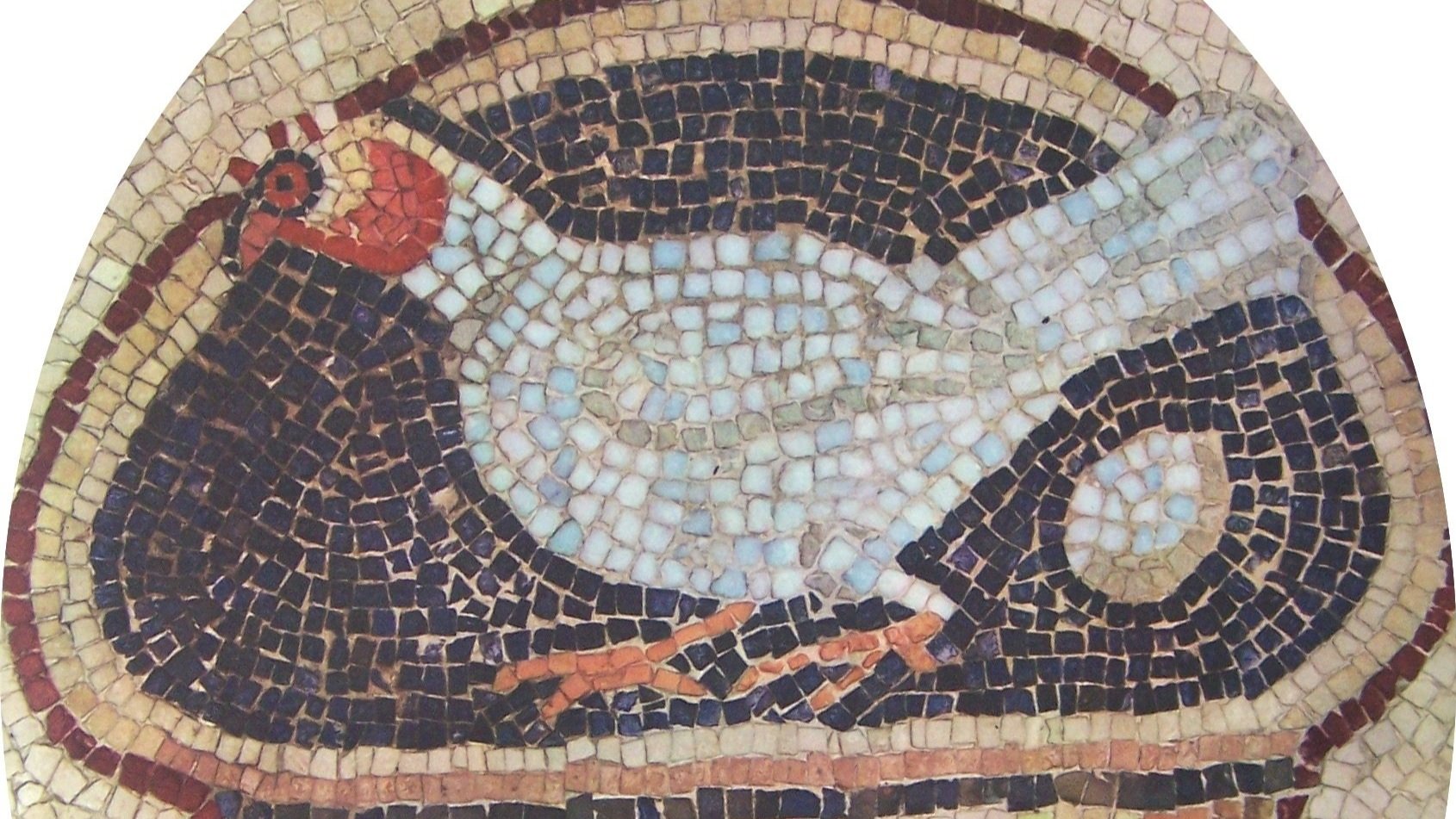
Detail of the Maon synagogue mosaic depicting a hen and an egg. Via wikimedia commons.

Two ways to talk about eggs

April 04, 2018 by Sean Coughlin in Philosophy, Ancient Medicine

Two discussions of eggs: one, from Michael of Ephesus, on the egg as a boundary between death and life; another, from Aetius of Amida, on the best way to cook eggs (soft boiled, soaked in wine and fish sauce and cooked on a double-boiler).


Lemma: “The reason for this is that nature produces the eggs, as it were, before [their] time, because of its own incompleteness…” (Aristotle, Generation of Animals 3.8, 758b19)

"In what follows, he (sc. Aristotle) discusses the reason why insects produce at first a grub which moves itself and is generally speaking an animal; then, once the grub has grown, it turns into an egg, lacking sensation and movement; then it turns into a different animal from the grub. He says that since an insect’s nature, because of its inherent weakness, is in itself unable to nourish and complete the embryo, what it produces is incomplete. And if in addition to generating an incomplete embryo, its nature generated something lacking soul and sensation as well, the embryo would cease to exist. But if this were the case, it is quite likely that the insect-kind would be absent from the world.* So it must be for this reason that nature generates an animal that is able to be nourished from itself, and it feeds on itself until it reaches completion.** Having reached completion, it dies.*** For living and eating are granted to it so that it becomes complete, but once it has reached completion, there is no longer any point for it to eat, and so no point for it to live.**** At this moment it dies, and it is then like an egg surrounded all around by a shell.***** Later, when what is inside of this shell has been completely concocted by the climate as if by a bird and has changed into an animal, it emerges."

758b19 «Τούτου δ’ αἴτιον ὅτι ἡ φύσις ὡσανεὶ πρὸ ὥρας ᾠοτοκεῖ διὰ τὴν ἀτέλειαν τὴν αὐτῆς.»

Τὴν αἰτίαν διὰ τούτων λέγει, τίνος ἕνεκα πρῶτον μὲν σκώληξ γεννᾶται κινούμενος καὶ ὅλως ζῷον ὑπάρχων, εἶτα αὐξηθεὶς ᾠὸν γίνεται ἀναίσθητον καὶ ἀκίνητον, εἶθ’ οὕτω πάλιν ζῷον ἕτερον παρὰ τὸν σκώληκα. λέγει οὖν ὅτι ἡ τῶν ἐντόμων φύσις ἀδυνατοῦσα θρέψαι ἐν αὑτῇ καὶ τελειῶσαι τὸ κύημα διὰ τὴν οἰκείαν ἀσθένειαν, ἀτελὲς αὐτὸ γεννᾷ· ὥστ’ εἴπερ πρὸς τῷ ἀτελὲς αὐτὸ γεννᾶν καὶ ἄψυχον ἐγέννα καὶ ἀναίσθητον, ἐφθείρετο ἄν· εἰ δὲ τοῦτο, τάχιον ἂν ἐκ τοῦ παντὸς ἐξέλιπε τὸ τῶν ἐντόμων γένος. διά τοι τοῦτο γεννᾷ ζῷον ἐξ ἑαυτοῦ δυνάμενον τρέφεσθαι, καὶ τρέφεται ἕως ἂν τελειωθῇ, τελειωθὲν δὲ θνήσκει· τὸ γὰρ ζῆν καὶ ἐσθίειν δέδοται αὐτῷ διὰ τὸ τέλειον γεγονέναι, ἐπειδὴ δὲ τετελείωται, οὐκέτι χρεία αὐτῷ τοῦ ἐσθίειν, ὥστε οὐδὲ τοῦ ζῆν. καὶ ἐπὶ τούτῳ θνήσκει, καὶ ἔστι τότε οἷον ᾠὸν κύκλῳ περιεχόμενον ὑπὸ τοῦ κελύφους· εἶθ’ οὕτως τὸ ἐντὸς ὑπάρχον τούτου τοῦ κελύφους ὑπὸ τῆς ὥρας ὥσπερ ὑπὸ ὄρνιθος συμπεφθὲν καὶ εἰς ζῷον μεταβαλὸν ἔξεισιν.

Michael of Ephesus, Commentary on Aristotle's Generation of Animals 3.8, (CAG 14,3 p.153,10-25 Hayduck).

*A reductio: if nature generated embryos without soul, i.e., without life, there wouldn't be any insects in the world; but, there are insects; so, nature does not generate embryos without a soul.

**The idea is either (1) that the grub is able to feed itself, or (2) that it is able to be nourished from the whole of its own body, unlike an egg, in which one part is food (yolk) and one part becomes the animal (white). Cf. GA 2.1, 732a28-32 and Michael’s comments; 3.2, 752a27-28.

***Michael might be thinking of allegories of metempsychosis. I have yet to find whether the psuchê (butterfly) was used as a symbol of resurrection by late Byzantine Christians. Whether or not that's what he has in mind, the idea is not Aristotle’s—he nowhere says that grubs die when they become cocoons, nor does he say, as Michael takes him to, that cocoons are akinêton or without movement; rather, he says they are akinêtisanta or at rest. Elsewhere, Aristotle claims cocoons move when touched, e.g. HA 5.19, 551a19-20. Just how familiar Michael was with the HA is not clear; but Michael is nevertheless right that in the passage he is commenting on, Aristotle emphasizes the lack of motion of chrysalids throughout. And even if allegories of metempsychosis are in the background, Michael is most likely drawing the following inference: if something is alive, it has nutritive (and sensitive) soul; if something has nutritive (and sensitive) soul, then it can (move, sense), eat, and excrete residues; cocoons do none of these things; hence cocoons are not alive. The inference of course would be false: at most it would imply that cocoons are asleep. Michael, however, likely sees that there would be a deeper problem in saying cocoons are alive in this sense of 'sleeping': on the one hand, the soul of the grub and the soul of the completed animal cannot be identical, since the animals have different bodily organs, and souls and the organs they use are correlative; on the other hand, it seems implausible that the grub should have both souls simultaneously. But if it cannot have both souls simultaneously, and it must have a soul, then it must have the souls successively, and so must ‘die’ in some sense. Michael, then, thinks it is better to say that the soul the grub had has perished, while what it left behind is something alive potentially, but actually dead, namely an egg, which comes back to life when warmed by the season. Michael hints that this is what he has in mind by emphasizing that cocoons are like eggs, although he does not explicitly distinguish actual and potential kinds of living. It's telling that another commentator, Philoponus, denies caterpillars perish, and claims they merely change from one form to another (On Physics 8, CAG 16 180,19-20). This suggests people other than Michael were thinking through this problem.

****Michael’s interpretation likely relies on the familiar Arisotelian claim that nature does nothing in vain: it would be in vain for an animal whose purpose is to become an egg to continue to live.

*****A similar point is made by Plutarch, Quaest. Conv. 2.3 (Moralia 636C3-D7)
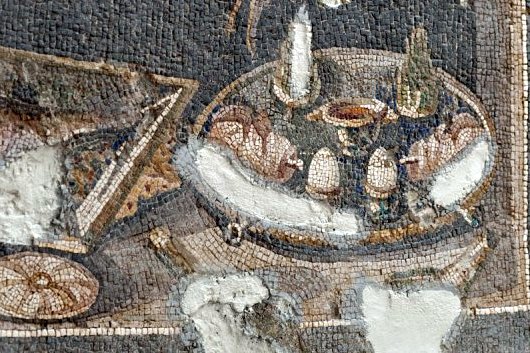
Eggs the right way, soft boiled and in cups. Detail from a 3rd century mosaic at the Hatay Archaeological Museum in Antakya, Turkey. 

Eggs the right way, soft boiled and in cups. Detail from a 3rd century mosaic at the Hatay Archaeological Museum in Antakya, Turkey. 

"Eggs of hens and of pheasants are better, while those of geese and ostriches [literally, 'sparrow-camels'] are worse. Best for the body's nourishment are the ones called 'trembling' [i.e., soft-boiled], while runny ones nourish less, but are passed more easily. They soothe the roughness in the throat caused by shouting or an acrid humour, when they are plastered on the affected places and remain there like a poultice; they also cure roughness because their whole substance is not stinging. For the same reason, they heal roughness in the stomach, bowels and bladder. An egg boiled in vinegar, when eaten, dries the discharges in the bowels. And if you mix things suitable for dysentery or a colic disposition with it and then broil it on coals and give it to eat, you will offer no small benefit to your patients. Suitable for these dispositions are the juice of unripe grapes, unripe mulberry plastered on, ashes of snails burnt whole, and grape seeds, myrtle berries and similar things.  Boiled eggs are hard to digest, pass slowly and provide thick nourishment to the body. The ones baked in hot ashes pass even more slowly and produce even thicker humours than them. Fried eggs have the least nutrition in every respect. For when they are cooked they become greasy and produce a thick humor that is bad and full of residues. Better than boiled and baked ones are those called 'curdled': briefly soaked in oil, garum and wine, and boiled on a double-boiler to a medium consistency. Eggs thickened longer become like boiled or baked ones. The same thing should also be done in cases where eggs are poured on a frying pan, taking the frying pan off the fire when the eggs are still soft."

Ὠὰ ἀμείνω τά τε τῶν ἀλεκτορίδων ἐστὶ καὶ τῶν φασιανῶν, φαυλότερα δὲ τὰ τῶν χηνῶν καὶ στρουθοκαμήλων. κάλλιστα μὲν οὖν εἰς τροφὴν τοῦ σώματός ἐστι τὰ τρομητὰ καλούμενα, τὰ δὲ ῥοφητὰ ἧττον μὲν τρέφει, ῥᾷον δὲ ὑποχωρεῖ. τὰς δὲ ἐν τῷ φάρυγγι τραχύτητας διὰ κραυγὴν ἢ χυμοῦ δριμύτητα ἐκλεαίνει, περιπλαττόμενα τοῖς πεπονθόσι τόποις καὶ προσμένοντα ὥσπερ τι κατάπλασμα καὶ τῷ τῆς ὅλης οὐσίας ἀδήκτῳ ἐκθεραπεύοντα καὶ τὰς τραχύτητας. τῷ δὲ αὐτῷ λόγῳ καὶ τὰς κατὰ τὸν στόμαχον καὶ γαστέρα καὶ κύστιν ἰᾶται τραχύτητας· ἐν ὄξει δὲ ἑψηθὲν ὠὸν εἰ βρωθείη, ξηραίνει τὰ κατὰ γαστέρα ῥεύματα. καὶ εἰ μίξας δὲ αὐτῷ τι τῶν πρὸς δυσεντερίαν ἢ κοιλιακὴν διάθεσιν ἁρμοττόντων, εἶτα ἐπ' ἀνθράκων ταγηνίσας, δοίης φαγεῖν, οὐ σμικρὰ τοὺς κάμνοντας ὠφελήσεις. ἐπιτήδεια δέ ἐστιν εἰς ταῦτα ὀμφάκιον καὶ ῥοῦς ἐπιπαττόμενος καὶ τέφρα τῶν κοχλιῶν ὅλων καέντων γίγαρτά τε σταφυλῆς καὶ μύρτα καὶ τὰ παραπλήσια. τὰ δὲ ἑφθὰ ὠὰ δύσπεπτα καὶ βραδύπορα καὶ τροφὴν παχεῖαν ἀναδίδωσι τῷ σώματι. τούτων δὲ ἔτι μᾶλλον βραδυπορώτερά τε καὶ παχυχυμότερα τὰ κατὰ θερμὴν σποδιὰν ὀπτηθέντα. τὰ δὲ ταγηνισθέντα χειρίστην ἔχει τροφὴν εἰς ἅπαντα· καὶ γὰρ ἐν τῷ πέττεσθαι κνισσοῦται καὶ παχὺν χυμὸν γεννᾷ καὶ μοχθηρὸν καὶ περιττωματικόν. ἀμείνω δὲ τῶν ἑφθῶν τε καὶ ὀπτῶν ἐστι τὰ καλούμενα πηκτὰ μετ' ἐλαίου καὶ γάρου καὶ οἴνου βραχέος ἀναδευθέντα καὶ ἐπὶ διπλώματος ἑψηθέντα μέχρι μετρίας συστάσεως. τὰ γὰρ ἐπὶ πλέον παχυνθέντα παραπλήσια τοῖς ἑψηθεῖσι καὶ ὀπτηθεῖσι γίγνεται. τὸ αὐτὸ δὲ χρὴ ποιεῖν κἀπὶ τῶν ἐπιχεομένων ταῖς λοπάσιν ὠῶν, ἔτι ἐγχύλων ὄντων ἀπὸ τοῦ πυρὸς αἴροντας τὴν λοπάδα.

Aetius of Amida, Libri Medicinales, II 134, 201,19-202,14 Olivieri

April 04, 2018 /Sean Coughlin
Generation of Animals, Aetius of Amida, eggs, resurrection, insects, Commentaries, Easter, Michael of Ephesus
Philosophy, Ancient Medicine
Comment
The Spring fresco. Thera, 16th cent. BCE (!!). Picture is from the National Archaeological Museum, Athens. CC BY-NC-DC.

The Spring fresco. Thera, 16th cent. BCE (!!). Picture is from the National Archaeological Museum, Athens. CC BY-NC-DC.

A Metaphor for Easter

Humboldt-Universität zu Berlin
April 03, 2018 by Sean Coughlin in Philosophy

It’s Easter time. A metaphor from Photius on raising the dead.


epsukhagôgêsen: was hopeful; was encouraged; or, brought back through magic the souls of the dead.

Ἐψυχαγώγησεν: ἐπήλπισε· παρεμυθήσατο· ἢ ψυχὰς διὰ μαγγανείας τῶν τελευτησάντων ἀνήγαγεν.

Photius, Lexicon, 47,14-16

See also the LSJ:

ψυχαγωγέω , (ψυχαγωγός): A. lead departed souls to the nether world, esp. of Hermes. II. evoke or conjure up the dead by sacrifice; hence metaph., lead or attract the souls of the living, win over, persuade, allure.

April 03, 2018 /Sean Coughlin
Easter, resurrection, Magic
Philosophy
Comment
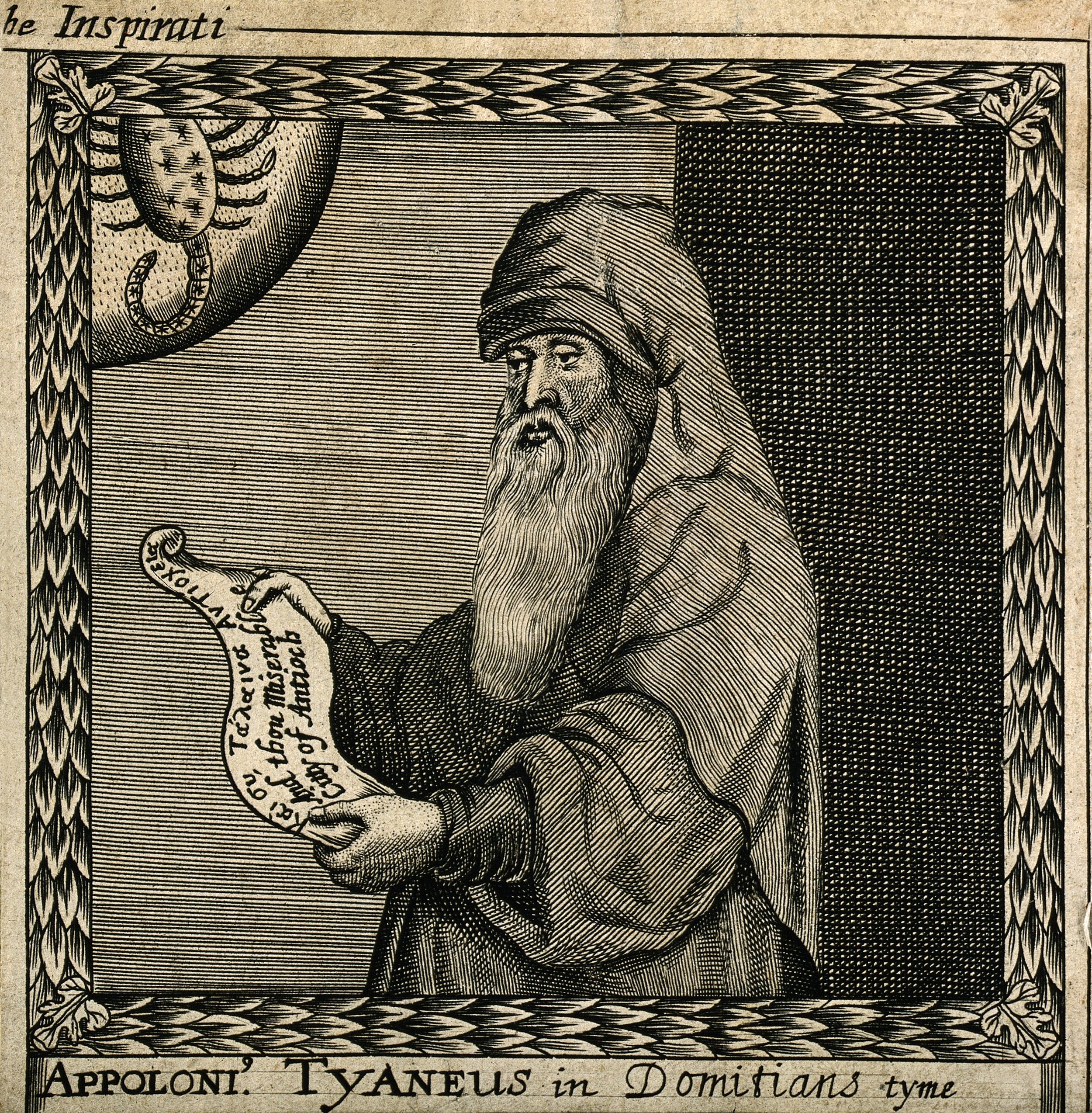
Old man of the sea: Apollonius of Tyana. Line engraving by F. Cleyn, 1659. Reproduction from The Wellcome Trust, via Wikimedia Commons. CCBY4.0.

Old man of the sea: Apollonius of Tyana. Line engraving by F. Cleyn, 1659. Reproduction from The Wellcome Trust, via Wikimedia Commons. CCBY4.0.

More on philosophers and magic, and Anaxagoras on teaching philosophy to cattle

April 01, 2018 by Sean Coughlin in Philosophy

"Apollonius, from Tyana, philosopher, son of Apollonius and a citizen-mother of the nobility. When she was pregnant, his mother saw a daimon suddenly appear saying that he himself would be the one she gives birth to, he being Proteus the Egyptian. For this reason, he was assumed to be the son of Proteus. He was in his prime during the time of Claudius, Gaius and Nero, up until Nerva, at which time he died. He kept silence for five years, following Pythagoras. Next he set out for Egypt, then for Babylon to go to the Magi, then to the Arabs, and he collected from all of them countless numbers of their magical incantations. He composed such works as Rites of Initiation or On Sacrifices, Covenant, Oracles, Letters, Life of Pythagoras.

"Philostratus of Lemnos wrote a biography of him fitting for a philosopher. [He says] that Apollonius of Tyana exceeded Sophocles in continence, for the latter used to say "one escapes the raging and wild master, once one has come into old age", but Apollonius, through virtue and continence, did not give way to them even in his youth. About Apollonius, Philostratus says that he was more divine in his approach to wisdom than Pythagoras, since he overcame tyrants and he lived in a time not too ancient and not too modern. People do not yet recognize that he comes from the true philosophy, which he practiced philosophically and soundly. Rather, some people accept one thing about the man, others another. Still others consider him a Magus and attack him as unwise, because he learned from the Magi of Babylon, the Brahmin of India, and the Naked [ones] in Egypt. They poorly understand him. The fact is Empedocles, Pythagoras himself, and Democritus, associated with the Magi and said many demonic things, and yet they were never seduced by the art. And Plato, who went to Egypt and, like a painter when he adds colour to a sketch, infused his own writings with many things derived from the prophets and priests of that place was never thought to practice magic, and he most of all among people is envied for his wisdom.

"Regarding his ability to perceive and foretell many things, one should not attack Apollonius for the things he predicted in his wisdom, since then Socrates will also be attacked for the things he predicted, and Anaxagoras, who, at Olympia, when there was not the least sign it would rain, went into the stadium under a fleece, indicating a prediction of rain. It is wrong for them to attribute to Anaxagoras this foreknowledge that comes from wisdom and deny it to Apollonius. It seems to me, therefore, that one should not pay attention to the ignorance of the many, but describe the man with precision, both with respect to his chronology, when he said or did something, and with respect to the ways of his wisdom, by which he came to be thought daimonic and divine. 

"I have collected reports from the cities that love him, from the temples which, having previously broken their rites, were restored by him, and from the things others wrote to him and he to others. He used to write to kings, sophists, philosophers, Elians, Delphians, Indians, and Egyptians about gods, about customs, and about laws, from whom [we can learn] what he did. The more accurate reports are from Damidos, his pupil.

"This Apollonius of Tyana had a good memory if anyone has. He kept his voice in silence, but gathered many things, and when he was one hundred years old had strength of memory beyond Simonides. He had a hymn to Memory which he would sign, in which he says all things wash away in time, but through memory time itself is ageless and immortal. Concerning Apollonius, look under the entry on 'Timasion' for other predictions. 

"[It is reported] that this Apollonius said the following about Anaxagoras: he said he was from Clazomenae and the things he established were for cattle and camels, and that he would rather teach philosophy to cows than people. Crates from Thebes threw his property into the sea, making it useful for neither cows or men."

Ἀπολλώνιος, Τυανεὺς, φιλόσοφος, υἱὸς Ἀπολλωνίου καὶ μητρὸς πολίτιδος τῶν ἐπιφανῶν, ὃν κύουσα ἡ μήτηρ ἐπιστάντα δαίμονα ἐθεάσατο λέγοντα, ὡς αὐτὸς εἴη ὃν κύει, εἶναι δὲ Πρωτέα τὸν Αἰγύπτιον: ὅθεν ὑπειλῆφθαι αὐτὸν Πρωτέως εἶναι υἱόν. καὶ ἤκμαζε μὲν ἐπὶ Κλαυδίου καὶ Γαί̈ου καὶ Νέρωνος καὶ μέχρι Νέρβα, ἐφ' οὗ καὶ μετήλλαξεν. ἐσιώπησε δὲ κατὰ Πυθαγόραν ε' ἔτη. εἶτα ἀπῆρεν εἰς Αἴγυπτον, ἔπειτα εἰς Βαβυλῶνα πρὸς τοὺς μάγους, κἀκεῖθεν ἐπὶ τοὺς Ἄραβας, καὶ συνῆξεν ἐκ πάντων τὰ μυρία καὶ περὶ αὐτοῦ θρυλούμενα μαγγανεύματα. συνέταξε δὲ τοσαῦτα: Τελετὰς ἢ περὶ θυσιῶν, Διαθήκην, Χρησμοὺς, Ἐπιστολὰς, Πυθαγόρου βίον.

εἰς τοῦτον ἔγραψε Φιλόστρατος ὁ Λήμνιος τὸν φιλοσόφῳ πρέποντα βίον. ὅτι Ἀπολλώνιος ὁ Τυανεὺς ἐς σωφροσύνην ὑπερεβάλλετο τοῦ Σοφοκλέους. ὁ μὲν γὰρ λυττῶντα ἔφη καὶ ἄγριον δεσπότην ἀποφυγεῖν, ἐλθόντα ἐς γῆρας, ὁ δὲ Ἀπολλώνιος ὑπ' ἀρετῆς καὶ σωφροσύνης οὐδὲ ἐν μειρακίῳ ἡττήθη τούτων. ὅτι Φιλόστρατος λέγει περὶ Ἀπολλωνίου, θειότερον ἢ ὁ Πυθαγόρας τῇ σοφίᾳ προσελθεῖν τυραννίδων τε ὑπεράραντα καὶ γενόμενον κατὰ χρόνους οὔτ' ἀρχαίους οὔτ' αὖ νέους. ὃν οὔπω οἱ ἄνθρωποι γινώσκουσιν ἀπὸ τῆς ἀληθινῆς φιλοσοφίας, ἣν φιλοσόφως τε καὶ ὑγιῶς ἐπήσκησεν. ἀλλ' ὁ μὲν τὸ, ὁ δὲ τὸ ἐπαινεῖ τἀνδρός: οἱ δὲ, ἐπειδὴ μάγοις Βαβυλωνίων καὶ Ἰνδῶν Βραχμᾶσι καὶ τοῖς ἐν Αἰγύπτῳ Γυμνοῖς συνεγένετο, μάγον ἡγοῦνται αὐτὸν καὶ διαβάλλουσιν ὡς μὴ σοφὸν, κακῶς γινώσκοντες. Ἐμπεδοκλῆς τε γὰρ καὶ Πυθαγόρας αὐτὸς καὶ Δημόκριτος ὁμιλήσαντες μάγοις καὶ πολλὰ δαιμόνια εἰπόντες οὔπω ὑπήχθησαν τῇ τέχνῃ. Πλάτων δὲ βαδίσας ἐς Αἴγυπτον καὶ πολλὰ τῶν ἐκεῖ προφητῶν τε καὶ ἱερέων ἐγκαταμίξας τοῖς ἑαυτοῦ λόγοις καὶ καθάπερ ζωγράφος ἐσκιαγραφημένοις ἐπιβαλὼν χρώματα οὔπω μαγεύειν ἔδοξε, καίτοι πλεῖστα ἀνθρώπων φθονηθεὶς ἐπὶ σοφίᾳ.

οὐδὲ γὰρ τὸ αἰσθέσθαι πολλὰ καὶ προγνῶναι διαβάλλοι ἂν τὸν Ἀπολλώνιον, ἐφ' οἷς προὔλεγεν, ἐς τὴν σοφίαν ταύτην, ὡς διαβεβλήσεται καὶ Σωκράτης ἐφ' οἷς προὔλεγε, καὶ Ἀναξαγόρας, ὃς Ὀλυμπίασιν, ὁπότε ἥκιστα ὕοι, προελθὼν ὑπὸ κωδίῳ ἐς τὸ στάδιον ἐπὶ προρρήσει ὄμβρου. καὶ ἄλλα τινὰ ὑπὲρ Ἀναξαγόρου προτιθέντες ἀφαιροῦνται τὸν Ἀπολλώνιον τὸ κατὰ σοφίαν προγινώσκειν. δοκεῖ οὖν μοι μὴ περιϊδεῖν τὴν τῶν πολλῶν ἄνοιαν, ἀλλ' ἐξακριβῶσαι τὸν ἄνδρα τοῖς τε χρόνοις, καθ' οὓς εἶπέ τι ἢ ἔπραξε, τοῖς τε τῆς σοφίας τρόποις, ὑφ' ὧν ἔψαυσε τοῦ δαιμόνιός τε καὶ θεῖος νομισθῆναι.

ξυνείλεκται δέ μοι τὰ μὲν ἐκ πόλεων, ὁπόσαι αὐτοῦ ἤρων, τὰ δὲ ἐξ ἱερῶν, ὁπόσα ὑπ' αὐτοῦ ἐπανήχθη παραλελυμένα τοὺς θεσμοὺς ἤδη, τὰ δὲ ἐξ ὧν ἕτεροι πρὸς αὐτὸν ἢ αὐτὸς πρὸς ἄλλους ἔγραφεν. ἐπέστελλε δὲ βασιλεῦσι, σοφισταῖς, φιλοσόφοις, Ἠλείοις, Δελφοῖς, Ἰνδοῖς, Αἰγυπτίοις, ὑπὲρ θεῶν, ὑπὲρ ἠθῶν, ὑπὲρ νόμων, παρ' οἷς ὅ τι ἂν πράττοι: τὰ δὲ ἀκριβέστερα παρὰ Δάμιδος ἀκηκοώς.

οὗτος Ἀπολλώνιος ὁ Τυανεὺς διαμνημονικός τις ἦν εἴπερ τις ἄλλος, ὃς τὴν μὲν φωνὴν σιωπῇ κατεῖχε, πλεῖστα δὲ ἀνελέγετο, καὶ τὸ μνημονικὸν ἑκατοντούτης γενόμενος ἔρρωτο ὑπὲρ τὸν Σιμωνίδην. καὶ ὕμνος αὐτῷ τίς ἐστιν εἰς μνημοσύνην, ὃν ᾖδεν, ἐν ᾧ πάντα μὲν ὑπὸ τοῦ χρόνου μαραίνεσθαί φησιν, αὐτόν γε μὴν τὸν χρόνον ἀγήρω τε καὶ ἀθάνατον ὑπὸ τῆς μνημοσύνης εἶναι. ζήτει περὶ Ἀπολλωνίου καὶ ἕτερα προγνωστικὰ αὐτοῦ ἐν τῷ Τιμασίων.

ὅτι Ἀπολλώνιος οὗτος τάδε περὶ Ἀναξαγόρα ἔφη: καὶ γὰρ Κλαζομένιον ὄντα καὶ ἀγέλαις καὶ καμήλοις τὰ ἑαυτοῦ ἀναθέντα εἰπεῖν, προβάτοις μᾶλλον ἢ ἀνθρώποις φιλοσοφῆσαι. ὁ δὲ Θηβαῖος Κράτης κατεπόντωσε τὴν οὐσίαν, οὔτε προβάτοις ποιήσας ἐπιτήδειον, οὔτε ἀνθρώποις.

Suda, s.v. Apollonius of Tyana

*Philostratus' Life of Apollonius of Tyana, which documents his adventures touring the world talking with kings and gymnosophists is online at Livius.org. 
 

April 01, 2018 /Sean Coughlin
Anaxagoras, Apollonius of Tyana, Philostratus, Pythagoreanism, Magic, Magus
Philosophy
1 Comment

A path home, star men, and the origins of astronomy

Humboldt-Universität zu Berlin
March 29, 2018 by Sean Coughlin in Philosophy

Astronomy: "the distribution of the stars." The Babylonians were first to discover it through [the teaching of?] Zoroaster. With them was Ostanes. They established that what occurs at birth is caused by celestial movement. The Egyptians and Greeks came after these men, and they trace those who are born back to movement of the stars.

Also, there is the phrase "to judge by the stars": for those who travel a long and solitary path, and by the stars are led back to the place of their homeland.

And the word, "starry": one who comes from the stars.

Magic and astrology originated from the Magouseans, for the Persians are actually called Magog by the locals, and these are the same as the Magouseans.

Ἀστρονομία: ἡ τῶν ἄστρων διανομή. πρῶτοι Βαβυλώνιοι ταύτην ἐφεῦρον διὰ Ζωροάστρου· μεθ' ὧν καὶ Ὀστάνης· οἳ ἐπέστησαν τῇ οὐρανίᾳ κινήσει τὰ περὶ τοὺς τικτομένους συμβαίνειν· ἀφ' ὧν Αἰγύπτιοι καὶ Ἕλληνες ἐδέξαντο καὶ τοὺς γεννωμένους ἀναφέρουσιν εἰς τὴν τῶν ἀστέρων κίνησιν.

καὶ Ἄστροις τεκμαίρεσθαι, ἐπὶ τῶν μακρὰν καὶ ἔρημον ὁδὸν πορευομένων καὶ ἄστροις σημειουμένων τὰς θέσεις τῶν πατρίδων.

καὶ Ἀστρῷος, ὁ ἐκ τῶν ἄστρων.

ὅτι μαγεία καὶ ἀστρολογία ἀπὸ Μαγουσαίων ἤρξατο. οἱ γάρ τοι Πέρσαι Μαγὼγ ὑπὸ τῶν ἐγχωρίων ὀνομάζονται. καὶ Μαγουσαῖοι, οἱ αὐτοί. 

Suda, s.v. Ἀστρονομία (α-entry 4257)

March 29, 2018 /Sean Coughlin
Zoroastrianism, Astronomy, Astrology, Egypt, Greece, Ostanes, Magic, Magus
Philosophy
Comment
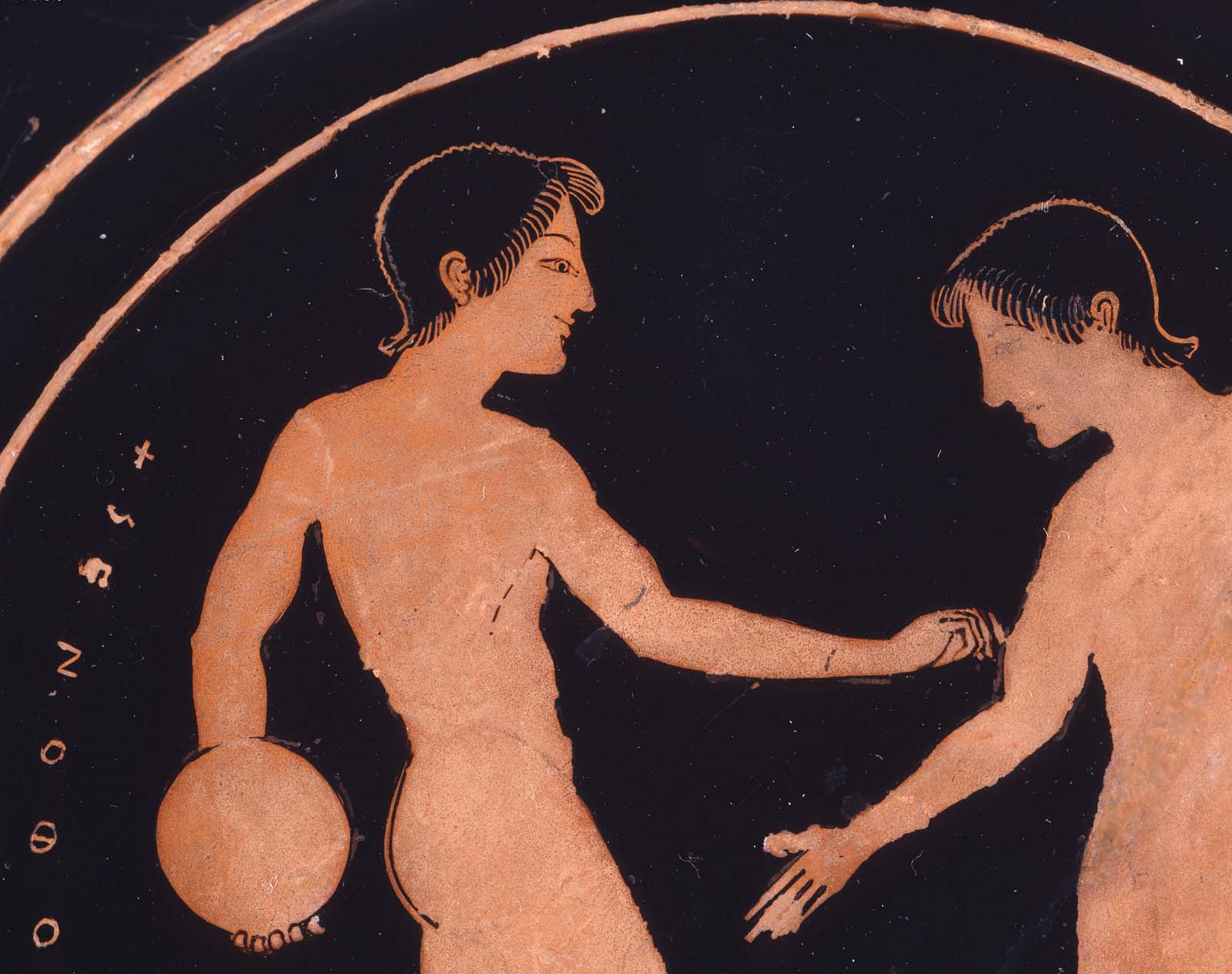
Xenophon and Dorothy, chatting about discus. 6th century. At the Museum of Fine Arts, Boston.

Xenophon and Dorothy, chatting about discus. 6th century. At the Museum of Fine Arts, Boston.

How to live a long life: learn magic or get some exercise

March 28, 2018 by Sean Coughlin in Ancient Medicine

Pseudo-Lucian talks about the prophecy and piety of the Magi (along with ethnographies of other tribes) as part of a discussion of life-expectancy: why do some groups of people live longer than others? Pseudo-Lucian thinks you could live a long time too if you just exercised and ate properly. Inspired by this article at the BBC: "We learn nothing about nutrition, claim medical students".


"Stories have been told of whole races who have a long life expectancy because of their way of life.* There are those called the 'Sacred Scribes' in Egypt, the 'Interpreters of Myths' in Assyria and Arabia, those called 'Brahmans' in India, men completely devoted to the study of philosophy, and those called the 'Magi', a prophetic race who dedicate themselves to the gods, found among the Persians, Parthians, Bactrians, Chorasmians, Arians, Sacae, Medes, and many other Barbarians. They are strong and long-lived because they lead their life in strict observance of magic.

"There are also whole nations who have a long life expectancy, like in the stories they tell about the Seres, who live up to three-hundred years, some attributing the cause of their old age to the climate, others to the land, and still others to their way of life: for, they say, this is a whole nation of water-drinkers. Stories are also told of the people of Athos living up to one- hundred and thirty years, and there is a report that the Chaldeans live over one-hundred years, using bread made from barley because it acts as a drug for preserving good eyesight. They also say that on account of this diet, their other senses are better than those of other people.

"But that's enough about the life expectancy of these races and nations, those which they say survive for a long time either because of the land and climate, or way of life, or both. I, however, want to propose to you that your hopes [of a long life] are easy to achieve, by telling you about men in every land and in every climate who have become long-lived by using the right kind of exercises and a healthy diet."

καὶ γένη δὲ ὅλα μακρόβια ἱστορεῖται διὰ τὴν δίαιταν, ὥσπερ Αἰγυπτίων οἱ καλούμενοι ἱερογραμματεῖς, Ἀσσυρίων δὲ καὶ Ἀράβων οἱ ἐξηγηταὶ τῶν μύθων, Ἰνδῶν δὲ οἱ καλούμενοι Βραχμᾶνες, ἄνδρες ἀκριβῶς φιλοσοφίᾳ σχολάζοντες, καὶ οἱ καλούμενοι δὲ μάγοι, γένος τοῦτο μαντικὸν καὶ θεοῖς ἀνακείμενον παρά τε Πέρσαις καὶ Πάρθοις καὶ Βάκτροις καὶ Χωρασμίοις καὶ Ἀρείοις καὶ Σάκαις καὶ Μήδοις καὶ παρὰ πολλοῖς ἄλλοις βαρβάροις, ἐρρωμένοι τέ εἰσι καὶ πολυχρόνιοι διὰ τὸ μαγεύειν διαιτώμενοι καὶ αὐτοὶ ἀκριβέστερον.

ἤδη δὲ καὶ ἔθνη ὅλα μακροβιώτατα, ὥσπερ Σῆρας μὲν ἱστοροῦσι μέχρι τριακοσίων ζῆν ἐτῶν, οἱ μὲν τῷ ἀέρι, οἱ δὲ τῇ γῇ τὴν αἰτίαν τοῦ μακροῦ γήρως προστιθέντες, οἱ δὲ καὶ τῇ διαίτῃ· ὑδροποτεῖν γάρ φασι τὸ ἔθνος τοῦτο σύμπαν. καὶ Ἀθῴτας δὲ μέχρι τριάκοντα καὶ ἑκατὸν ἐτῶν βιοῦν ἱστορεῖται, καὶ τοὺς Χαλδαίους ὑπὲρ τὰ ἑκατὸν ἔτη βιοῦν λόγος, τούτους μὲν καὶ κριθίνῳ ἄρτῳ χρωμένους, ὡς ὀξυδορκίας τοῦτο φάρμακον· οἷς γέ φασι διὰ τὴν τοιαύτην δίαιταν καὶ τὰς ἄλλας αἰσθήσεις ὑπὲρ τοὺς ἄλλους ἀνθρώπους ἐρρωμένας εἶναι.

Ἀλλὰ ταῦτα μὲν περί τε τῶν μακροβίων γενῶν καὶ τῶν ἐθνῶν, ἅτινά φασιν ὡς ἐπὶ πλεῖστον διαγίγνεσθαι χρόνον, οἱ μὲν διὰ τὴν γῆν καὶ τὸν ἀέρα, οἱ δὲ διὰ τὴν δίαιταν, οἱ δὲ καὶ δι' ἄμφω. ἐγὼ δ' ἄν σοι δικαίως τὴν ἐλπίδα ῥᾳδίαν παράσχοιμι ἱστορήσας ὅτι καὶ κατὰ πᾶσαν γῆν καὶ κατὰ πάντα ἀέρα μακρόβιοι γεγόνασιν ἄνδρες οἱ γυμνασίοις τοῖς προσήκουσιν καὶ διαίτῃ τῇ ἐπιτηδειοτάτῃ πρὸς ὑγίειαν χρώμενοι.

Pseudo-Lucian, Long Lives (Marcobii), 4-8

* διὰ τὴν δίαιταν I'm translating as "way of life" or "diet" depending on the context. Keep in mind that it includes more that just what one eats, but also hygiene more generally: one's daily routine of sleep, waking, food, drink, work and sex.

March 28, 2018 /Sean Coughlin
regimen, Exercise, Persia, Serica, India, Macrobii, Egypt, Lucian, Magic, Magus, Chaldeans
Ancient Medicine
Comment
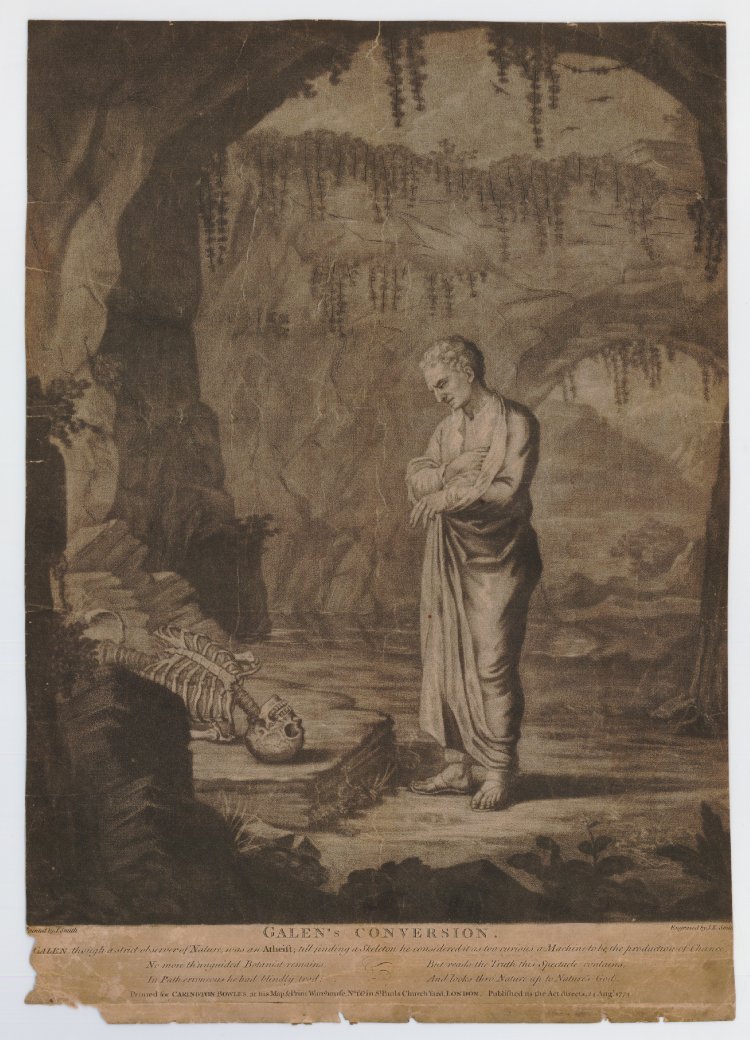
"Galen's Conversion", a motif in the late 18th century. This one is by John Raphael Smith, 1774. It's at the British Museum. CC BY-NC-SA 4.0.

"Galen's Conversion", a motif in the late 18th century. This one is by John Raphael Smith, 1774. It's at the British Museum. CC BY-NC-SA 4.0.

Galen's advice on how to never get sick ("read my books and pay attention")

March 19, 2018 by Sean Coughlin in Ancient Medicine

"After I turned 28, I had convinced myself that there exists an art of hygiene and I followed its precepts the whole rest of my life. The result was that I never got sick except for the occasional ephemeral fever; but, surely it is possible for someone to preserve themselves completely if they have secured a life of freedom.* This already became clear in the previous sections, and it will become even clearer in the sections that follow should you choose to pay attention. For I say no buboes** can be produced in anyone who has rigorously prepared for health, simply if their body is free from of each kind of excess residue, both in quantity and quality."

ἀλλὰ μετά γε τὸ εἰκοστὸν ὄγδοον ἔτος ἀπὸ γενετῆς ἐμαυτὸν πείσας, ὡς ἔστι τις ὑγιεινὴ τέχνη, τοῖς προστάγμασιν αὐτῆς ἠκολούθησα παρ' ὅλον τὸν ἑξῆς βίον, ὡς μηκέτι νοσῆσαι νόσημα μηδέν, ὅτι μὴ σπάνιόν που πυρετὸν ἐφήμερον. ἔστι δὲ δήπου καὶ τοῦτον αὐτὸν φυλάξασθαι τελέως, ἐλεύθερον ἑλόμενον βίον, ὡς ἔν τε τοῖς ἔμπροσθεν ἤδη γέγονε δῆλον ἔτι τε μᾶλλον ἔσται σαφὲς ἐν τοῖς ἐφεξῆς εἰρησομένοις, εἰ θέλοι τις προσέχειν τὸν νοῦν. ἐγὼ γάρ φημι μηδὲ βουβῶνα δύνασθαι γενέσθαι τοῖς ἀκριβῶς παρεσκευασμένοις εἰς ὑγείαν, εἴ γ' ἀπέριττον αὐτοῖς ἐστι τὸ σῶμα τοῦ γένους τῶν περιττωμάτων ἑκατέρου, τοῦ τε κατὰ τὸ ποσὸν καὶ τοῦ κατὰ τὸ ποιόν.

Galen, De sanitate tuenda, 5.1, 6.309-10 Kühn

*Galen is referring to something he said a bit earlier: that he gets an occasional fever because sometimes he works too much. In other words, he is not free, since he is dedicated to his practice. If you are free, all the more reason you should remain healthy if you follow his advice.

**not quite sure why Galen is singling out buboes here.

March 19, 2018 /Sean Coughlin
hygiene, buboes, diet, health tips, ostentation, regimen, Galen
Ancient Medicine
Comment
iacta alea esto

iacta alea esto

Julius Caesar's Prescription

March 15, 2018 by Sean Coughlin in Ancient Medicine

“They say that Caesar had an epileptic fit brought on by an unending winter, but that he was later treated by drinking the juice of the Heraclean plant with the rennet from a seal. It’s not surprising if Caesar was able to get his hands on seal rennet. Aretas, however, the phylarch of Arab Scenitae, wrote a letter to Claudius Caesar about a treatment using birds. He says the liver of a vulture roasted along with the blood and taken with honey three times a week gives relief from epilepsy. Likewise, the heart of the vulture, when dried, taken with water in the same manner, is equally effective.”

Ὅτι τὸν Καίσαρά φασιν ἐξ ἀπείρου χειμῶνος ἐπιληψίᾳ περιπεσεῖν· θεραπευθῆναι δὲ ὕστερον ἡρακλείου βοτάνης χυλὸν σὺν πυτίᾳ φώκης ἑλκύσαντα. καὶ Καῖσαρ μὲν οὔπω θαυμαστὸν εἰ καὶ φώκης πυτίας ηὐπόρησεν· Ἀρέτας δὲ ὁ τῶν Σκηνιτῶν Ἀράβων φύλαρχος Κλαυδίῳ Καίσαρι γράφων ἐπιστολὴν περὶ τῆς δι' ὀρνέων θεραπείας φησίν, ἧπαρ γυπὸς σὺν τῷ αἵματι ὀπτὸν μετὰ μέλιτος διδόμενον ἐπὶ ἑβδομάδας τρεῖς ἀπαλλάττειν ἐπιληψίας, ὁμοίως δὲ καὶ τὴν καρδίαν τοῦ γυπός, ὅτε ξηρανθῇ, ἐν ὕδατι διδομένην τῷ ἴσῳ τρόπῳ ἰσχύειν.

Lydus, On the months of the year, 4. 104

“Most historians say that Caesar was a seven-month child, and that’s why he changed the name of the seventh month of the sacred year to his own.”

Ὅτι οἱ πολλοὶ τῶν ἱστορικῶν φασι τὸν Καίσαρα ἑπτάμηνον τεχθῆναι, καὶ διὰ τοῦτο τὸν ἕβδομον μῆνα τοῦ ἱερατικοῦ ἐνιαυτοῦ εἰς τὴν οἰκείαν μεταβαλεῖν προσηγορίαν.

Lydus, On the months of the year, 4. 105

“An oracle was delivered to the Romans by the Mother, that they are not to engage in sexual activity at all during July, if their bodies are to stay healthy.”

Χρησμὸς ἐδόθη Ῥωμαίοις πρὸς τῆς Μητρός, μηδ' ὅλως ἀφροδισίοις χρῆσθαι ἀνὰ πάντα τὸν Ἰούλιον μῆνα, εἴπερ αὐτοῖς ὑγιαίνειν τὰ σώματα μέλλοι.

Lydus, On the months of the year, 4. 106

“When some people were suspicious of Marc Antony and Dolabella and urged Caesar to keep an eye on them, he said he wasn't worried about plodding and portly people, but thin and pale ones, indicating Brutus and Cassius.”

Ἀντώνιον δὲ καὶ Δολοβέλλαν ὑφορωμένων ἐνίων καὶ φυλάττεσθαι κελευόντων, οὐ τούτους ἔφη δεδιέναι τοὺς βαναύσους καὶ λιπῶντας, ἀλλὰ τοὺς ἰσχνοὺς καὶ ὠχροὺς ἐκείνους, δείξας Βροῦτον καὶ Κάσσιον.

[Plutarch], Sayings of Gaius Caesar, 14 (Moralia 206F)

"When the conversation at dinner turned to the best kind of death, Caesar said: 'unexpected.'"

Λόγου δὲ παρὰ δεῖπνον ἐμπεσόντος περὶ θανάτου ποῖος ἄριστος ‘ὁ ἀπροσδόκητος’ εἶπε.

[Plutarch], Sayings of Gaius Caesar, 15 (Moralia 206F)

March 15, 2018 /Sean Coughlin
epilepsy, idesofmarch, ancient prescriptions, Julius Caesar
Ancient Medicine
Comment
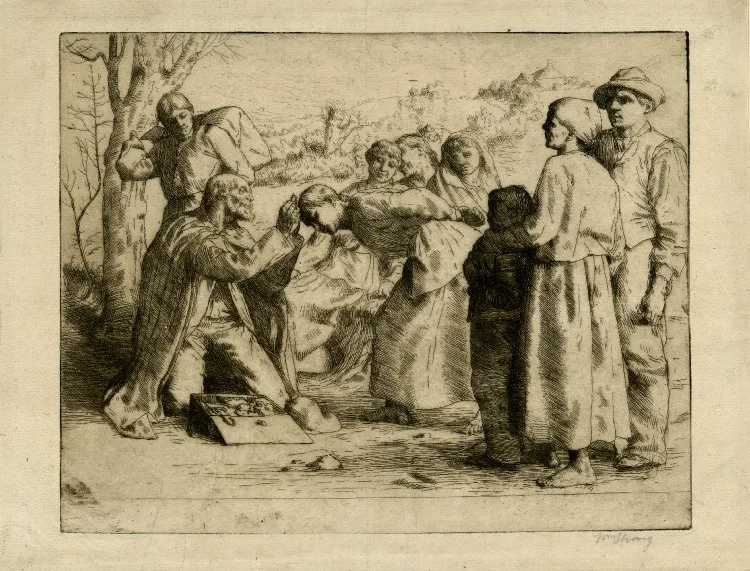
The Trinket Seller. William Strang. 1883. Etching and drypoint. From the British Museum: "To left, a trinket seller kneels to right with an open box of his wares by his side; a woman is bending towards him and he is placing a necklace over her head.…

The Trinket Seller. William Strang. 1883. Etching and drypoint. From the British Museum: "To left, a trinket seller kneels to right with an open box of his wares by his side; a woman is bending towards him and he is placing a necklace over her head. A group of potential customers in rustic dress look on." CC BY-NC-SA 4.0.

Pedlars and Peddlers, Hucksters and Trash-talkers

March 14, 2018 by Sean Coughlin in Ancient Medicine

(Ed 22 March 2019: I’ve since found an excellent book on shopping in Ancient Rome by Claire Holleran. Here’s the Google books view of the relevant chapter.)

I’ve been trying to sort out a term from Galen’s pharmacology: a group of people called ‘rhôpopôlai‘ who seem to deal with plants professionally. Not ‘professionally’ like doctor- or florist-professionally, but still in a way that everyone recognizes:

"Once I have added this further point, I will end the discussion of abrotanum. The incredible Pamphilus, although he describes this herb first and even tries to give a description of it from his own experience (so what if he doesn’t do this for any of the herbs that follow), nevertheless makes a terrible error: he thought that this plant is the one the Romans call, 'santonicum'. The fact is, abrotanum differs from santonicum, as Dioscorides very accurately described in book three of De materia medica. Everyone knows this, doctors and rhôpopôlai alike.

τοσόνδε μέντοι προσθεὶς ἔτι περὶ ἀβροτόνου καταπαύσω τὸν λόγον, ὡς ὁ θαυμασιώτατος Πάμφιλος, καίτοι ταύτην πρώτην πόαν γράφων καὶ τάχ' ἂν εἰ μηδενὸς τῶν ἐφεξῆς, ἀλλὰ ταύτης γοῦν ἐθελήσας αὐτόπτης γενέσθαι, ὅμως ἔσφαλται μέγιστα, νομίζων ὑπὸ Ῥωμαίων σαντόνικον ὀνομάζεσθαι τὴν βοτάνην.  διαφέρει γὰρ ἀβρότονον σαντονίκου, καθότι καὶ Διοσκουρίδης ἔγραψεν ἐν τῷ τρίτῳ περὶ ὕλης ἀκριβέστατα, καὶ πάντες ἴσασι τοῦτό γε ἰατροὶ καὶ ῥωποπῶλαι.

Galen, Simple Drugs, 6.pr. (11.804 K.)

Galen thinks doctors are expected to know the difference between one kind of artemisia and another (artemisia santonicum and artemisia abrotanum). His expectations for the rhôpopôlai, however, are more relaxed, and he doesn't think he's being controversial in saying this (he mentions this profession five times, he's not too big on them). At the same time he also seems confident that he and his audience are familiar with who these people are. The character of the rhôpopôlês is so well known, so utterly unremarkable, that it can slip in as the punchline of Galen’s trash-talk.

Of course, they aren’t unremarkable anymore. I have no idea what a 'rhôpopôlês' is, what he knows or doesn’t know, where one finds him in town, what he does. The rhôpopôlês is an alien to me. Even after putting together a bunch of texts that talk about him, I’m still not sure I really get the joke. 

A 'rhôpopôlês' is probably something like a huckster, hawker, costermonger, street-vendor. (to be honest, I don't know what these guys are either. I have an irrational fear of markets and my imagination is limited to the pedlars on summer sundays at Parc Mont Royal). Literally, it is someone who sells or deals in ῥῶπος. What this means is not totally clear: sometimes, it means a trinket, or small non-perishable good, i.e., something you don’t need a fixed shop to sell; other times it means something much more specific, namely pigments, oils, dyes, perfumes and drugs.

The specification we see in later sources led to some debate about whether this term (and terms like it) implies there was a profession of druggists or pharmacists in Roman antiquity. It probably doesn't; there were ‘root-cutters’, but that’s another story.

“'Rhôpopôlês': a person who sells 'rhôpos’, that is any dry, miscellaneous goods.”

ῥωποπώλης: ὁ τὸν ῥῶπον πωλῶν, ὅ ἐστι ξηρὸς φόρτος καὶ ποικίλος.

Phrynichus, Sophistic Preparations (epitome) Page 107, line 1

“Rhôpos and gelgê: Miscellaneous and small goods. Thus, 'rhôpopôlês' (‘rôpos-seller) and 'gelgopôlê' (gelge-seller).”

ῥῶπος καὶ γέλγη· ὁ ποικίλος καὶ λεπτὸς φόρτος, ὅθεν ῥωποπώλης καὶ γελγοπώλη

Aelius Dionysius, Attic Names, s.v. ῥῶπος (entry 14)

“The Attics say ‘gelgê ' and ' gelgê-seller'; Greeks say 'rhôpos ' and 'rhôpos-seller'.”

γέλγη καὶ γελγοπώλης Ἀττικοί, ῥῶπος καὶ ῥωποπώλης Ἕλληνες.

Moeris, Attic Lexicon, 194,4

“It is said that the first Phoenicians to sail to Tartessos, having brought oil and other nautical rhôpos, came back loaded with so much silver that there was nowhere to keep or put it, but when sailing away from the place they were forced to make everything else which they used out of silver, and even all the anchors, as well.”

Τοὺς πρώτους τῶν Φοινίκων ἐπὶ Ταρτησσὸν πλεύσαντας λέγεται τοσοῦτον ἀργύριον ἀντιφορτίσασθαι, ἔλαιον καὶ ἄλλον ναυτικὸν ῥῶπον εἰσαγαγόντας, ὥστε μηκέτι ἔχειν δύνασθαι μήτε ἐπιδέξασθαι τὸν ἄργυρον, ἀλλ' ἀναγκασθῆναι ἀποπλέοντας ἐκ τῶν τόπων τά τε ἄλλα πάντα ἀργυρᾶ οἷς ἐχρῶντο κατασκευάσασθαι, καὶ δὴ καὶ τὰς ἀγκύρας πάσας.

Pseudo-Aristotle, On Marvellous Things Heard, 844a17-23

“Nature is everywhere precise, artistic, lacking nothing and without excess – ‘having’, as Erasistratus says, ‘nothing rhôpikon.’” (=trashy? tracky? worthless?? superfluous?)

πανταχοῦ μὲν γὰρ ἡ φύσις ἀκριβὴς καὶ φιλότεχνος καὶ ἀνελλιπὴς καὶ ἀπέριττος, ‘οὐδέν’ ὡς ἔφησεν Ἐρασίστρατος ‘ἔχουσα ῥωπικόν’

Plutarch, Moralia 495C7-9 = Erasistratus Fr. 83

[[then there’s a semantic shift, at some point in the dark ages.]]

“'Rhôpos': compounds, pigments, all those things used by dyers, painters and perfumers. Whence, 'rhôpopôlês', 'perfume dealer' (?). Some people have also called miscellaneous goods, 'rhôpos'.”

Ῥῶπος: μίγμα· χρώματα, ὅσα βαφεῦσι, ζωγράφοις, μυρεψοῖς χρησιμεύει· ὅθεν ῥωποπώλης, ὁ μυροπώλης· τινὲς δὲ καὶ τὸν παντοδαπὸν φόρτον, ῥῶπον εἰρήκασιν.

Photius, Lexicon, s.v. Ῥῶπος (p.494)

“Rhôpos: compounds of colour, those which are used by dyers, painters and perfumers. Whence 'rhôpopôlês'. Some people have also called miscellaneous goods 'rhôpos'.”

Ῥῶπος: μίγμα χρώματος, ὅσα βαφεῦσι, ζωγράφοις, μυρεψοῖς χρησιμεύει. ὅθεν ῥωποπώλης. τινὲς δὲ καὶ τὸν παντοδαπὸν φόρτον ῥῶπον εἰρήκασι.

Suda, s.v. Ῥῶπος

“A rhôpos is a small, cheap, miscellaneous good, as Aelius Dionysius says, while gelgê, he says, is what the ancients called it. Whence, just as there are rhôpos-sellers, so too there are gelgê- sellers. The word, 'rhôpos', occurs in Demosthenes and others, and in Strabo. From this also comes rhopoperperethra, when someone calls out to someone they are mocking with vulgarity and silliness ('trash-talk'?), the inflection of which follows daktylethra ('finger sheath') and similar words. It also occurs in the verb, 'rhôpizein', which refers to making compounds and mixtures.

Ῥῶπος μέντοι λεππὸς καὶ εὐτελὴς φόρτος, ὡς δὲ Αἴλιος Διονύσιος λέγει, καὶ ποικίλος, γέλγην δέ, φησίν, αὐτὸν ἔλεγον οἱ παλαιοί. ὅθεν καθὰ ὁ ῥωποπώλης, οὕτω καὶ ὁ γελγοπώλης. ἡ δὲ λέξις τοῦ ῥώπου παρά τε Δημοσθένει καὶ ἑτέροις, κεῖται δὲ καὶ παρὰ τῷ Στράβωνι. ἐκ τούτου δὲ καὶ ῥωποπερπερήθρα τις προσερρήθη ἐπὶ χυδαιότητι καὶ φλυαρίᾳ σκωπτόμενος, οὗ ἡ παραγωγὴ κατὰ τὸ δακτυλήθρα καὶ τὰ ὅμοια. φέρεται δὲ καὶ ῥῆμα τὸ ῥωπίζειν, ὃ δηλοῖ τὸ σύμμικτα καὶ συμπεφυρμένα ποιεῖν.

Eustathius, Commentarii ad Homeri Iliadem, 3.459-360

March 14, 2018 /Sean Coughlin
hucksters, pigments, dye, oils, wormwood, perfume, professions, pharmacology, drug dealing, peddlers, Galen, Translation problems, materia medica
Ancient Medicine
Comment
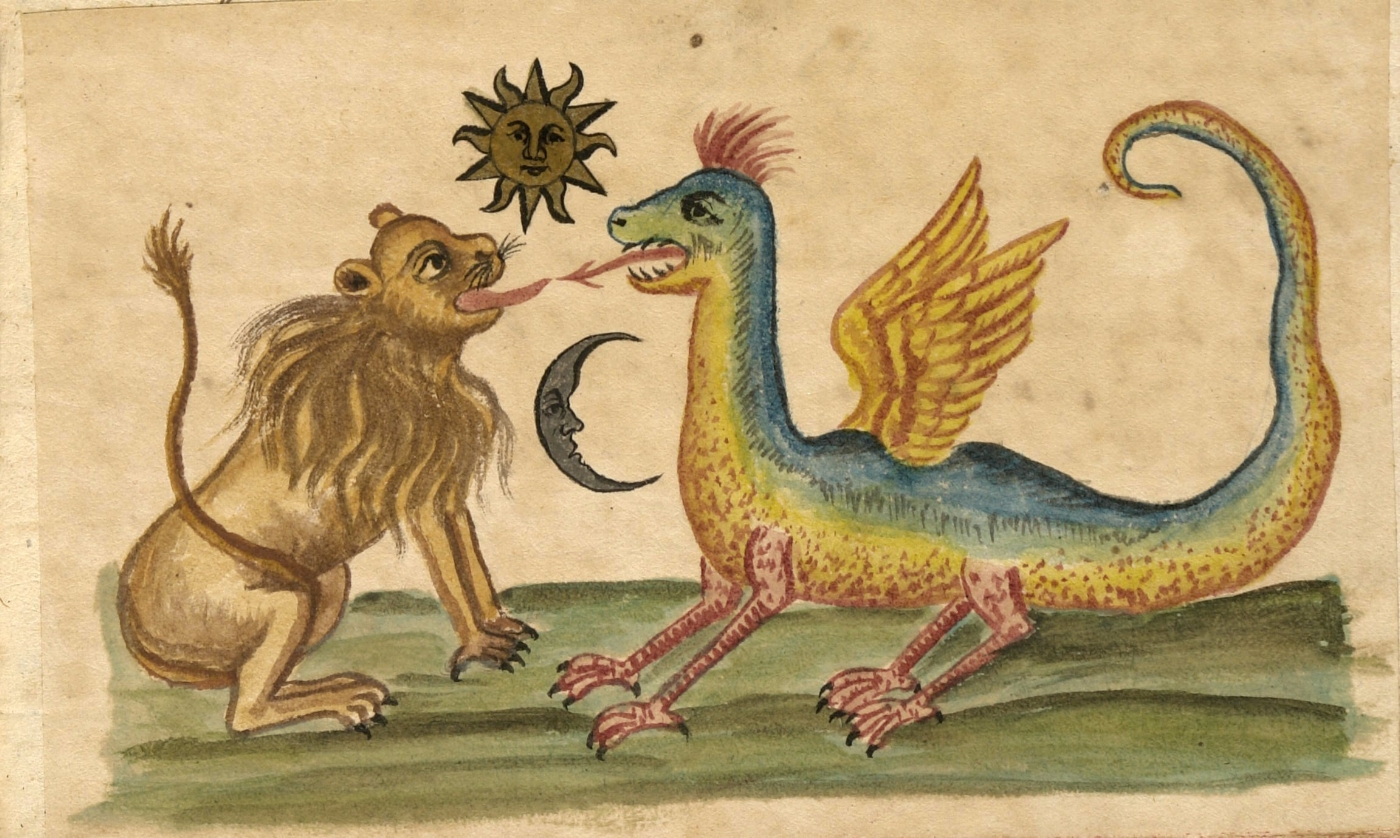
This illustration is from the Clavis Artis, a German alchemical text attributed to Zoroaster. Clavis Artis, Ms-2-27, Biblioteca Civica Hortis, Trieste, vol. 2, pag. 182. On the manuscript and its provenance, see the Italian wiki. Image from wikimedi…

This illustration is from the Clavis Artis, a German alchemical text attributed to Zoroaster. Clavis Artis, Ms-2-27, Biblioteca Civica Hortis, Trieste, vol. 2, pag. 182. On the manuscript and its provenance, see the Italian wiki. Image from wikimedia commons. 

Aristotle's Lost Book On Magic

March 11, 2018 by Sean Coughlin in Philosophy

Here are all of V. Rose's testimonia of a work attributed to Aristotle called Magic (ὁ Μαγικός λόγος, or τὸ μαγικόν?). The title either refers to the art practised by the Magi (the Zoroastrian priests from Persia), or it refers to the fact that the discussion is a discussion about the Magi. The latter seems more likely, even though the first passage, from Diogenes Laertius, suggests the discussion mentioned all sorts of wisdom cults.

The attribution is disputed. Diogenes Laertius says it is by Aristotle, but doesn't put it in his list of Aristotle's works (it doesn't show up in any other list I've looked at in either Greek or Arabic). The Suda says it is by Antisthenes, and that some people attributed it to Aristotle or someone named Rhodon. It's not clear where the Suda is getting this from.

While we don't know who wrote it, its contents are hinted at by the testimonies gathered in Rose (+ a few others I've put together). Diogenes reports that Aristotle thought magic wasn't sorcery, but philosophy or wisdom. This is confirmed by the Suda. It has something to do with prognostication. Eudoxus, according to Pliny, believed it was useful and very valuable, and so it was not only practical but connected to more valuable objects of study, probably the heavenly bodies. This is especially supported by the etymology of Zoroaster ('star-diviner') reported by Diogenes, and Porphyry's etymology of 'magus' as 'wise in divine matters'. Philo specifies that it was a kind of 'optics' and a very precise branch of natural science. Finally, Philo, Porphyry and the Suda associate it with both wisdom and with kingship. Philo says not only private citizens practice magic, but that Persian kings themselves had to be educated as Magi to become king.

It seems to me as if all these testimonies could be referring to a discussion of wise philosopher kings who are able to predict the future through their understanding of the heavens and the science of nature.


"Some say the work of philosophy originated with the barbarians. For among the Persians are the Magi, among the Babylonians and Assyrians the Chaldeans, among the Indians the Gymnosophists (lit. naked philosophers), and among the Celts and Gauls, those called 'Druids' and holy people, according to what Aristotle says in the book on Magic and Sotion in the twenty-third book of the Succession of Philosophers."

Τὸ τῆς φιλοσοφίας ἔργον ἔνιοί φασιν ἀπὸ βαρβάρων ἄρξαι. γεγενῆσθαι γὰρ παρὰ μὲν Πέρσαις μάγους, παρὰ δὲ Βαβυλωνίοις ἢ Ἀσσυρίοις Χαλδαίους, καὶ γυμνοσοφιστὰς παρ' Ἰνδοῖς, παρά τε Κελτοῖς καὶ Γαλάταις τοὺς καλουμένους δρυίδας καὶ σεμνοθέους, καθά φησιν Ἀριστοτέλης ἐν τῷ μαγικῷ καὶ Σωτίων ἐν εἰκοστῷ τρίτῳ τῆς διαδοχῆς.

Diogenes Laertius, Lives of the Eminent Philosophers, 1.1

"The Magi were ignorant of sorcerers' magic, says Aristotle in the book on Magic and Dinon in the fifth book of his Histories. He also says 'Zoroaster' when translated literally means 'star-diviner'; Hermodorus says this as well. In the first book of On Philosophy, Aristotle says they (the Magi) are actually older than the Egyptians. And according to them there are two principles, a good daimon and a bad daimon: to the former, the name is Zeus and 'Oromasdes' [i.e., Ahura Mazda], to the other Hades and 'Arimanius' [i.e., Ahriman]. Hermippus says this too in the first book On Magi, so does Eudoxus in the Survey, and Theopompus in the eighth book of the Philippics."

Τὴν δὲ γοητικὴν μαγείαν [sc. οἱ Μάγοι] οὐδ' ἔγνωσαν, φησὶν Ἀριστοτέλης ἐν τῷ Μαγικῷ καὶ Δείνων ἐν τῇ πέμπτῃ τῶν Ἱστοριῶν· ὃς καὶ μεθερμηνευόμενόν φησι τὸν Ζωροάστρην ἀστροθύτην εἶναι· φησὶ δὲ τοῦτο καὶ ὁ Ἑρμόδωρος. Ἀριστοτέλης δ' ἐν πρώτῳ Περὶ φιλοσοφίας καὶ πρεσβυτέρους εἶναι τῶν Αἰγυπτίων· καὶ δύο κατ' αὐτοὺς εἶναι ἀρχάς, ἀγαθὸν δαίμονα καὶ κακὸν δαίμονα· καὶ τῷ μὲν ὄνομα εἶναι Ζεὺς καὶ Ὠρομάσδης, τῷ δὲ Ἅιδης καὶ Ἀρειμάνιος. φησὶ δὲ τοῦτο καὶ Ἕρμιππος ἐν τῷ πρώτῳ Περὶ μάγων καὶ Εὔδοξος ἐν τῇ Περιόδῳ καὶ Θεόπομπος ἐν τῇ ὀγδόῃ τῶν Φιλιππικῶν.

Diogenes Laertius, Lives of the Eminent Philosophers, 1.7-8

"Aristotle says that a certain magus [magician or priest from Persia] came from Syria to Athens and among the other things he predicted about Socrates, was that he will have a violent end."

φησὶ δ' Ἀριστοτέλης μάγον τινὰ ἐλθόντα ἐκ Συρίας εἰς Ἀθήνας τά τε ἄλλα καταγνῶναι τοῦ Σωκράτους καὶ δὴ καὶ βίαιον ἔσεσθαι τὴν τελευτὴν αὐτῷ.

Diogenes Laertius, Lives of the Eminent Philosophers, 2.45

"Eudoxus, who wanted it to be known that among the schools of philosophy, magic is the most illustrious and most useful, relates that this 'Zoroaster' lived six thousand years before Plato's death. Aristotle says this too."

Eudoxus qui inter sapientiae sectas clarissimam utilissimamque eam (magicam) intellegi voluit, Zoroastren hunc sex milibus annorum ante Platonis mortem fuisse prodidit. sic et Aristoteles.

Pliny, Natural History, 30.3

"Antisthenes, an Athenian, Socratic philosopher from among the orators, who first was called a Peripatetic, then 'played the dog' (i.e., acted like someone from what would later be called the 'Cynic' school). He was the son of a father with the same name, and his mother came from the people of Thrace. He wrote these ten volumes: first, Magic: it tells about a certain magus, Zoroaster, who discovered wisdom. Some people attribute this to Aristotle, others to Rhodon."

Ἀντισθένης, Ἀθηναῖος, ἀπὸ ῥητόρων φιλόσοφος Σωκρατικός, ὅστις Περιπατητικὸς ἐκλήθη πρῶτον, εἶτα ἐκύνισεν: υἱὸς δὲ ὢν ὁμωνύμου πατρὸς, μητρὸς δὲ τὸ γένος Θρᾴσσης. οὗτος συνέγραψε τόμους δέκα: πρῶτον μαγικόν: ἀφηγεῖται δὲ περὶ Ζωροάστρου τινὸς μάγου, εὑρόντος τὴν σοφίαν: τοῦτο δέ τινες Ἀριστοτέλει, οἱ δὲ Ῥόδωνι ἀνατιθέασιν.

Suda, s.v. Ἀντισθένης

"Execestus, the Phocian tyrant, used to wear two enchanted rings, and he used to determine the appropriate time to act by the sound they made against one another. But, he still died, murdered by treachery despite being warned by the sound, as Aristotle says in the Phocian Constitution."

Ἐξήκεστός τε ὁ Φωκαιέων τύραννος δύο δακτυλίους φορῶν γεγοητευμένους τῷ ψόφῳ τῷ πρὸς ἀλλήλους διῃσθάνετο τοὺς καιροὺς τῶν πράξεων, ἀπέθανεν δὲ ὅμως δολοφονηθεὶς καίτοι προσημήναντος τοῦ ψόφου, ὥς φησιν Ἀριστοτέλης ἐν τῇ Φωκαιέων πολιτείᾳ.

Clement of Alexandria, Stromateus I, chapter 21

"The true art of magic, which is a science of optics by which the works of nature are illuminated with a brighter appearance and is thought to be holy and highly prized, is not only practiced by private citizens, but also by kings and of kings the greatest, and most of all the Persian kings, to the extent that they say no one among them is able to be a successor to the kingship if he does not happen to share in the house of the Magi."

τὴν μὲν οὖν ἀληθῆ μαγικήν, ὀπτικὴν ἐπιστήμην οὖσαν, ᾗ τὰ τῆς φύσεως ἔργα τρανοτέραις φαντασίαις αὐγάζεται, σεμνὴν καὶ περιμάχητον δοκοῦσαν εἶναι, οὐκ ἰδιῶται μόνον ἀλλὰ καὶ βασιλεῖς καὶ βασιλέων οἱ μέγιστοι καὶ μάλιστα οἱ Περσῶν διαπονοῦσιν οὕτως, ὥστ' οὐδένα φασὶν ἐπὶ βασιλείαν δύνασθαι παραπεμφθῆναι παρ' αὐτοῖς, εἰ μὴ πρότερον τοῦ μάγων γένους κεκοινωνηκὼς τυγχάνοι.

Philo of Judaea, On Special Laws, 3.100

"Among the Persians, those who are wise in divine matters and worship it are called 'Magi'. This is just what 'Magus' means in the regional language. This house is considered to be so great and so holy by the Persians, that even Darius, son of Hystaspes, had engraved on his tombstone (among other things) that he was a teacher of magic arts."

παρά γε μὴν τοῖς Πέρσαις οἱ περὶ τὸ θεῖον σοφοὶ καὶ τούτου θεράποντες μάγοι μὲν προσαγορεύονται· τοῦτο γὰρ δηλοῖ κατὰ τὴν ἐπιχώριον διάλεκτον ὁ μάγος· οὕτω δὲ μέγα καὶ σεβάσμιον γένος τοῦτο παρὰ Πέρσαις νενόμισται, ὥστε καὶ Δαρεῖον τὸν Ὑστάσπου ἐπιγράψαι τῷ μνήματι πρὸς τοῖς ἄλλοις ὅτι καὶ μαγικῶν γένοιτο διδάσκαλος.

Porphyry, On Abstinence from Animal Food, 4.16

"Don't make drugs. Stay away from magic books."

Φάρμακα μὴ τεύχειν, μαγικῶν βίβλων ἀπέχεσθαι.

Pseudo-Phocylides, Sententiae, l.149

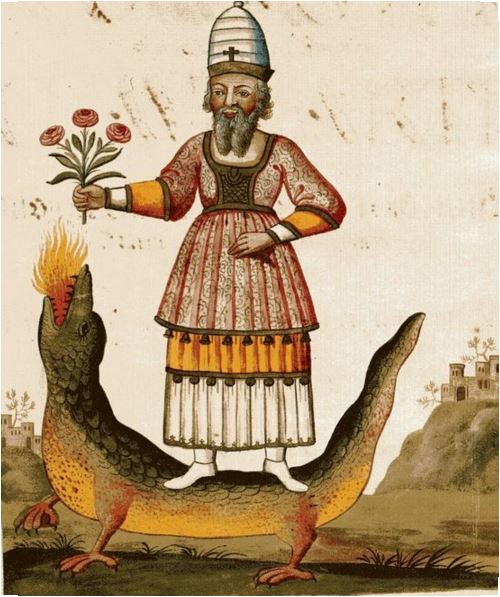
Illustration of (a somewhat Christian?) Zoroaster riding the back of a dragon. Zoroaster was associated with the arts of magic and astrology already in antiquity. This illustration is from the Clavis Artis, vol. 1, the Biblioteca dell’Acca…

Illustration of (a somewhat Christian?) Zoroaster riding the back of a dragon. Zoroaster was associated with the arts of magic and astrology already in antiquity. This illustration is from the Clavis Artis, vol. 1, the Biblioteca dell’Accademia Nazionale dei Lincei, Roma. On the manuscript and its provenance, see the Italian wiki. Image source here.

March 11, 2018 /Sean Coughlin
Pliny, gymnosophists, history of philosophy, lost books, Diogenes Laertius, Aristotle, Zoroastrianism, druids, Philo, Magic, Magus, Chaldeans
Philosophy
Comment
An illustration of a hyena that is not eating a human corpse (they almost always are eating dead people in medieval bestiaries). The bestiary is Jacob van Maerlant, Der Naturen Bloeme. It's in ms. The Hague, KB, KA 16, f. 59v. (C) Koninklijke B…

An illustration of a hyena that is not eating a human corpse (they almost always are eating dead people in medieval bestiaries). The bestiary is Jacob van Maerlant, Der Naturen Bloeme. It's in ms. The Hague, KB, KA 16, f. 59v. (C) Koninklijke Bibliotheek National Library of the Netherlands.

Animal Magic

March 11, 2018 by Sean Coughlin in Philosophy

Here are some magical animals from Aelian, Pliny and Pseudo Aristotle. I'm trying to track down animals that use magic, rather than animals (or parts) that are used for magic (like the 'hippomane') or animals that people perform magic on (like snake charmers, etc.). The question I'm interested in is whether anyone in antiquity thought we learned any of the magic arts by observing animals, as they thought we learned many of the more mundane ones. Hyena is the closest thing to an animal magician I've found so far.


"The salamander is not an animal born from fire, like the animals called 'fire-born'. Still, it is bold and fond of staying close to the flame, and it is eager to defeat it as if it were an adversary."

Ἡ σαλαμάνδρα τὸ ζῷον οὐκ ἔστι μὲν τῶν πυρὸς ἐκγόνων, ὥσπερ οὖν οἱ καλούμενοι πυρίγονοι, θαρρεῖ δὲ αὐτὸ καὶ χωρεῖ τῇ φλογὶ ὁμόσε, καὶ ὡς ἀντίπαλόν τινα σπεύδει καταγωνίσασθαι.

Aelian, On the Nature of Animals, 2.31

"They say that in Arabia there is a kind of hyena which, when it first catches sight of some wild animal, or when it steps on a person's shadow,  renders it speechless and fixed in such a way that it cannot move its body. It also does this to dogs."

Ἐν δὲ τῇ Ἀραβίᾳ ὑαινῶν τι γένος φασὶν εἶναι, ὃ ἐπειδὰν προΐδῃ τι θηρίον ἢ ἀνθρώπου ἐπιβῇ ἐπὶ τὴν σκιάν, ἀφωνίαν ἐργάζεται καὶ πῆξιν τοιαύτην ὥστε μὴ δύνασθαι κινεῖν τὸ σῶμα. τοῦτο δὲ ποιεῖν καὶ ἐπὶ τῶν κυνῶν.

Pseudo-Aristotle, On Marvellous Things Heard, chapter 145

"If a dog makes contact with the hyena's shadow, it will go silent. And by some magic art, any animal it encircles three times becomes fixed at that spot."

praeterea umbrae eius [sc. hyaenae] contactu canes obmutescere, et quibusdam magicis artibus omne animal, quod ter lustraverit, in vestigio haerere.

Pliny, Natural History, 8.44

"When the moon is full, the hyena will keep the light behind it, and cast its shadow onto dogs. Instantly, they are silenced. Having bewitched them like sorceresses do, it then carries off the silent dogs and makes use of them in whatever way it wants."

ὅταν ᾖ πλήρης ὁ τῆς σελήνης κύκλος, κατόπιν λαμβάνει [sc. ἡ ὕαινα] τὴν αὐγήν, καὶ τὴν αὑτῆς σκιὰν ἐπιβάλλει τοῖς κυσί, καὶ παραχρῆμα αὐτοὺς κατεσίγασε, καὶ καταγοητεύσασα ὡς αἱ φαρμακίδες εἶτα ἀπάγει σιωπῶντας, καὶ κέχρηται ὅ τι καὶ βούλεται τὸ ἐντεῦθεν αὐτοῖς.

Aelian, On the Nature of Animals, 6.14

"Dogs, cows, pigs, goats, snakes and other animals are perceptive of future famine. And they are first to be aware when a plague or earthquake is approaching. They can forsee times of healthy weather and fertile crops. And even though they do not have reason, which is able both to save and to destroy, they do not make mistakes in the matters just mentioned."

Λιμοῦ μέλλοντος ἐπιδημεῖν αἰσθητικῶς ἔχουσι κύνες καὶ βόες καὶ ὗς καὶ αἶγες καὶ ὄφεις καὶ ζῷα ἄλλα, καὶ λοιμοῦ δὲ ἀφιξομένου συνίησι πρώτστα καὶ σεισμοῦ. προγινώσκει δὲ καὶ ὑγίειαν ἀέρων καὶ εὐφορίαν καρπῶν. καὶ λόγου μὲν οὐ μετείληχε τοῦ καὶ σώζειν καὶ ἀποκτείνειν δυναμένου, τῶν γε μὴν προειρημένων οὐ διαμαρτάνει.

Aelian, On the Nature of Animals, 6.16

"By name, it is 'Hunter', by nature, a bird, a member of the Thrush family, black in colour, musical in voice. It has been called hunter and for good reason. For it catches the other birds with its song, the small ones that fly to it when enchanted by its music."

Ἀγρεὺς τὸ ὄνομα, τὴν φύσιν πτηνός, τὸ γένος κοσσύφων φράτωρ, μέλας τὴν χρόαν, μουσικὸς τὴν γλῶτταν. κέκληται δὲ ἀγρεύς, καὶ δικαίως· τῷ γάρ τοι μέλει τῶν ἄλλων ὀρνέων αἱρεῖ τὰ ἁπαλὰ προσπετόμενα τῇ τῆς εὐμουσίας θέλξει.

Aelian, On the Nature of Animals, 8.24

Postscript:

"I hear that in India, the elephant and the dragon are each other's worst enemies."

Ἐν Ἰνδοῖς, ὡς ἀκούω, ἐλέφας καὶ δράκων ἐστὶν ἔχθιστα.

Aelian, On the Nature of Animals, 6.21

March 11, 2018 /Sean Coughlin
Aelian, dog, sorcerer, hyena, animal intelligence, Aristotle, Magic, Pliny
Philosophy
Comment
  • Newer
  • Older
 

CATEGORIES

  • Ancient Medicine
  • Botany
  • Events
  • Philosophy

SEARCH


RECENT POSTS

Featured
Dec 13, 2025
Ancient Medicine
"Patroclus died as well" (How Not to Talk to Patients)
Dec 13, 2025
Ancient Medicine
Dec 13, 2025
Ancient Medicine
Sep 18, 2023
Ancient Medicine
Galen, Simple Drugs, Book 11, Preface (II)
Sep 18, 2023
Ancient Medicine
Sep 18, 2023
Ancient Medicine
Sep 11, 2023
Ancient Medicine
Galen, Simple Drugs, Book 11, Preface (I)
Sep 11, 2023
Ancient Medicine
Sep 11, 2023
Ancient Medicine
Sep 6, 2023
Philosophy
The first Socratic dialogues: Simon the Shoemaker
Sep 6, 2023
Philosophy
Sep 6, 2023
Philosophy
Sep 4, 2023
Ancient Medicine
Galen, Simple Drugs, Book 10, Preface
Sep 4, 2023
Ancient Medicine
Sep 4, 2023
Ancient Medicine