Ancient Medicine

  • Home
  • About
  • Contact
Apollo on the left, Asclepius on the right, Chiron, the friendly centaur, in the middle - they're all are associated with medicine and prophecy. This painting goes much deeper into the mythology than the discussion below, although they're rough…

Apollo on the left, Asclepius on the right, Chiron, the friendly centaur, in the middle - they're all are associated with medicine and prophecy. This painting goes much deeper into the mythology than the discussion below, although they're roughly contemporary. The fresco is in Naples at the National Archaeological Museum. Photo was taken by Marie-Lan Nguyen, via wikimedia commons.

Prophecy and Pharmacy: Apollonius and Iarchas talk about divination as a safe way to learn about drugs

April 16, 2018 by Sean Coughlin in Ancient Medicine

Apollonius of Tyana and his disciple, Damis, visit the Brahmin in India. Iarchas, the wisest of Brahmin, talks with them about the relationship between divination and medicine. Iarchas was first mentioned in 2.40 as the teacher of the Indian king, Phraotes, and it was the king who sent the pair off to visit him. I find the speech puzzling.


"After [Damis' speech] all the wise men laughed, and when the laughter had calmed down, Iarchas returned to the discussion about divination. He said that among the many good things it had produced for people, the greatest was the gift of medicine. For the wise Asclepiads would never have arrived at knowledge of it if Asclepius had not been the son of Apollo. Having mixed drugs that were appropriate for different diseases in accordance with his (i.e., Apollo's) prophecies and oracles, he (i.e., Asclepius) passed on the knowledge to his own children and he taught his followers which herbs one should use for weeping wounds, which for parched and dry ones, and what are the right proportions for the drugs we drink, the ones by which dropsical diseases are drained and blood is restrained, and by which wasting diseases and the hollows thus formed are ended. And the cures for the bites of venomous animals, and the use of venom itself for many diseases - who would say these have nothing to do with the art of divination? For I do not believe people would ever have risked mixing the most deadly things of all into drugs meant to keep us alive without the wisdom of knowing what will happen before it happens."

ἐπὶ τούτοις μὲν δὴ ἐγέλασαν οἱ σοφοὶ πάντες, καταστάντος δὲ τοῦ γέλωτος ἐπανῆγεν ὁ Ἰάρχας ἐς τὸν περὶ τῆς μαντικῆς λόγον, καὶ πολλὰ μὲν αὐτὴν ἀγαθὰ ἔλεγε τοὺς ἀνθρώπους εἰργάσθαι, μέγιστον δὲ τὸ τῆς ἰατρικῆς δῶρον· οὐ γὰρ ἄν ποτε τοὺς σοφοὺς Ἀσκληπιάδας ἐς ἐπιστήμην τούτου παρελθεῖν, εἰ μὴ παῖς Ἀπόλλωνος Ἀσκληπιὸς γενόμενος καὶ κατὰ τὰς ἐκείνου φήμας τε καὶ μαντείας ξυνθεὶς τὰ πρόσφορα ταῖς νόσοις φάρμακα παισί τε ἑαυτοῦ παρέδωκε καὶ τοὺς ξυνόντας ἐδιδάξατο, τίνας μὲν δεῖ προσάγειν πόας ὑγροῖς ἕλκεσι, τίνας δὲ αὐχμηροῖς καὶ ξηροῖς ξυμμετρίας τε ποτίμων φαρμάκων, ὑφ' ὧν ὕδεροι ἀποχετεύονται καὶ αἷμα ἴσχεται φθόαι τε παύονται καὶ τὰ οὕτω κοῖλα. καὶ τὰ τῶν ἰοβόλων δὲ ἄκη καὶ τὸ τοῖς ἰοβόλοις αὐτοῖς ἐς πολλὰ τῶν νοσημάτων χρῆσθαι τίς ἀφαιρήσεται τὴν μαντικήν; οὐ γάρ μοι δοκοῦσιν ἄνευ τῆς προγιγνωσκούσης σοφίας θαρσῆσαί ποτε ἄνθρωποι τὰ πάντων ὀλεθριώτατα φαρμάκων ἐγκαταμῖξαι τοῖς σώζουσιν.

Philostratus, Vita Apollonii, 3.44

April 16, 2018 /Sean Coughlin
materia medica, Brahmin, prognostics, Philostratus, divination, Apollonius of Tyana, Magic
Ancient Medicine
Comment
Boy playing the flute and curing a dolphin. Mid-4th century, Etruria. At the National Archaeological Museum in Madrid. Photo taken by Marie-Lan Nguyen, via wikimedia commons.

Boy playing the flute and curing a dolphin. Mid-4th century, Etruria. At the National Archaeological Museum in Madrid. Photo taken by Marie-Lan Nguyen, via wikimedia commons.

An ancient debate on music therapy

April 11, 2018 by Sean Coughlin in Philosophy, Ancient Medicine

Musical therapy has been shown to be effective at reducing pain. That might not be surprising, but it's nice that people are researching ways of dealing with pain that are not just pharmacological. What's curious to me about the passages and the debate below isn't so much that they talk about music (particularly flute music) as a way of curing the pain, or that others would deny it. I'm curious (a) why Theophrastus would have talked about musical therapy in a text on enthusiasm (a kind of frenzy of divine possession normally associated with ritual cults); and (b) whether it suggests there was a discussion going on among people like Theophrastus and Democritus (or a pseudo-Democritus - here is a great article by Matteo Martelli) about whether music causes enthusiasm, how enthusiasm is related to pain, and what it suggests about the affinity of mind and body. It'd also be nice to know why you have to play the flute right over the part of the body that's in pain.


"It is worth mentioning the treatment <which> Theophrastus talks about in his book On Enthusiasm. He says that music cures many of the illnesses that occur in the soul and the body, like swooning, fear and long-term mental derangement. He says flute playing in particular cures sciatica and epilepsy, just like it did for the person who went to see Aristoxenus the musician..."

Ἄξια δ' ἐστὶν ἐπιστάσεως [τὰ εἰρημένα.] <ἃ> Θεόφραστος ἐν τῷ περὶ ἐνθουσιασμοῦ ἐξεῖπεν. φησὶ γὰρ ἐκεῖνος τὴν μουσικὴν πολλὰ τῶν ἐπὶ ψυχὴν καὶ τὸ σῶμα γιγνομένων παθῶν ἰατρεύειν, καθάπερ λιποθυμίαν, φόβους καὶ τὰς ἐπὶ μακρὸν γιγνομένας τῆς διανοίας ἐκστάσεις. ἰᾶται γάρ, φησίν, ἡ καταύλησις καὶ ἰσχιάδα καὶ ἐπιληψίαν· καθάπερ πρὸς Ἀριστόξενον τὸν μουσικὸν ἐλθόντα [text is corrupt after this point]...

Apollonius Paradoxographus, Historiae Mirabiles c. 49.

"That music cures diseases, Theophrastus discusses in his book On Enthusiasm, where he says that those suffering from sciatica become free of the disease when someone plays a Phrygian arrangement on the flute over the affected place."

ὅτι δὲ καὶ νόσους ἰᾶται μουσικὴ Θεόφραστος ἱστόρησεν ἐν τῷ περὶ Ἐνθουσιασμοῦ ἰσχιακοὺς φάσκων ἀνόσους διατελεῖν, εἰ καταυλήσοι τις τοῦ τόπου τῇ Φρυγιστὶ ἁρμονίᾳ.

Athenaeus of Naucratis, Deipnosophistae 14.18

"I recently found a passage in a book of Theophrastus, which says that many people believe and have written down that when sciatica is especially painful, their pains are diminished if a flute-player plays a gentle melody. That flute playing, when done with skill and measure, also cures snake bites is mentioned in a book by Democritus, which is called [there's a lacuna], in which he shows that music from flutes is a cure for many human diseases. There is so great an affinity between people's bodies and minds, and for this reason as well between the illnesses and also remedies of the soul and the body."

Creditum hoc a plerisque esse et memoriae mandatum, ischia cum maxime doleant, tum, si modulis lenibus tibicen incinat, minui dolores, ego nuperrime in libro Theophrasti scriptum inveni. Viperarum morsibus tibicinium scite modulateque adhibitum mederi refert etiam Democriti liber, qui inscribitur . . ., in quo docet plurimis hominum morbidis medicinae fuisse incentiones tibiarum. Tanta prosus adfinitas est corporibus hominum mentibusque et propterea vitiis quoque aut medellis animorum et corporum.

Aulus Gellius, Attic Nights, 4.13

"Some doctors prescribe the use of music [for sciatica], as the brother of Philistion also mentions in Book 22 of On Remedies. He writes that there was a piper who would play songs over the part that was in pain, which would begin to pulse and palpitate, relieving and freeing him from the pain. Some say Pythagoras discovered this kind of remedy. But in Soranus' opinion, whoever believes that a powerful disease is removed by music and song suffers from a vain delusion."

"item alii cantelenas adhibendas probaverunt, ut etiam Philistionis frater idem memorat libro XXII De adiutoriis, scribens quendam fistulatorem loca dolentia decantasse, quae cum saltum sumerent palpitando discusso dolore mitescerent. alii denique hoc adiutorii genus Pithagoram memorant invenisse. sed Sorani iudicio videntur hi mentis vanitate iactari qui modulis et cantilena passionis robur excludi crediderunt."

Caelius Aurelianus, On Chronic Diseases, 5.23 (pp.918-20 Drabkin)

April 11, 2018 /Sean Coughlin
Soranus, sciatica, Pythagoras, Ancient music, enthusiasm, Medicine of the mind, musical therapy, Apollonius Paradoxographus, Theophrastus, Athenaeus of Naucratis, phrygian mode, Caelius Aurelianus, Democritus, Aulus Gellius
Philosophy, Ancient Medicine
1 Comment
Atlas, shrugging, with his brother.

Atlas, shrugging, with his brother.

Galen on what to do with a patient who thinks the sky will fall

April 07, 2018 by Sean Coughlin in Ancient Medicine

"I know a man from Cappadocia who had put a nonsensical thing in his head and because of it fell into melancholy. The idea he had put in his head was frankly ridiculous. His friends saw him cry and asked him about his sorrow. Sighing deeply, he answered by saying he was afraid the whole world would collapse. His worry was that the Titan, who the poets say holds up the world and is called Atlas, had become weak because of the length of time he has been holding it up, and therefore, there is a danger that the heavens will fall down to earth and smash to pieces. You have also heard from me the story of the woman who I mentioned had imagined she swallowed a snake, and the story of the man who believed that a ghost had called out to him as he passed the churchyard, and the story of the man who had farted in the presence of other people, and who wasted away and died out of shame. The physician must therefore consider it his job, besides the other dispositions of the patient, to discover the things that oppress his soul. For healing a person for whom the cause of illness lies in his spirit can only be achieved by eliminating the idea that has become fixed, but not by food and drink, or their home, bathing routine, walking and the like."

Ich kenne einen Mann aus Kappadokien, der sich eine unsinnige Sache in den Kopf gesetzt hatte und dadurch der Melancholie verfiel. Die Idee, die er sich in den Kopf gesetzt hatte, war geradezu lächerlich. Seine Bekannten sahen ihn nämlich weinen und fragten ihn nach seinem Kummer. Indem er tief seufzte, antwortete er und sagte, er sei in Angst, daß die ganze Welt einstürze. Sein Kummer sei, daß der König, von dem die Dichter erzählen, daß er die Welt trage und Atlas heiße, infolge der langen Zeit, in der er sie trage, schwach to geworden sei. Deshalb sei Gefahr, daß der Himmel auf die Erde herabstürze und sie zertrümmere. Ihr habt von mir auch schon die Geschichte der Frau gehört, von der ich erzählte, daß sie sich einbildete, eine Schlange verschluckt zu haben, und die Geschichte des Mannes, der glaubte, daß ein Toter ihn gerufen habe, als er am Kirchhof vorbeiging, und die Geschichte von dem Mann, dem in Anwesenheit von Leuten ein Wind entfahren war und der aus Scham darüber hin siechte und starb. Der Arzt muß also es als seine Aufgabe betrachten, außer den übrigen Neigungen des Kranken auch die Dinge ausfindig zu machen, die seinen Geist bedrücken. Denn die Heilung eines Menschen, dessen Krankheitsursache in seinem Geiste liegt, kann nur durch Beseitigung der fixen Idee, nicht aber durch Speisen und Getränke, durch Wohnung, Baden, Marschieren und dergleichen erreicht werden.*

Galen, Commentary on Hippocrates' Epidemics VI, 8  (487,3-23 Wenkebach/Pfaff)

*Pfaff's German translation of Hunayn's school's Arabic translation (the Greek is lost). 

April 07, 2018 /Sean Coughlin
Medicine of the mind, Atlas, grief lessons, Hippocratic Commentary, madness, mental health, Galen
Ancient Medicine
Comment
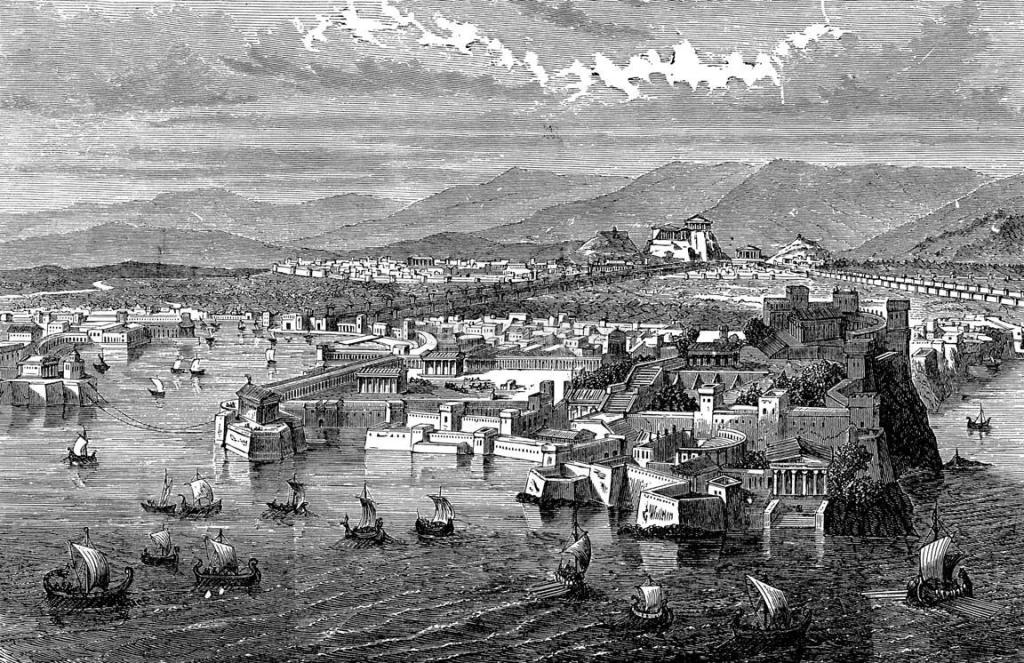
Watching the ships at the Piraeus.

Watching the ships at the Piraeus.

Heraclides of Pontus on the joy of madness

April 06, 2018 by Sean Coughlin in Philosophy, Ancient Medicine

“In his book On Pleasure, Heraclides of Pontus relates not unpleasantly that a most pleasant luxury occured during a fit of madness. He writes:

‘Thrasyllus from Aexone, the son of Pythodorus, once went so mad that he thought all the ships arriving at Piraeus were his own. He would register them, dispatch them, and manage their affairs. When they returned to port, he would welcome them with the kind of joy you might expect from someone who was really in charge of such great wealth. When ships were lost, he did not inquire after them, but he rejoiced at every one that was saved and recounted it with greatest delight. When his brother Crito came to visit from Sicily, he took him into custody, handed him over to a doctor, and put an end to his madness. Afterwards, Thrasyllus would tell the story, saying that he had never in his life been happier, for he felt not pain whatsoever, while the amount of pleasure he felt was overwhelming.’”

ἐν μανίᾳ δὲ τρυφὴν ἡδίστην γενομένην οὐκ ἀηδῶς ὁ Ποντικὸς Ἡρακλείδης διηγεῖται ἐν τῷ περὶ Ἡδονῆς οὕτως γράφων· ‘ὁ Αἰξωνεὺς Θράσυλλος ὁ Πυθοδώρου διετέθη ποτὲ ὑπὸ μανίας τοιαύτης ὡς πάντα τὰ πλοῖα τὰ εἰς τὸν Πειραιᾶ καταγόμενα ὑπολαμβάνειν ἑαυτοῦ εἶναι, καὶ ἀπεγράφετο αὐτὰ καὶ ἀπέστελλε καὶ διῴκει καὶ καταπλέοντα ἀπεδέχετο μετὰ χαρᾶς τοσαύτης ὅσησπερ ἄν τις ἡσθείη τοσούτων χρημάτων κύριος ὤν. καὶ τῶν μὲν ἀπολομένων οὔτε ἐπεζήτησεν, τοῖς δὲ σῳζομένοις ἔχαιρεν καὶ διῆγεν μετὰ πλείστης ἡδονῆς. ἐπεὶ δὲ ὁ ἀδελφὸς αὐτοῦ Κρίτων ἐκ Σικελίας ἐπιδημήσας συλλαβὼν αὐτὸν παρέδωκεν ἰατρῷ καὶ τῆς μανίας ἐπαύσατο, διηγεῖτο <...> οὐδεπώποτε φάσκων κατὰ τὸν βίον ἡσθῆναι πλείονα· λύπην μὲν γὰρ οὐδ' ἡντινοῦν αὐτῷ παραγίνεσθαι, τὸ δὲ τῶν ἡδονῶν πλῆθος ὑπερβάλλειν.’ 

Athenaeus, Deipnosophistae 12.81 (p.223-4 Kaibel)

April 06, 2018 /Sean Coughlin
madness, sailboats, mental health, Medicine of the mind, Piraeus, happy delusions, fragments, Heraclides of Pontus
Philosophy, Ancient Medicine
Comment
From Christine de Pizan's Le livre du chemin de long estude. Harley MS 4431, f. 189v. Images of the ms. are here. Copyright 2005 British Library.

From Christine de Pizan's Le livre du chemin de long estude. Harley MS 4431, f. 189v. Images of the ms. are here. Copyright 2005 British Library.

Draw down the moon, hide it in a mirror. On Thessalian medicine women

April 05, 2018 by Sean Coughlin in Ancient Medicine, Philosophy

“Thessalian woman”: refers to medicine women, since the Thessalians are accused of being sorcerers. Even to the present day, Thessalian women are called medicine women (pharmakides). They say it's because when Medea fled, she tossed her basket of medicines (pharmaka) and there they sprouted. Attic speakers read it with a barytone accent [Thes–SA–ly instead of Thes–sa–LY]. Aristophanes: “if I bought a Thessalian woman, I could draw down the moon at night, then hide it like a mirror.” For the orb of the moon has a round shape like a mirror, and they say that people who are skilled in these kinds of things draw down the moon with it (sc. a mirror). There’s also Pythagoras’ trick with a mirror that goes like this: when the moon is full, if someone writes in blood on a mirror whatever he wishes and, while standing behind another person, proclaims against him and shows the words to the moon, if he then looks closely at the orb of the moon, then he can read all that is written on the mirror as if it were written on the moon.

Θετταλὴ γυνή: ἐπὶ τῶν φαρμακίδων. διαβάλλονται γὰρ οἱ Θετταλοὶ ὡς γόητες· καὶ μέχρι καὶ νῦν φαρμακίδες αἱ Θετταλαὶ καλοῦνται. φασὶ δὲ ὅτι ἡ Μήδεια φεύγουσα κίστην ἐξέβαλε φαρμάκων ἐκεῖ, καὶ ἀνέφυσαν. βαρυτόνως δὲ οἱ Ἀττικοὶ ἀναγινώσκουσιν. Ἀριστοφάνης· γυναῖκα πριάμενος Θετταλὴν καθέλκοιμι νύκτωρ τὴν σελήνην· εἶτα καθείρξαιμ' ὥσπερ κάτοπτρον. ὁ γὰρ τῆς σελήνης κύκλος στρογγυλοειδὴς ὡς ἔσοπτρον. καί φασι τοὺς περὶ τὰ τοιαῦτα δεινοὺς τούτῳ κατάγειν τὴν σελήνην. ἔστι δὲ καὶ Πυθαγόρου παίγνιον διὰ κατόπτρου τοιοῦτον. πληροσελήνου τῆς σελήνης οὔσης, εἴ τις ἔσοπτρον ἐπιγράψειεν αἵματι, ὅσα βούλεται, καὶ προειπὼν ἑτέρῳ σταίη κατόπιν αὐτοῦ, δείκνυσι πρὸς τὴν σελήνην τὰ γράμματα, κἀκεῖνον ἀτενίσαι πλησίον εἰς τὸν τῆς σελήνης κύκλον, ἀναγνοίη πάντα τὰ ἐν τῷ κατόπτρῳ γεγραμμένα, ὡς τῇ σελήνῃ γεγραμμένα.

Suda, theta entry 289

“You're drawing the moon down to yourself”: the Thessalian women who draw down the moon are said to lose their eyes and feet.

Ἐπὶ σαυτῷ τὴν σελήνην καθέλκεις: αἱ τὴν σελήνην καθέλκουσαι Θετταλίδες λέγονται τῶν ὀφθαλμῶν καὶ τῶν ποδῶν στερίσκεσθαι.

Suda, epsilon entry 2559


Socrates: First, tell me what it is you want for yourself.

Strepsiades (lying naked in bed): You’ve heard a thousand times what I want: I don't want to have to pay back any interest on my debts.

Socrates: Come now, cover yourself up. Loosen up your mind a little bit. Think about your affairs, analyze and investigate them properly.

Strepsiades: This sucks.

Socrates: Stay calm. If you get caught up in some of your thoughts, put them to the side and move on. Later on, turn your mind to them again and examine them.

Strepsiades (after thinking): ... oh, little Socrates! You’re the best!

Socrates: What is it, old man?

Strepsiades: I have a plan to get out of paying any interest!

Socrates: Show me.

Strepsiades: Alright now, tell me...

Socrates: Tell you what?

Strepsiades: ...if I bought a medicine woman, a Thessalian one, I could bring down the moon at night, then hide it in a round case like the ones we use for mirrors and keep it there.

Socrates: Ok, but how would this help you?

Strepsiades: Because if the moon didn’t rise, I wouldn't have to pay back any interest.

Socrates: Yeah, but why not?

Strepsiades: Because interest is charged by the month.

{Σω.} αὐτὸς ὅτι βούλει πρῶτος ἐξευρὼν λέγε. 

{Στ.} ἀκήκοας μυριάκις ἁγὼ βούλομαι, περὶ τῶν τόκων, ὅπως ἂν ἀποδῶ μηδενί.

{Σω.} ἴθι νυν καλύπτου, καὶ σχάσας τὴν φροντίδα λεπτὴν κατὰ μικρὸν περιφρόνει τὰ πράγματα ὀρθῶς διαιρῶν καὶ σκοπῶν.

{Στ.} οἴμοι τάλας.

{Σω.} ἔχ' ἀτρέμα· κἂν ἀπορῇς τι τῶν νοημάτων, ἀφεὶς ἄπελθε, κᾆτα τῇ γνώμῃ πάλιν κίνησον αὖθις αὐτὸ καὶ ζυγώθρισον.

{Στ.} ὦ Σωκρατίδιον φίλτατον.

{Σω.} τί, ὦ γέρον;

{Στ.} ἔχω τόκου γνώμην ἀποστερητικήν.

{Σω.} ἐπίδειξον αὐτήν.

{Στ.} εἰπὲ δή νυν μοι – 

{Σω.} τὸ τί;

{Στ.} γυναῖκα φαρμακίδ' εἰ πριάμενος Θετταλὴν καθέλοιμι νύκτωρ τὴν σελήνην, εἶτα δὴ αὐτὴν καθείρξαιμ' εἰς λοφεῖον στρογγύλον ὥσπερ κάτροπτον, κᾆτα τηροίην ἔχων.

{Σω.} τί δῆτα τοῦτ' ἂν ὠφελήσειέν σ'; 

{Στ.} ὅτι εἰ μηκέτ' ἀνατέλλοι σελήνη μηδαμοῦ, οὐκ ἂν ἀποδοίην τοὺς τόκους.

{Σω.} ὁτιὴ τί δή;

{Στ.} ὁτιὴ κατὰ μῆνα τἀργύριον δανείζεται.

Aristophanes, Clouds, ll. 737-756


“I'm amazed that this rumour has stuck so firmly to Achilles’ people (sc. the Thessalians) that even Menander, who wrote works with unrivaled subtlety, called a play “The Woman from Thessaly”, which describes these women’s tricks for bringing down the moon. I would have thought that Orpheus was the first to introduce the art from his region to his neighbours’ and that the superstition developed from medicine, if it weren’t the case that Thrace—Orpheus’ homeland—was completely free of the art of magic.”

miror equidem Achillis populis famam eius in tantum adhaesisse, ut Menander quoque, litterarum subtilitati sine aemulo genitus, Thessalam cognominaret fabulam complexam ambages feminarum detrahentium lunam. Orphea putarem e propinquo artem primum intulisse ad vicina usque superstitionis ac medicinae provectum, si non expers sedes eius tota Thrace magices fuisset.

Pliny the Elder, Natural History, 30.2.7


April 05, 2018 /Sean Coughlin
Thessalian women, moon, Magic
Ancient Medicine, Philosophy
Comment

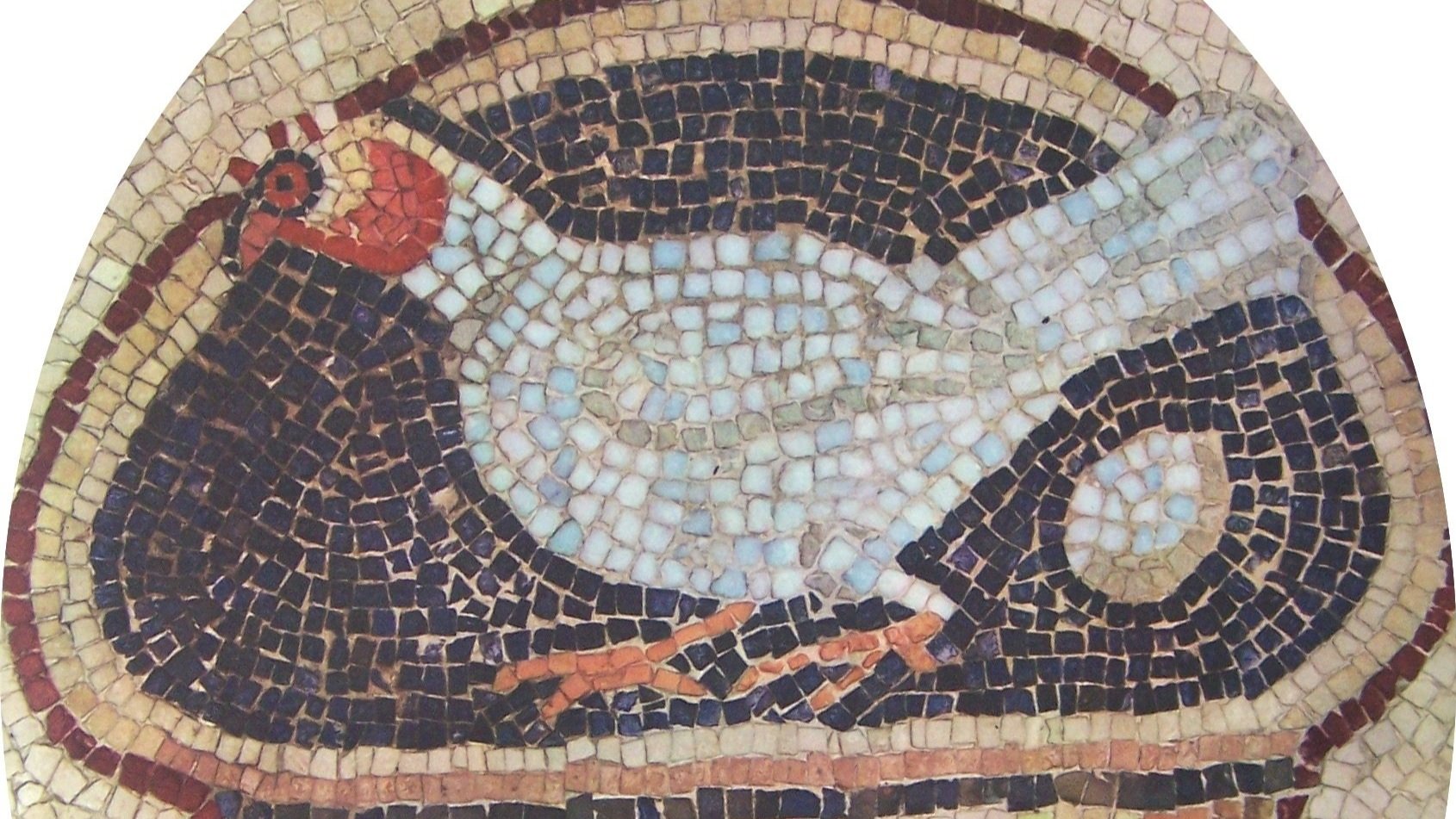
Detail of the Maon synagogue mosaic depicting a hen and an egg. Via wikimedia commons.

Two ways to talk about eggs

April 04, 2018 by Sean Coughlin in Philosophy, Ancient Medicine

Two discussions of eggs: one, from Michael of Ephesus, on the egg as a boundary between death and life; another, from Aetius of Amida, on the best way to cook eggs (soft boiled, soaked in wine and fish sauce and cooked on a double-boiler).


Lemma: “The reason for this is that nature produces the eggs, as it were, before [their] time, because of its own incompleteness…” (Aristotle, Generation of Animals 3.8, 758b19)

"In what follows, he (sc. Aristotle) discusses the reason why insects produce at first a grub which moves itself and is generally speaking an animal; then, once the grub has grown, it turns into an egg, lacking sensation and movement; then it turns into a different animal from the grub. He says that since an insect’s nature, because of its inherent weakness, is in itself unable to nourish and complete the embryo, what it produces is incomplete. And if in addition to generating an incomplete embryo, its nature generated something lacking soul and sensation as well, the embryo would cease to exist. But if this were the case, it is quite likely that the insect-kind would be absent from the world.* So it must be for this reason that nature generates an animal that is able to be nourished from itself, and it feeds on itself until it reaches completion.** Having reached completion, it dies.*** For living and eating are granted to it so that it becomes complete, but once it has reached completion, there is no longer any point for it to eat, and so no point for it to live.**** At this moment it dies, and it is then like an egg surrounded all around by a shell.***** Later, when what is inside of this shell has been completely concocted by the climate as if by a bird and has changed into an animal, it emerges."

758b19 «Τούτου δ’ αἴτιον ὅτι ἡ φύσις ὡσανεὶ πρὸ ὥρας ᾠοτοκεῖ διὰ τὴν ἀτέλειαν τὴν αὐτῆς.»

Τὴν αἰτίαν διὰ τούτων λέγει, τίνος ἕνεκα πρῶτον μὲν σκώληξ γεννᾶται κινούμενος καὶ ὅλως ζῷον ὑπάρχων, εἶτα αὐξηθεὶς ᾠὸν γίνεται ἀναίσθητον καὶ ἀκίνητον, εἶθ’ οὕτω πάλιν ζῷον ἕτερον παρὰ τὸν σκώληκα. λέγει οὖν ὅτι ἡ τῶν ἐντόμων φύσις ἀδυνατοῦσα θρέψαι ἐν αὑτῇ καὶ τελειῶσαι τὸ κύημα διὰ τὴν οἰκείαν ἀσθένειαν, ἀτελὲς αὐτὸ γεννᾷ· ὥστ’ εἴπερ πρὸς τῷ ἀτελὲς αὐτὸ γεννᾶν καὶ ἄψυχον ἐγέννα καὶ ἀναίσθητον, ἐφθείρετο ἄν· εἰ δὲ τοῦτο, τάχιον ἂν ἐκ τοῦ παντὸς ἐξέλιπε τὸ τῶν ἐντόμων γένος. διά τοι τοῦτο γεννᾷ ζῷον ἐξ ἑαυτοῦ δυνάμενον τρέφεσθαι, καὶ τρέφεται ἕως ἂν τελειωθῇ, τελειωθὲν δὲ θνήσκει· τὸ γὰρ ζῆν καὶ ἐσθίειν δέδοται αὐτῷ διὰ τὸ τέλειον γεγονέναι, ἐπειδὴ δὲ τετελείωται, οὐκέτι χρεία αὐτῷ τοῦ ἐσθίειν, ὥστε οὐδὲ τοῦ ζῆν. καὶ ἐπὶ τούτῳ θνήσκει, καὶ ἔστι τότε οἷον ᾠὸν κύκλῳ περιεχόμενον ὑπὸ τοῦ κελύφους· εἶθ’ οὕτως τὸ ἐντὸς ὑπάρχον τούτου τοῦ κελύφους ὑπὸ τῆς ὥρας ὥσπερ ὑπὸ ὄρνιθος συμπεφθὲν καὶ εἰς ζῷον μεταβαλὸν ἔξεισιν.

Michael of Ephesus, Commentary on Aristotle's Generation of Animals 3.8, (CAG 14,3 p.153,10-25 Hayduck).

*A reductio: if nature generated embryos without soul, i.e., without life, there wouldn't be any insects in the world; but, there are insects; so, nature does not generate embryos without a soul.

**The idea is either (1) that the grub is able to feed itself, or (2) that it is able to be nourished from the whole of its own body, unlike an egg, in which one part is food (yolk) and one part becomes the animal (white). Cf. GA 2.1, 732a28-32 and Michael’s comments; 3.2, 752a27-28.

***Michael might be thinking of allegories of metempsychosis. I have yet to find whether the psuchê (butterfly) was used as a symbol of resurrection by late Byzantine Christians. Whether or not that's what he has in mind, the idea is not Aristotle’s—he nowhere says that grubs die when they become cocoons, nor does he say, as Michael takes him to, that cocoons are akinêton or without movement; rather, he says they are akinêtisanta or at rest. Elsewhere, Aristotle claims cocoons move when touched, e.g. HA 5.19, 551a19-20. Just how familiar Michael was with the HA is not clear; but Michael is nevertheless right that in the passage he is commenting on, Aristotle emphasizes the lack of motion of chrysalids throughout. And even if allegories of metempsychosis are in the background, Michael is most likely drawing the following inference: if something is alive, it has nutritive (and sensitive) soul; if something has nutritive (and sensitive) soul, then it can (move, sense), eat, and excrete residues; cocoons do none of these things; hence cocoons are not alive. The inference of course would be false: at most it would imply that cocoons are asleep. Michael, however, likely sees that there would be a deeper problem in saying cocoons are alive in this sense of 'sleeping': on the one hand, the soul of the grub and the soul of the completed animal cannot be identical, since the animals have different bodily organs, and souls and the organs they use are correlative; on the other hand, it seems implausible that the grub should have both souls simultaneously. But if it cannot have both souls simultaneously, and it must have a soul, then it must have the souls successively, and so must ‘die’ in some sense. Michael, then, thinks it is better to say that the soul the grub had has perished, while what it left behind is something alive potentially, but actually dead, namely an egg, which comes back to life when warmed by the season. Michael hints that this is what he has in mind by emphasizing that cocoons are like eggs, although he does not explicitly distinguish actual and potential kinds of living. It's telling that another commentator, Philoponus, denies caterpillars perish, and claims they merely change from one form to another (On Physics 8, CAG 16 180,19-20). This suggests people other than Michael were thinking through this problem.

****Michael’s interpretation likely relies on the familiar Arisotelian claim that nature does nothing in vain: it would be in vain for an animal whose purpose is to become an egg to continue to live.

*****A similar point is made by Plutarch, Quaest. Conv. 2.3 (Moralia 636C3-D7)

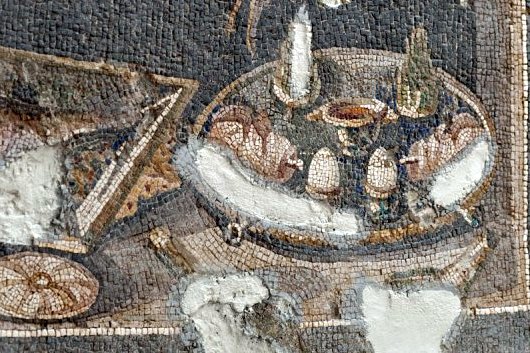
Eggs the right way, soft boiled and in cups. Detail from a 3rd century mosaic at the Hatay Archaeological Museum in Antakya, Turkey.&nbsp;

Eggs the right way, soft boiled and in cups. Detail from a 3rd century mosaic at the Hatay Archaeological Museum in Antakya, Turkey. 

"Eggs of hens and of pheasants are better, while those of geese and ostriches [literally, 'sparrow-camels'] are worse. Best for the body's nourishment are the ones called 'trembling' [i.e., soft-boiled], while runny ones nourish less, but are passed more easily. They soothe the roughness in the throat caused by shouting or an acrid humour, when they are plastered on the affected places and remain there like a poultice; they also cure roughness because their whole substance is not stinging. For the same reason, they heal roughness in the stomach, bowels and bladder. An egg boiled in vinegar, when eaten, dries the discharges in the bowels. And if you mix things suitable for dysentery or a colic disposition with it and then broil it on coals and give it to eat, you will offer no small benefit to your patients. Suitable for these dispositions are the juice of unripe grapes, unripe mulberry plastered on, ashes of snails burnt whole, and grape seeds, myrtle berries and similar things.  Boiled eggs are hard to digest, pass slowly and provide thick nourishment to the body. The ones baked in hot ashes pass even more slowly and produce even thicker humours than them. Fried eggs have the least nutrition in every respect. For when they are cooked they become greasy and produce a thick humor that is bad and full of residues. Better than boiled and baked ones are those called 'curdled': briefly soaked in oil, garum and wine, and boiled on a double-boiler to a medium consistency. Eggs thickened longer become like boiled or baked ones. The same thing should also be done in cases where eggs are poured on a frying pan, taking the frying pan off the fire when the eggs are still soft."

Ὠὰ ἀμείνω τά τε τῶν ἀλεκτορίδων ἐστὶ καὶ τῶν φασιανῶν, φαυλότερα δὲ τὰ τῶν χηνῶν καὶ στρουθοκαμήλων. κάλλιστα μὲν οὖν εἰς τροφὴν τοῦ σώματός ἐστι τὰ τρομητὰ καλούμενα, τὰ δὲ ῥοφητὰ ἧττον μὲν τρέφει, ῥᾷον δὲ ὑποχωρεῖ. τὰς δὲ ἐν τῷ φάρυγγι τραχύτητας διὰ κραυγὴν ἢ χυμοῦ δριμύτητα ἐκλεαίνει, περιπλαττόμενα τοῖς πεπονθόσι τόποις καὶ προσμένοντα ὥσπερ τι κατάπλασμα καὶ τῷ τῆς ὅλης οὐσίας ἀδήκτῳ ἐκθεραπεύοντα καὶ τὰς τραχύτητας. τῷ δὲ αὐτῷ λόγῳ καὶ τὰς κατὰ τὸν στόμαχον καὶ γαστέρα καὶ κύστιν ἰᾶται τραχύτητας· ἐν ὄξει δὲ ἑψηθὲν ὠὸν εἰ βρωθείη, ξηραίνει τὰ κατὰ γαστέρα ῥεύματα. καὶ εἰ μίξας δὲ αὐτῷ τι τῶν πρὸς δυσεντερίαν ἢ κοιλιακὴν διάθεσιν ἁρμοττόντων, εἶτα ἐπ' ἀνθράκων ταγηνίσας, δοίης φαγεῖν, οὐ σμικρὰ τοὺς κάμνοντας ὠφελήσεις. ἐπιτήδεια δέ ἐστιν εἰς ταῦτα ὀμφάκιον καὶ ῥοῦς ἐπιπαττόμενος καὶ τέφρα τῶν κοχλιῶν ὅλων καέντων γίγαρτά τε σταφυλῆς καὶ μύρτα καὶ τὰ παραπλήσια. τὰ δὲ ἑφθὰ ὠὰ δύσπεπτα καὶ βραδύπορα καὶ τροφὴν παχεῖαν ἀναδίδωσι τῷ σώματι. τούτων δὲ ἔτι μᾶλλον βραδυπορώτερά τε καὶ παχυχυμότερα τὰ κατὰ θερμὴν σποδιὰν ὀπτηθέντα. τὰ δὲ ταγηνισθέντα χειρίστην ἔχει τροφὴν εἰς ἅπαντα· καὶ γὰρ ἐν τῷ πέττεσθαι κνισσοῦται καὶ παχὺν χυμὸν γεννᾷ καὶ μοχθηρὸν καὶ περιττωματικόν. ἀμείνω δὲ τῶν ἑφθῶν τε καὶ ὀπτῶν ἐστι τὰ καλούμενα πηκτὰ μετ' ἐλαίου καὶ γάρου καὶ οἴνου βραχέος ἀναδευθέντα καὶ ἐπὶ διπλώματος ἑψηθέντα μέχρι μετρίας συστάσεως. τὰ γὰρ ἐπὶ πλέον παχυνθέντα παραπλήσια τοῖς ἑψηθεῖσι καὶ ὀπτηθεῖσι γίγνεται. τὸ αὐτὸ δὲ χρὴ ποιεῖν κἀπὶ τῶν ἐπιχεομένων ταῖς λοπάσιν ὠῶν, ἔτι ἐγχύλων ὄντων ἀπὸ τοῦ πυρὸς αἴροντας τὴν λοπάδα.

Aetius of Amida, Libri Medicinales, II 134, 201,19-202,14 Olivieri

April 04, 2018 /Sean Coughlin
Generation of Animals, Aetius of Amida, eggs, resurrection, insects, Commentaries, Easter, Michael of Ephesus
Philosophy, Ancient Medicine
Comment
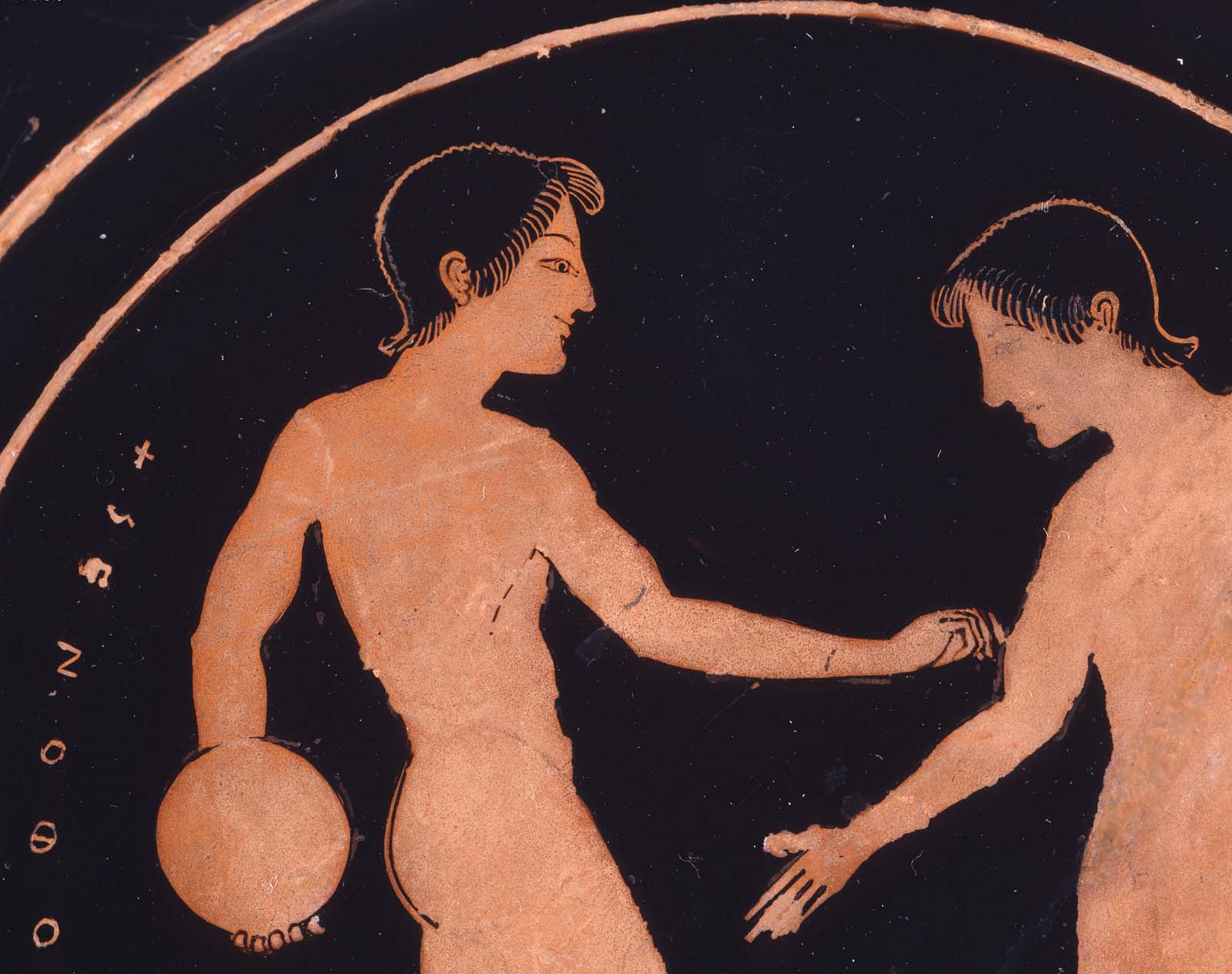
Xenophon and Dorothy, chatting about discus. 6th century.&nbsp;At the Museum of Fine Arts, Boston.

Xenophon and Dorothy, chatting about discus. 6th century. At the Museum of Fine Arts, Boston.

How to live a long life: learn magic or get some exercise

March 28, 2018 by Sean Coughlin in Ancient Medicine

Pseudo-Lucian talks about the prophecy and piety of the Magi (along with ethnographies of other tribes) as part of a discussion of life-expectancy: why do some groups of people live longer than others? Pseudo-Lucian thinks you could live a long time too if you just exercised and ate properly. Inspired by this article at the BBC: "We learn nothing about nutrition, claim medical students".


"Stories have been told of whole races who have a long life expectancy because of their way of life.* There are those called the 'Sacred Scribes' in Egypt, the 'Interpreters of Myths' in Assyria and Arabia, those called 'Brahmans' in India, men completely devoted to the study of philosophy, and those called the 'Magi', a prophetic race who dedicate themselves to the gods, found among the Persians, Parthians, Bactrians, Chorasmians, Arians, Sacae, Medes, and many other Barbarians. They are strong and long-lived because they lead their life in strict observance of magic.

"There are also whole nations who have a long life expectancy, like in the stories they tell about the Seres, who live up to three-hundred years, some attributing the cause of their old age to the climate, others to the land, and still others to their way of life: for, they say, this is a whole nation of water-drinkers. Stories are also told of the people of Athos living up to one- hundred and thirty years, and there is a report that the Chaldeans live over one-hundred years, using bread made from barley because it acts as a drug for preserving good eyesight. They also say that on account of this diet, their other senses are better than those of other people.

"But that's enough about the life expectancy of these races and nations, those which they say survive for a long time either because of the land and climate, or way of life, or both. I, however, want to propose to you that your hopes [of a long life] are easy to achieve, by telling you about men in every land and in every climate who have become long-lived by using the right kind of exercises and a healthy diet."

καὶ γένη δὲ ὅλα μακρόβια ἱστορεῖται διὰ τὴν δίαιταν, ὥσπερ Αἰγυπτίων οἱ καλούμενοι ἱερογραμματεῖς, Ἀσσυρίων δὲ καὶ Ἀράβων οἱ ἐξηγηταὶ τῶν μύθων, Ἰνδῶν δὲ οἱ καλούμενοι Βραχμᾶνες, ἄνδρες ἀκριβῶς φιλοσοφίᾳ σχολάζοντες, καὶ οἱ καλούμενοι δὲ μάγοι, γένος τοῦτο μαντικὸν καὶ θεοῖς ἀνακείμενον παρά τε Πέρσαις καὶ Πάρθοις καὶ Βάκτροις καὶ Χωρασμίοις καὶ Ἀρείοις καὶ Σάκαις καὶ Μήδοις καὶ παρὰ πολλοῖς ἄλλοις βαρβάροις, ἐρρωμένοι τέ εἰσι καὶ πολυχρόνιοι διὰ τὸ μαγεύειν διαιτώμενοι καὶ αὐτοὶ ἀκριβέστερον.

ἤδη δὲ καὶ ἔθνη ὅλα μακροβιώτατα, ὥσπερ Σῆρας μὲν ἱστοροῦσι μέχρι τριακοσίων ζῆν ἐτῶν, οἱ μὲν τῷ ἀέρι, οἱ δὲ τῇ γῇ τὴν αἰτίαν τοῦ μακροῦ γήρως προστιθέντες, οἱ δὲ καὶ τῇ διαίτῃ· ὑδροποτεῖν γάρ φασι τὸ ἔθνος τοῦτο σύμπαν. καὶ Ἀθῴτας δὲ μέχρι τριάκοντα καὶ ἑκατὸν ἐτῶν βιοῦν ἱστορεῖται, καὶ τοὺς Χαλδαίους ὑπὲρ τὰ ἑκατὸν ἔτη βιοῦν λόγος, τούτους μὲν καὶ κριθίνῳ ἄρτῳ χρωμένους, ὡς ὀξυδορκίας τοῦτο φάρμακον· οἷς γέ φασι διὰ τὴν τοιαύτην δίαιταν καὶ τὰς ἄλλας αἰσθήσεις ὑπὲρ τοὺς ἄλλους ἀνθρώπους ἐρρωμένας εἶναι.

Ἀλλὰ ταῦτα μὲν περί τε τῶν μακροβίων γενῶν καὶ τῶν ἐθνῶν, ἅτινά φασιν ὡς ἐπὶ πλεῖστον διαγίγνεσθαι χρόνον, οἱ μὲν διὰ τὴν γῆν καὶ τὸν ἀέρα, οἱ δὲ διὰ τὴν δίαιταν, οἱ δὲ καὶ δι' ἄμφω. ἐγὼ δ' ἄν σοι δικαίως τὴν ἐλπίδα ῥᾳδίαν παράσχοιμι ἱστορήσας ὅτι καὶ κατὰ πᾶσαν γῆν καὶ κατὰ πάντα ἀέρα μακρόβιοι γεγόνασιν ἄνδρες οἱ γυμνασίοις τοῖς προσήκουσιν καὶ διαίτῃ τῇ ἐπιτηδειοτάτῃ πρὸς ὑγίειαν χρώμενοι.

Pseudo-Lucian, Long Lives (Marcobii), 4-8

* διὰ τὴν δίαιταν I'm translating as "way of life" or "diet" depending on the context. Keep in mind that it includes more that just what one eats, but also hygiene more generally: one's daily routine of sleep, waking, food, drink, work and sex.

March 28, 2018 /Sean Coughlin
regimen, Exercise, Persia, Serica, India, Macrobii, Egypt, Lucian, Magic, Magus, Chaldeans
Ancient Medicine
Comment
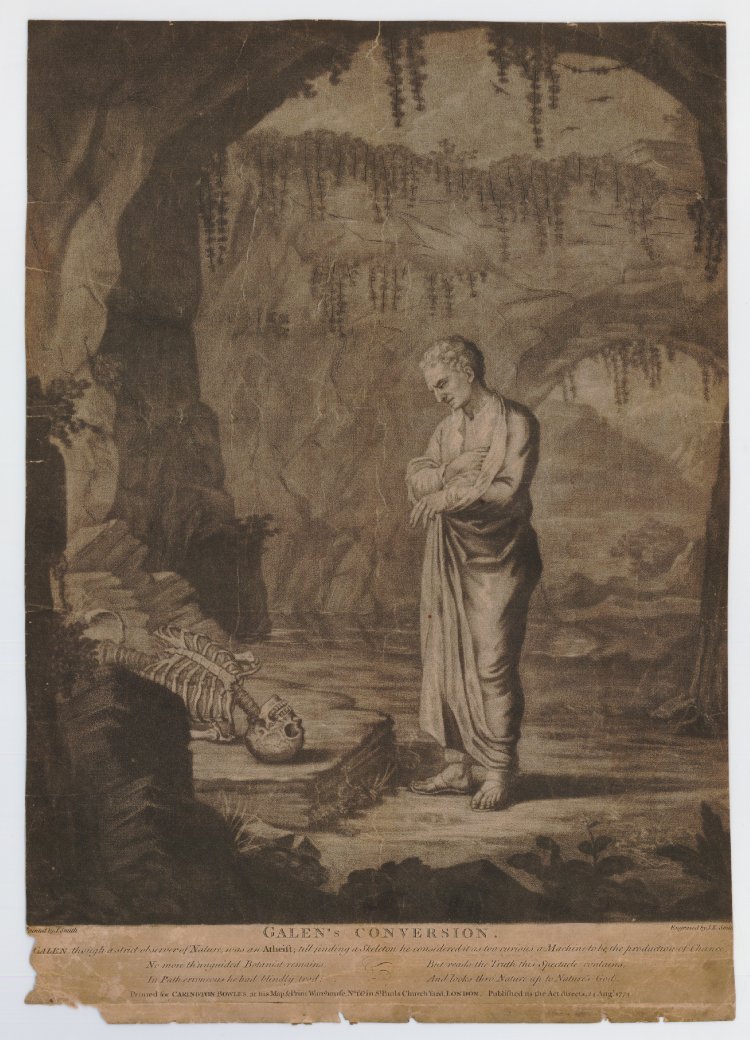
"Galen's Conversion", a motif in the late 18th century. This one is by John Raphael Smith, 1774. It's at the British Museum.&nbsp;CC BY-NC-SA 4.0.

"Galen's Conversion", a motif in the late 18th century. This one is by John Raphael Smith, 1774. It's at the British Museum. CC BY-NC-SA 4.0.

Galen's advice on how to never get sick ("read my books and pay attention")

March 19, 2018 by Sean Coughlin in Ancient Medicine

"After I turned 28, I had convinced myself that there exists an art of hygiene and I followed its precepts the whole rest of my life. The result was that I never got sick except for the occasional ephemeral fever; but, surely it is possible for someone to preserve themselves completely if they have secured a life of freedom.* This already became clear in the previous sections, and it will become even clearer in the sections that follow should you choose to pay attention. For I say no buboes** can be produced in anyone who has rigorously prepared for health, simply if their body is free from of each kind of excess residue, both in quantity and quality."

ἀλλὰ μετά γε τὸ εἰκοστὸν ὄγδοον ἔτος ἀπὸ γενετῆς ἐμαυτὸν πείσας, ὡς ἔστι τις ὑγιεινὴ τέχνη, τοῖς προστάγμασιν αὐτῆς ἠκολούθησα παρ' ὅλον τὸν ἑξῆς βίον, ὡς μηκέτι νοσῆσαι νόσημα μηδέν, ὅτι μὴ σπάνιόν που πυρετὸν ἐφήμερον. ἔστι δὲ δήπου καὶ τοῦτον αὐτὸν φυλάξασθαι τελέως, ἐλεύθερον ἑλόμενον βίον, ὡς ἔν τε τοῖς ἔμπροσθεν ἤδη γέγονε δῆλον ἔτι τε μᾶλλον ἔσται σαφὲς ἐν τοῖς ἐφεξῆς εἰρησομένοις, εἰ θέλοι τις προσέχειν τὸν νοῦν. ἐγὼ γάρ φημι μηδὲ βουβῶνα δύνασθαι γενέσθαι τοῖς ἀκριβῶς παρεσκευασμένοις εἰς ὑγείαν, εἴ γ' ἀπέριττον αὐτοῖς ἐστι τὸ σῶμα τοῦ γένους τῶν περιττωμάτων ἑκατέρου, τοῦ τε κατὰ τὸ ποσὸν καὶ τοῦ κατὰ τὸ ποιόν.

Galen, De sanitate tuenda, 5.1, 6.309-10 Kühn

*Galen is referring to something he said a bit earlier: that he gets an occasional fever because sometimes he works too much. In other words, he is not free, since he is dedicated to his practice. If you are free, all the more reason you should remain healthy if you follow his advice.

**not quite sure why Galen is singling out buboes here.

March 19, 2018 /Sean Coughlin
hygiene, buboes, diet, health tips, ostentation, regimen, Galen
Ancient Medicine
Comment
iacta alea esto

iacta alea esto

Julius Caesar's Prescription

March 15, 2018 by Sean Coughlin in Ancient Medicine

“They say that Caesar had an epileptic fit brought on by an unending winter, but that he was later treated by drinking the juice of the Heraclean plant with the rennet from a seal. It’s not surprising if Caesar was able to get his hands on seal rennet. Aretas, however, the phylarch of Arab Scenitae, wrote a letter to Claudius Caesar about a treatment using birds. He says the liver of a vulture roasted along with the blood and taken with honey three times a week gives relief from epilepsy. Likewise, the heart of the vulture, when dried, taken with water in the same manner, is equally effective.”

Ὅτι τὸν Καίσαρά φασιν ἐξ ἀπείρου χειμῶνος ἐπιληψίᾳ περιπεσεῖν· θεραπευθῆναι δὲ ὕστερον ἡρακλείου βοτάνης χυλὸν σὺν πυτίᾳ φώκης ἑλκύσαντα. καὶ Καῖσαρ μὲν οὔπω θαυμαστὸν εἰ καὶ φώκης πυτίας ηὐπόρησεν· Ἀρέτας δὲ ὁ τῶν Σκηνιτῶν Ἀράβων φύλαρχος Κλαυδίῳ Καίσαρι γράφων ἐπιστολὴν περὶ τῆς δι' ὀρνέων θεραπείας φησίν, ἧπαρ γυπὸς σὺν τῷ αἵματι ὀπτὸν μετὰ μέλιτος διδόμενον ἐπὶ ἑβδομάδας τρεῖς ἀπαλλάττειν ἐπιληψίας, ὁμοίως δὲ καὶ τὴν καρδίαν τοῦ γυπός, ὅτε ξηρανθῇ, ἐν ὕδατι διδομένην τῷ ἴσῳ τρόπῳ ἰσχύειν.

Lydus, On the months of the year, 4. 104

“Most historians say that Caesar was a seven-month child, and that’s why he changed the name of the seventh month of the sacred year to his own.”

Ὅτι οἱ πολλοὶ τῶν ἱστορικῶν φασι τὸν Καίσαρα ἑπτάμηνον τεχθῆναι, καὶ διὰ τοῦτο τὸν ἕβδομον μῆνα τοῦ ἱερατικοῦ ἐνιαυτοῦ εἰς τὴν οἰκείαν μεταβαλεῖν προσηγορίαν.

Lydus, On the months of the year, 4. 105

“An oracle was delivered to the Romans by the Mother, that they are not to engage in sexual activity at all during July, if their bodies are to stay healthy.”

Χρησμὸς ἐδόθη Ῥωμαίοις πρὸς τῆς Μητρός, μηδ' ὅλως ἀφροδισίοις χρῆσθαι ἀνὰ πάντα τὸν Ἰούλιον μῆνα, εἴπερ αὐτοῖς ὑγιαίνειν τὰ σώματα μέλλοι.

Lydus, On the months of the year, 4. 106

“When some people were suspicious of Marc Antony and Dolabella and urged Caesar to keep an eye on them, he said he wasn't worried about plodding and portly people, but thin and pale ones, indicating Brutus and Cassius.”

Ἀντώνιον δὲ καὶ Δολοβέλλαν ὑφορωμένων ἐνίων καὶ φυλάττεσθαι κελευόντων, οὐ τούτους ἔφη δεδιέναι τοὺς βαναύσους καὶ λιπῶντας, ἀλλὰ τοὺς ἰσχνοὺς καὶ ὠχροὺς ἐκείνους, δείξας Βροῦτον καὶ Κάσσιον.

[Plutarch], Sayings of Gaius Caesar, 14 (Moralia 206F)

"When the conversation at dinner turned to the best kind of death, Caesar said: 'unexpected.'"

Λόγου δὲ παρὰ δεῖπνον ἐμπεσόντος περὶ θανάτου ποῖος ἄριστος ‘ὁ ἀπροσδόκητος’ εἶπε.

[Plutarch], Sayings of Gaius Caesar, 15 (Moralia 206F)

March 15, 2018 /Sean Coughlin
epilepsy, idesofmarch, ancient prescriptions, Julius Caesar
Ancient Medicine
Comment
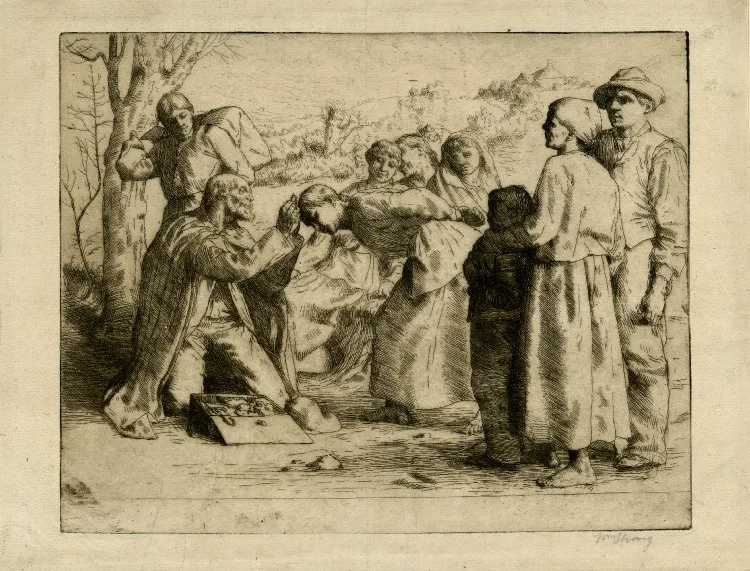
The Trinket Seller. William Strang. 1883. Etching and drypoint. From the British Museum: "To left, a trinket seller kneels to right with an open box of his wares by his side; a woman is bending towards him and he is placing a necklace over her head.…

The Trinket Seller. William Strang. 1883. Etching and drypoint. From the British Museum: "To left, a trinket seller kneels to right with an open box of his wares by his side; a woman is bending towards him and he is placing a necklace over her head. A group of potential customers in rustic dress look on." CC BY-NC-SA 4.0.

Pedlars and Peddlers, Hucksters and Trash-talkers

March 14, 2018 by Sean Coughlin in Ancient Medicine

(Ed 22 March 2019: I’ve since found an excellent book on shopping in Ancient Rome by Claire Holleran. Here’s the Google books view of the relevant chapter.)

I’ve been trying to sort out a term from Galen’s pharmacology: a group of people called ‘rhôpopôlai‘ who seem to deal with plants professionally. Not ‘professionally’ like doctor- or florist-professionally, but still in a way that everyone recognizes:

"Once I have added this further point, I will end the discussion of abrotanum. The incredible Pamphilus, although he describes this herb first and even tries to give a description of it from his own experience (so what if he doesn’t do this for any of the herbs that follow), nevertheless makes a terrible error: he thought that this plant is the one the Romans call, 'santonicum'. The fact is, abrotanum differs from santonicum, as Dioscorides very accurately described in book three of De materia medica. Everyone knows this, doctors and rhôpopôlai alike.

τοσόνδε μέντοι προσθεὶς ἔτι περὶ ἀβροτόνου καταπαύσω τὸν λόγον, ὡς ὁ θαυμασιώτατος Πάμφιλος, καίτοι ταύτην πρώτην πόαν γράφων καὶ τάχ' ἂν εἰ μηδενὸς τῶν ἐφεξῆς, ἀλλὰ ταύτης γοῦν ἐθελήσας αὐτόπτης γενέσθαι, ὅμως ἔσφαλται μέγιστα, νομίζων ὑπὸ Ῥωμαίων σαντόνικον ὀνομάζεσθαι τὴν βοτάνην.  διαφέρει γὰρ ἀβρότονον σαντονίκου, καθότι καὶ Διοσκουρίδης ἔγραψεν ἐν τῷ τρίτῳ περὶ ὕλης ἀκριβέστατα, καὶ πάντες ἴσασι τοῦτό γε ἰατροὶ καὶ ῥωποπῶλαι.

Galen, Simple Drugs, 6.pr. (11.804 K.)

Galen thinks doctors are expected to know the difference between one kind of artemisia and another (artemisia santonicum and artemisia abrotanum). His expectations for the rhôpopôlai, however, are more relaxed, and he doesn't think he's being controversial in saying this (he mentions this profession five times, he's not too big on them). At the same time he also seems confident that he and his audience are familiar with who these people are. The character of the rhôpopôlês is so well known, so utterly unremarkable, that it can slip in as the punchline of Galen’s trash-talk.

Of course, they aren’t unremarkable anymore. I have no idea what a 'rhôpopôlês' is, what he knows or doesn’t know, where one finds him in town, what he does. The rhôpopôlês is an alien to me. Even after putting together a bunch of texts that talk about him, I’m still not sure I really get the joke. 

A 'rhôpopôlês' is probably something like a huckster, hawker, costermonger, street-vendor. (to be honest, I don't know what these guys are either. I have an irrational fear of markets and my imagination is limited to the pedlars on summer sundays at Parc Mont Royal). Literally, it is someone who sells or deals in ῥῶπος. What this means is not totally clear: sometimes, it means a trinket, or small non-perishable good, i.e., something you don’t need a fixed shop to sell; other times it means something much more specific, namely pigments, oils, dyes, perfumes and drugs.

The specification we see in later sources led to some debate about whether this term (and terms like it) implies there was a profession of druggists or pharmacists in Roman antiquity. It probably doesn't; there were ‘root-cutters’, but that’s another story.

“'Rhôpopôlês': a person who sells 'rhôpos’, that is any dry, miscellaneous goods.”

ῥωποπώλης: ὁ τὸν ῥῶπον πωλῶν, ὅ ἐστι ξηρὸς φόρτος καὶ ποικίλος.

Phrynichus, Sophistic Preparations (epitome) Page 107, line 1

“Rhôpos and gelgê: Miscellaneous and small goods. Thus, 'rhôpopôlês' (‘rôpos-seller) and 'gelgopôlê' (gelge-seller).”

ῥῶπος καὶ γέλγη· ὁ ποικίλος καὶ λεπτὸς φόρτος, ὅθεν ῥωποπώλης καὶ γελγοπώλη

Aelius Dionysius, Attic Names, s.v. ῥῶπος (entry 14)

“The Attics say ‘gelgê ' and ' gelgê-seller'; Greeks say 'rhôpos ' and 'rhôpos-seller'.”

γέλγη καὶ γελγοπώλης Ἀττικοί, ῥῶπος καὶ ῥωποπώλης Ἕλληνες.

Moeris, Attic Lexicon, 194,4

“It is said that the first Phoenicians to sail to Tartessos, having brought oil and other nautical rhôpos, came back loaded with so much silver that there was nowhere to keep or put it, but when sailing away from the place they were forced to make everything else which they used out of silver, and even all the anchors, as well.”

Τοὺς πρώτους τῶν Φοινίκων ἐπὶ Ταρτησσὸν πλεύσαντας λέγεται τοσοῦτον ἀργύριον ἀντιφορτίσασθαι, ἔλαιον καὶ ἄλλον ναυτικὸν ῥῶπον εἰσαγαγόντας, ὥστε μηκέτι ἔχειν δύνασθαι μήτε ἐπιδέξασθαι τὸν ἄργυρον, ἀλλ' ἀναγκασθῆναι ἀποπλέοντας ἐκ τῶν τόπων τά τε ἄλλα πάντα ἀργυρᾶ οἷς ἐχρῶντο κατασκευάσασθαι, καὶ δὴ καὶ τὰς ἀγκύρας πάσας.

Pseudo-Aristotle, On Marvellous Things Heard, 844a17-23

“Nature is everywhere precise, artistic, lacking nothing and without excess – ‘having’, as Erasistratus says, ‘nothing rhôpikon.’” (=trashy? tracky? worthless?? superfluous?)

πανταχοῦ μὲν γὰρ ἡ φύσις ἀκριβὴς καὶ φιλότεχνος καὶ ἀνελλιπὴς καὶ ἀπέριττος, ‘οὐδέν’ ὡς ἔφησεν Ἐρασίστρατος ‘ἔχουσα ῥωπικόν’

Plutarch, Moralia 495C7-9 = Erasistratus Fr. 83

[[then there’s a semantic shift, at some point in the dark ages.]]

“'Rhôpos': compounds, pigments, all those things used by dyers, painters and perfumers. Whence, 'rhôpopôlês', 'perfume dealer' (?). Some people have also called miscellaneous goods, 'rhôpos'.”

Ῥῶπος: μίγμα· χρώματα, ὅσα βαφεῦσι, ζωγράφοις, μυρεψοῖς χρησιμεύει· ὅθεν ῥωποπώλης, ὁ μυροπώλης· τινὲς δὲ καὶ τὸν παντοδαπὸν φόρτον, ῥῶπον εἰρήκασιν.

Photius, Lexicon, s.v. Ῥῶπος (p.494)

“Rhôpos: compounds of colour, those which are used by dyers, painters and perfumers. Whence 'rhôpopôlês'. Some people have also called miscellaneous goods 'rhôpos'.”

Ῥῶπος: μίγμα χρώματος, ὅσα βαφεῦσι, ζωγράφοις, μυρεψοῖς χρησιμεύει. ὅθεν ῥωποπώλης. τινὲς δὲ καὶ τὸν παντοδαπὸν φόρτον ῥῶπον εἰρήκασι.

Suda, s.v. Ῥῶπος

“A rhôpos is a small, cheap, miscellaneous good, as Aelius Dionysius says, while gelgê, he says, is what the ancients called it. Whence, just as there are rhôpos-sellers, so too there are gelgê- sellers. The word, 'rhôpos', occurs in Demosthenes and others, and in Strabo. From this also comes rhopoperperethra, when someone calls out to someone they are mocking with vulgarity and silliness ('trash-talk'?), the inflection of which follows daktylethra ('finger sheath') and similar words. It also occurs in the verb, 'rhôpizein', which refers to making compounds and mixtures.

Ῥῶπος μέντοι λεππὸς καὶ εὐτελὴς φόρτος, ὡς δὲ Αἴλιος Διονύσιος λέγει, καὶ ποικίλος, γέλγην δέ, φησίν, αὐτὸν ἔλεγον οἱ παλαιοί. ὅθεν καθὰ ὁ ῥωποπώλης, οὕτω καὶ ὁ γελγοπώλης. ἡ δὲ λέξις τοῦ ῥώπου παρά τε Δημοσθένει καὶ ἑτέροις, κεῖται δὲ καὶ παρὰ τῷ Στράβωνι. ἐκ τούτου δὲ καὶ ῥωποπερπερήθρα τις προσερρήθη ἐπὶ χυδαιότητι καὶ φλυαρίᾳ σκωπτόμενος, οὗ ἡ παραγωγὴ κατὰ τὸ δακτυλήθρα καὶ τὰ ὅμοια. φέρεται δὲ καὶ ῥῆμα τὸ ῥωπίζειν, ὃ δηλοῖ τὸ σύμμικτα καὶ συμπεφυρμένα ποιεῖν.

Eustathius, Commentarii ad Homeri Iliadem, 3.459-360

March 14, 2018 /Sean Coughlin
hucksters, pigments, dye, oils, wormwood, perfume, professions, pharmacology, drug dealing, peddlers, Galen, Translation problems, materia medica
Ancient Medicine
Comment
  • Newer
  • Older
 

CATEGORIES

  • Ancient Medicine
  • Botany
  • Events
  • Philosophy

SEARCH


RECENT POSTS

Featured
mid_00530502_001.jpg
April 30, 2026
Ancient Medicine
The Surgery of Erichtho
April 30, 2026
Ancient Medicine
Read more →
April 30, 2026
Ancient Medicine
Arctic_Fox_in_Summer_Coat_(20986746788).jpg
March 16, 2026
Ancient Medicine
“It is not as if the womb creeps out of its lair like a wild animal” — Soranus on the ancients on scented materials and women's medicine
March 16, 2026
Ancient Medicine
Read more →
March 16, 2026
Ancient Medicine
Concerning a Variant in the de Fuentes Manuscript
December 31, 2025
Botany, Philosophy
Concerning a Variant in the de Fuentes Manuscript
December 31, 2025
Botany, Philosophy
Read more →
December 31, 2025
Botany, Philosophy
Hausziege_04.jpg
December 25, 2025
Ancient Medicine
How to smell nice: Galen's advice for doctors
December 25, 2025
Ancient Medicine
Read more →
December 25, 2025
Ancient Medicine
oct21-1920x1280.jpg
December 23, 2025
Ancient Medicine
More on how not to talk to patients
December 23, 2025
Ancient Medicine
Read more →
December 23, 2025
Ancient Medicine